

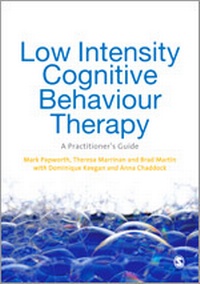
Low Intensity Cognitive-Behaviour Therapy
A Practitioner's Guide
1st Edition
Published on 15. March 2013
Book
Hardback
384 pages
978-1-4462-0919-6 (ISBN)
Description
'An engaging textbook which explores 'low intensity interventions' and modes of delivery whilst placing equal emphasis on the therapeutic value of the relationship between service user and practitioner' - Jane Briddon, APIMH Primary Mental Health Care MSC, University of Manchester
This is a practical and jargon-free introduction to the principles, skills and application of Low Intensity Cognitive Behaviour Therapy (LICBT). Tailored specifically for the low intensity practitioner, it shows you how to deliver the approach to service users presenting with common adult mental health problems such as anxiety or depression, and how to use therapy 'vehicles' like supported self-help.
Beginning at the initial assessment, the book will guide you all the way through the implementation of interventions to the management of endings - with key case examples threading through the book to illustrate each step. Interactive exercises will encourage your self-development, leaving you with a deeper understanding of the approach.
This accessible, evidence-based book is essential reading for Psychological Wellbeing Practitioners (PWPs). It will also be useful for health professionals of all kinds who need a practical guide to applying this cost-effective therapy in clinical settings.
Mark Papworth is consultant clinical psychologist at Newcastle University.
Theresa Marrinan is clinical/academic tutor at Newcastle University.
Brad Martin is a consultant clinical psychologist and cognitive therapist in Wellington, New Zealand.
Dominique Keegan is a clinical psychologist and cognitive therapist, working in the NHS and as a clinical lecturer on the PGDipCBT at Newcastle University.
Anna Chaddock is a clinical psychologist and CBT therapist in Newcastle upon Tyne Hospitals NHS Foundation Trust.
This is a practical and jargon-free introduction to the principles, skills and application of Low Intensity Cognitive Behaviour Therapy (LICBT). Tailored specifically for the low intensity practitioner, it shows you how to deliver the approach to service users presenting with common adult mental health problems such as anxiety or depression, and how to use therapy 'vehicles' like supported self-help.
Beginning at the initial assessment, the book will guide you all the way through the implementation of interventions to the management of endings - with key case examples threading through the book to illustrate each step. Interactive exercises will encourage your self-development, leaving you with a deeper understanding of the approach.
This accessible, evidence-based book is essential reading for Psychological Wellbeing Practitioners (PWPs). It will also be useful for health professionals of all kinds who need a practical guide to applying this cost-effective therapy in clinical settings.
Mark Papworth is consultant clinical psychologist at Newcastle University.
Theresa Marrinan is clinical/academic tutor at Newcastle University.
Brad Martin is a consultant clinical psychologist and cognitive therapist in Wellington, New Zealand.
Dominique Keegan is a clinical psychologist and cognitive therapist, working in the NHS and as a clinical lecturer on the PGDipCBT at Newcastle University.
Anna Chaddock is a clinical psychologist and CBT therapist in Newcastle upon Tyne Hospitals NHS Foundation Trust.
Reviews / Votes
'An engaging textbook which explores 'low intensity interventions' and modes of delivery whilst placing equal emphasis on the therapeutic value of the relationship between service user and practitioner' -Jane Briddon, APIMH Primary Mental Health Care MSC, University of Manchester Overall, this book provides a clear overview not only of best practice in using low intensity CBT but also how to be a good scientist-practitioner, regardless of the therapy modality. Concise and clear in its presentation, it will engage and inform the reader, whether read cover to cover or selectively. -- Clare O'Grady
More details
Language
English
Place of publication
London
United Kingdom
Target group
Professional and scholarly
Dimensions
Height: 232 mm
Width: 186 mm
Weight
829 gr
ISBN-13
978-1-4462-0919-6 (9781446209196)
Copyright in bibliographic data and cover images is held by Nielsen Book Services Limited or by the publishers or by their respective licensors: all rights reserved.
Schweitzer Classification
Other editions
New editions
Book
11/2018
2nd Edition
SAGE Publications Ltd
€184.21
Shipment within 15-20 days
Persons
Mark Papworth is a consultant clinical psychologist and course director of Newcastle University's PGCert in Low Intensity Psychological Therapies (seconded by Tees, Esk and Wear Valleys NHS Trust). He works in private practice in Newcastle at psychologynortheast.com.
Theresa Marrinan is a clinical psychologist and CBT therapist. She was formerly the assistant course director of Newcastle University's PGCert in Low Intensity Psychological Therapies. Currently she is clinical director and deputy programme director on the Doctorate in Clinical Psychology programme at Newcastle University.
Theresa Marrinan is a clinical psychologist and CBT therapist. She was formerly the assistant course director of Newcastle University's PGCert in Low Intensity Psychological Therapies. Currently she is clinical director and deputy programme director on the Doctorate in Clinical Psychology programme at Newcastle University.
Content
List of Figures, Tables and Exercises
About the Authors
Acknowledgements
Introduction
The Role of the LICBT Practitioner
Understanding the Client's Problem
The Therapeutic Relationship: Big Deal or No Deal?
The LICBT Interview Structure
The Assessment and Management of Risk
Understanding Depression
Treatment of Depression
Understanding Anxiety
Treating Anxiety
Adapting LICBT for Use with Individuals from Minority Groups
Employment and Mental Health
Supervision
Appendix: The use of Case Studies
References
Index
About the Authors
Acknowledgements
Introduction
The Role of the LICBT Practitioner
Understanding the Client's Problem
The Therapeutic Relationship: Big Deal or No Deal?
The LICBT Interview Structure
The Assessment and Management of Risk
Understanding Depression
Treatment of Depression
Understanding Anxiety
Treating Anxiety
Adapting LICBT for Use with Individuals from Minority Groups
Employment and Mental Health
Supervision
Appendix: The use of Case Studies
References
Index