

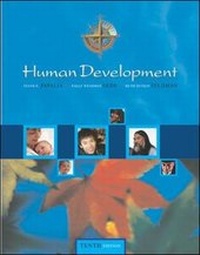
Human Development with LifeMAP CD-ROM and PowerWeb
10th Edition
Published on 16. February 2006
Book
Paperback/Softback
978-0-07-322878-5 (ISBN)
Description
The new edition retains the extensive cross-cultural and multicultural coverage, the innovative pedagogical learning system, and the balance between research and real-life applications that have made this text a favorite of students and professors alike. In the warmly-written and engaging style that is their hallmark, Papalia, Olds, and Feldman continue to provide a chronological view of lifespan development. The tenth edition expands the coverage of cultural and historical influences on development, features the latest research, and introduces marginal callouts integrating the LifeMap Student CD-ROM with key concepts in the text.
More details
Edition
10th edition
Language
English
Place of publication
United States
Publishing group
McGraw-Hill Education - Europe
Illustrations
Illustrations (chiefly col.)
Dimensions
Height: 287 mm
Width: 224 mm
Thickness: 37 mm
Weight
2245 gr
ISBN-13
978-0-07-322878-5 (9780073228785)
Copyright in bibliographic data and cover images is held by Nielsen Book Services Limited or by the publishers or by their respective licensors: all rights reserved.
Schweitzer Classification
Persons
As a professor, Diane E. Papalia has taught thousands of undergraduates at the University of Wisconsin-Madison. She received her bachelors degree, majoring in psychology, from Vassar College and both her masters degree in child development and family relations and her Ph.D. in life-span developmental psychology from West Virginia University. She has published numerous articles in such professional journals as Human Development, International Journal of Aging and Human Development, Sex Roles, Journal of Experimental Child Psychology and Journal of Gerontology. Most of these papers have dealt with her major research focus, cognitive development from childhood through old age.
Ruth Duskin Feldman is an award-winning writer and educator. With Diane E. Papalia and Sally Wendkos Olds, she coauthored the fourth and the seventh through the twelfth editions of Human Development and the eighth through the twelfth editions of A Child's World. She also is coauthor, with Dr. Papalia, Harvey Sterns and Cameron J. Camp, of Adult Development and Aging. A former teacher, she has developed educational materials for all levels from elementary school through college and has prepared ancillaries to accompany the Papalia-Olds books. She is author or coauthor of four books addressed to general readers, including Whatever Happened to the Quiz Kids? Perils and Profits of Growing Up Gifted. She has written for numerous newspapers and magazines and has lectured extensively and made national and local media appearances throughout the United States on education and gifted children. She received her bachelor's degree from Northwestern University, where she was graduated with highest distinction and was elected to Phi Beta Kappa.
Ruth Duskin Feldman is an award-winning writer and educator. With Diane E. Papalia and Sally Wendkos Olds, she coauthored the fourth and the seventh through the twelfth editions of Human Development and the eighth through the twelfth editions of A Child's World. She also is coauthor, with Dr. Papalia, Harvey Sterns and Cameron J. Camp, of Adult Development and Aging. A former teacher, she has developed educational materials for all levels from elementary school through college and has prepared ancillaries to accompany the Papalia-Olds books. She is author or coauthor of four books addressed to general readers, including Whatever Happened to the Quiz Kids? Perils and Profits of Growing Up Gifted. She has written for numerous newspapers and magazines and has lectured extensively and made national and local media appearances throughout the United States on education and gifted children. She received her bachelor's degree from Northwestern University, where she was graduated with highest distinction and was elected to Phi Beta Kappa.
Content
Part 1: About Human Development Chapter 1:The Study of Human Development Chapter 2: Theory and Research Part 2: Beginnings Chapter 3: Forming a New Life Chapter 4: Physical Development During the First Three Years Chapter 5: Cognitive Development During the First Three Years Chapter 6: Psychosocial Development During the First Three Years Part 3: Early Childhood Chapter 7: Physical and Cognitive Development in Early Childhood Chapter 8: Psychosocial Development in Early Childhood Part 4: Middle Childhood Chapter 9: Physical and Cognitive Development in Middle Childhood Chapter 10: Psychosocial Development in Middle Childhood Part 5: Adolescence Chapter 11: Physical and Cognitive Development in Adolescence Chapter 12: Psychosocial Development in Adolescence Part 6: Young Adulthood Chapter 13: Physical and Cognitive Development in Young Adulthood Chapter 14: Psychosocial Development in Young Adulthood Part 7: Middle Adulthood Chapter 15: Physical and Cognitive Development in Middle Adulthood Chapter 16: Psychosocial Development in Middle Adulthood Part 8: Late Adulthood Chapter 17: Physical and Cognitive Development in Late Adulthood Chapter 18: Psychosocial Development in Late Adulthood Part 9: The End of Life Chapter 19: Dealing with Death and Bereavement