

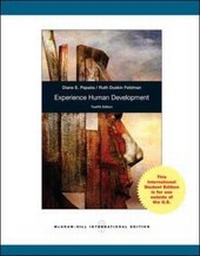
Experience Human Development
12th Edition
Published on 16. November 2011
Book
Paperback/Softback
800 pages
978-0-07-131619-4 (ISBN)
Description
Experience Human Development 12e allows you to:
Experience a program that connects students to the real world. Our Milestones video program allows students to witness real life as it unfolds via a customizable, assignable and assessible platform. Additionally, our new Research in Action feature highlights interesting and timely topics.
Experience the diversity of the human experience.The 12th edition of this classic best-seller retains the extensive and integrated cross-cultural and multicultural coverage as previous editions.
Experience a program that helps students navigate the vast amount of material in the course.Now with Connect Lifespan, Papalia 12e allows students to connect with real life and the real world. Connect Psychology with LearnSmart, our adaptive learning system, is designed to help students learn faster, study more efficiently, and retain more knowledge for greater success. And, it allows faculty to spend more time teaching and less time grading.
Experience a program that connects students to the real world. Our Milestones video program allows students to witness real life as it unfolds via a customizable, assignable and assessible platform. Additionally, our new Research in Action feature highlights interesting and timely topics.
Experience the diversity of the human experience.The 12th edition of this classic best-seller retains the extensive and integrated cross-cultural and multicultural coverage as previous editions.
Experience a program that helps students navigate the vast amount of material in the course.Now with Connect Lifespan, Papalia 12e allows students to connect with real life and the real world. Connect Psychology with LearnSmart, our adaptive learning system, is designed to help students learn faster, study more efficiently, and retain more knowledge for greater success. And, it allows faculty to spend more time teaching and less time grading.
More details
Edition
12th edition
Language
English
Place of publication
United States
Publishing group
McGraw-Hill Education - Europe
Target group
College/higher education
Illustrations
col. Illustrations
Dimensions
Height: 277 mm
Width: 213 mm
Thickness: 25 mm
Weight
1554 gr
ISBN-13
978-0-07-131619-4 (9780071316194)
Copyright in bibliographic data and cover images is held by Nielsen Book Services Limited or by the publishers or by their respective licensors: all rights reserved.
Schweitzer Classification
Persons
As a professor, Diane E. Papalia has taught thousands of undergraduates at the University of Wisconsin-Madison. She received her bachelors degree, majoring in psychology, from Vassar College and both her masters degree in child development and family relations and her Ph.D. in life-span developmental psychology from West Virginia University. She has published numerous articles in such professional journals as Human Development, International Journal of Aging and Human Development, Sex Roles, Journal of Experimental Child Psychology and Journal of Gerontology. Most of these papers have dealt with her major research focus, cognitive development from childhood through old age.
Ruth Duskin Feldman is an award-winning writer and educator. With Diane E. Papalia and Sally Wendkos Olds, she coauthored the fourth and the seventh through the twelfth editions of Human Development and the eighth through the twelfth editions of A Child's World. She also is coauthor, with Dr. Papalia, Harvey Sterns and Cameron J. Camp, of Adult Development and Aging. A former teacher, she has developed educational materials for all levels from elementary school through college and has prepared ancillaries to accompany the Papalia-Olds books. She is author or coauthor of four books addressed to general readers, including Whatever Happened to the Quiz Kids? Perils and Profits of Growing Up Gifted. She has written for numerous newspapers and magazines and has lectured extensively and made national and local media appearances throughout the United States on education and gifted children. She received her bachelor's degree from Northwestern University, where she was graduated with highest distinction and was elected to Phi Beta Kappa.
Ruth Duskin Feldman is an award-winning writer and educator. With Diane E. Papalia and Sally Wendkos Olds, she coauthored the fourth and the seventh through the twelfth editions of Human Development and the eighth through the twelfth editions of A Child's World. She also is coauthor, with Dr. Papalia, Harvey Sterns and Cameron J. Camp, of Adult Development and Aging. A former teacher, she has developed educational materials for all levels from elementary school through college and has prepared ancillaries to accompany the Papalia-Olds books. She is author or coauthor of four books addressed to general readers, including Whatever Happened to the Quiz Kids? Perils and Profits of Growing Up Gifted. She has written for numerous newspapers and magazines and has lectured extensively and made national and local media appearances throughout the United States on education and gifted children. She received her bachelor's degree from Northwestern University, where she was graduated with highest distinction and was elected to Phi Beta Kappa.
Content
CHAPTER 1?The Study of Human Development?Human Development: An Ever-Evolving Field?Studying the Life Span?Human Development Today?The Study of Human Development: Basic Concepts?Domains of Development?Periods of the Life Span?Influences on Development?Heredity, Environment, and Maturation ?Contexts of Development ?Normative and Nonnormative Influences ?Timing of Influences: Critical or Sensitive PeriodsPaul B. Baltes's Life-Span Developmental Approach ?CHAPTER 2?Theory and Research?Basic Theoretical Issues?Issue 1: Is Development Active or Reactive??Issue 2: Is Development Continuous or Discontinuous??Theoretical Perspectives?Perspective 1: Psychoanalytic?Perspective 2: Learning?Perspective 3: Cognitive?Perspective 4: Contextual?Perspective 5: Evolutionary/Sociobiological?A Shifting Balance?Research Methods?Sampling?Forms of Data Collection?Basic Research DesignsDevelopmental Research Designs?CHAPTER 3?Forming a New Life?Conceiving New Life?How Fertilization Takes Place?What Causes Multiple Births??Mechanisms of Heredity?The Genetic CodeWhat Determines Sex??Patterns of Genetic Transmission?Genetic and Chromosomal Abnormalities?Genetic Counseling and Testing?Nature and Nurture: Influences of Heredity and Environment?Studying Heredity and Environment?How Heredity and Environment Work Together?Some Characteristics Influenced by Heredity and Environment Prenatal Development?Stages of Prenatal Development?Environmental Influences: Maternal Factors?Environmental Influences: Paternal Factors?Monitoring and Promoting Prenatal Development?Disparities in Prenatal Care?The Need for Preconception Care?CHAPTER 4?Birth and Physical Development during the First Three Years?Childbirth and Culture: How Birthing Has Changed?The Birth Process?Stages of Childbirth?Electronic Fetal Monitoring?Vaginal versus Cesarean Delivery?Medicated versus Nonmedicated Delivery?The Newborn Baby?Size and Appearance?Body Systems?Medical and Behavioral Assessment?States of Arousal?Complications of Childbirth?Low Birth Weight?Postmaturity?Stillbirth?Can a Supportive Environment Overcome Effects of Birth Complications??Survival and Health?Death during Infancy?Immunization for Better Health?Early Physical Development ?Principles of Development?Patterns of Growth?Nutrition?The Brain and Reflex Behavior?Early Sensory Capacities?Motor Development?Milestones of Motor Development?Motor Development and Perception?Eleanor and James Gibson's Ecological Theory?How Motor Development Occurs: Thelan's Dynamic Systems Theory?Cultural Influences on Motor Development??CHAPTER 5?Cognitive Development during the First Three Years?Studying Cognitive Development: Six Approaches?Behaviorist Approach: Basic Mechanics of Learning?Classical and Operant Conditioning ?Infant Memory?Psychometric Approach: Developmental and Intelligence Testing?Testing Infants and Toddlers?Assessing the Impact of the Early Home Environment?Early Intervention?Piagetian Approach: The Sensorimotor Stage?Substages of the Sensorimotor Stage?Do Imitative Abilities Develop Earlier than Piaget Thought??Development of Knowledge about Objects and Space?Evaluating Piaget's Sensorimotor Stage?Information-Processing Approach: Perceptions and Representations?Habituation?Visual and Auditory Processing Abilities?Information Processing as a Predictor of Intelligence?Information Processing and the Development of Piagetian Abilities?Cognitive Neuroscience Approach: The Brain's Cognitive Structures?Memory Systems?Understanding of Number?Social-Contextual Approach: Learning Form Interactions with Caregivers?Language Development?Sequence of Early Language Development?Characteristics of Early Speech?Classic Theories of Language Acquisition: The Nature-Nurture Debate?Influences on Early Language Development?Preparing for Literacy: The Benefits of Reading Aloud?CHAPTER 6?Psychosocial Development during the First Three Years?Foundations of Psychosocial Development?Emotions?Temperament?Earliest Social Experiences: The Infant in the Family?Gender: How Different Are Baby Boys and Girls??Developmental Issues in Infancy?Developing Trust?Developing Attachments?Emotional Communication with Caregivers: Mutual Regulation?Social Referencing?Developmental Issues in Toddlerhood?The Emerging Sense of Self?Development of Autonomy?The Roots of Moral Development: Socialization and Internalization?Contact with Other Children?Siblings?Sociability with Nonsiblings?Children of Working Parents?Effects of Maternal Employment?Early Child Care?Maltreatment: Child Abuse and Neglect?Maltreatment: Facts and Figures?Contributing Factors: An Ecological View?Helping Families in Trouble?Long-Term Effects of Maltreatment?CHAPTER 7?Physical and Cognitive Development in Early Childhood?PHYSICAL DEVELOPMENT?Aspects of Physical Development?Bodily Growth and Change?Sleep Patterns and Problems?Brain Development?Motor Skills?Health and Safety?Preventing Obesity?Undernutrition?Deaths and Accidental Injuries?Health in Context: Environmental Influences?COGNITIVE DEVELOPMENT?Piagetian Approach: the Preoperational Child?Advances of Preoperational Thought?Immature Aspects of Preoperational Thought?Do Young Children Have Theories of Mind??Information-Processing Approach: Memory Development?Basic Processes and Capacities?Recognition and Recall?Forming and Retaining Childhood Memories?Intelligence: Psychometric and Vygotskian Approaches?Traditional Psychometric Measures?Influences on Measured Intelligence?Testing and Teaching Based on Vygotsky's Theory?Language Development?Vocabulary?Grammar and Syntax?Pragmatics and Social Speech?Private Speech?Delayed Language Development?Preparation for Literacy?Early Childhood Education?Goals and Types of Preschools?Compensatory Preschool Programs?The Child in Kindergarten?CHAPTER 8?Psychosocial Development in Early Childhood?The Developing Self?The Self-Concept and Cognitive Development?Self-Esteem?Understanding and Regulating Emotions?Erikson: Initiative versus Guilt?Gender?Gender Differences?Perspectives on Gender Development?Play: The Business of Early Childhood?Cognitive Levels of Play?The Social Dimension of Play?How Gender Influences Play?How Culture Influences Play?Parenting?Forms of Discipline?Parenting Styles?Special Behavioral Concerns?Relationships with Other Children?Sibling Relationships?The Only Child?Playmates and Friends?CHAPTER 9?Physical and Cognitive Development in Middle Childhood?PHYSICAL DEVELOPMENT?Aspects of Physical Development?Height and Weight?Nutrition and Sleep?Brain Development?Motor Development and Physical Play?Health, Fitness, and Safety?Obesity and Body Image?Other Medical Conditions?Accidental Injuries?COGNITIVE DEVELOPMENT?Piagetian Approach: The Concrete Operational Child?Cognitive Advances?Influences of Neurological Development, Culture, and Schooling?Moral Reasoning?Information-Processing Approach: Planning, Attention, and Memory?How Do Executive Skills Develop??Selective Attention?Working Memory Span?Metamemory: Understanding Memory?Mnemonics: Strategies for Remembering?Information Processing and Piagetian Tasks?Psychometric Approach: Assessment of Intelligence?The IQ Controversy?Influences on Intelligence?Is There More Than One Intelligence??Other Directions in Intelligence Testing?Language?Vocabulary, Grammar, and Syntax?Pragmatics: Knowledge about Communication?Second-Language Learning?The Child In School?Entering First Grade?Becoming Literate?Influences on School Achievement?Educating Children with Special Needs?Children with Learning Problems?Gifted Children?CHAPTER 10?Psychosocial Development in Middle ChildhoodThe Developing Self?Self-Concept Development: Representational Systems?Self-Esteem?Emotional Growth and Prosocial Behavior?The Child in the Family?Family Atmosphere?Family Structure?Sibling Relationships?The Child in the Peer Group?Positive and Negative Effects of Peer Relations?Popularity?Friendship?Aggression and Bullying?Mental Health?Common Emotional Disturbances?Treatment Techniques?Stress and Resilience?CHAPTER 11?Physical and Cognitive Development in Adolescence?Adolescence: A Developmental Transition?Adolescence as a Social Construction?Adolescence: A Time of Opportunities and Risks?PHYSICAL DEVELOPMENT?Puberty?How Puberty Begins: Hormonal Changes?Timing, Signs, and Sequence of Puberty and Sexual Maturity?The Adolescent Brain?Physical and Mental Health?Physical Activity?Sleep Needs and Problems?Nutrition and Eating Disorders?Use and Abuse of Drugs?Depression?Death in Adolescence?COGNITIVE DEVELOPMENT?Aspects of Cognitive Maturation?Piaget's Stage of Formal Operations?Changes in Information Processing?Language Development?Moral Reasoning: Kohlberg's Theory?An Ethic of Care: Gilligan's Theory?Prosocial Behavior and Volunteer Activity?Educational and Vocational Issues?Influences on School Achievement?Dropping Out of High School?Preparing for Higher Educational o
r Vocations?CHAPTER 12?Psychosocial Development in Adolescence?The Search for Identity?Erikson: Identity versus Identity Confusion?Marcia: Identity Status-Crisis and Commitment?Gender Differences in Identity Formation?Ethnic Factors in Identity Formation?Sexuality?Sexual Orientation and Identity?Sexual Behavior?Sexually Transmitted Diseases (STDs)?Teenage Pregnancy and Childbearing?Relationships with Family, Peers, and Adult Society?Is Adolescent Rebellion a Myth??Changing Time Use and Changing Relationships?Adolescents and Parents?Adolescents and Siblings?Adolescents and Peers?Antisocial Behavior and Juvenile Delinquency?Becoming a Delinquent: Genetic and Neurological Factors?Becoming a Delinquent: How Family, Peer, and Community Influences Interact?Long-Term Prospects?Preventing and Treating Delinquency?CHAPTER 13?Physical and Cognitive Development in Emerging and Young Adulthood?Emerging Adulthood?PHYSICAL DEVELOPMENT?Health and Fitness?Health Status and Health Issues?Genetic Influences on Health?Behavioral Influences on Health and Fitness?Indirect Influences on Health and Fitness?Mental Health Problems?Sexual and Reproductive Issues?Sexual Behavior and Attitudes?Sexually Transmitted Diseases (STDs)?Menstrual Disorders?Infertility?COGNITIVE DEVELOPMENT?Perspectives on Adult Cognition?Beyond Piaget: New Ways of Thinking in Adulthood?Schaie: A Life-Span Model of Cognitive Development?Sternberg: Insight and Know-How?Emotional Intelligence?Moral Reasoning?Culture and Moral Reasoning?Gender and Moral Reasoning?Education and Work?The College Transition?Entering the World of Work??CHAPTER 14?Psychosocial Development in Emerging and Young Adulthood?Emerging Adulthood: Patterns and Tasks?Varied Paths to Adulthood?Identity Development in Emerging Adulthood?Developing Adult Relationships with Parents?Personality Development: Four Views?Normative-Stage Models?Timing-of-Events Model?Trait Models: Costa and McCrae's Five Factors?Typological Models?Foundations of Intimate Relationships?Friendship?Love?Marital and Nonmarital Lifestyles?Single Life?Gay and Lesbian Relationships?Cohabitation?Marriage?Parenthood?Parenthood as a Developmental Experience?How Dual-Income Families Cope?When Marriage Ends?Divorce?Remarriage and Stepparenthood??CHAPTER 15?Physical and Cognitive Development in Middle Adulthood?Middle Age: A Social Construct?PHYSICAL DEVELOPMENT?Physical Changes?Sensory and Psychomotor Functioning?Structural and Systemic Changes?Sexuality and Reproductive Functioning?Physical and Mental Health?Health Trends at Midlife?Behavioral Influences on Health?Socioeconomic Status and Health?Race/Ethnicity and Health?Gender and Health?Stress in Middle Age?Emotions and Health?Mental Health?COGNITIVE DEVELOPMENT?Measuring Cognitive Abilities in Middle Age?Schaie: The Seattle Longitudinal Study?Horn and Cattell: Fluid and Crystallized Intelligence?The Distinctiveness of Adult Cognition?The Role of Expertise?Integrative Thought?Creativity?Characteristics of Creative Achievers?Creativity and Age?Work and Education?Work versus Early Retirement?Work and Cognitive Development?The Mature Learner?CHAPTER 16?Psychosocial Development in Middle AdulthoodLooking at the Life Course in Middle Age?Change at Midlife: Theoretical Approaches?Trait Models?Normative-Stage Models?Timing of Events: The Social Clock?The Self at Midlife: Issues and Themes?Is There a Midlife Crisis??Identity Development?Psychological Well-Being and Positive Mental Health?Relationships at Midlife?Theories of Social Contact?Relationships, Gender, and Quality of Life?Consensual Relationships?Marriage?Cohabitation?Divorce?Marital Status, Well-Being, and Health?Gay and Lesbian Relationships?Friendships?Relationships with Maturing Children?Adolescent Children: Issues for Parents?When Children Leave: The Empty Nest?Parenting Grown Children?Prolonged Parenting: The "Cluttered Nest"?Other Kinship Ties?Relationships with Aging Parents?Relationships with Siblings?Grandparenthood?CHAPTER 17?Physical and Cognitive Development in Late Adulthood?Old Age Today?The Graying of the Population?Young Old to Oldest Old?PHYSICAL DEVELOPMENT?Longevity and Aging?Trends and Factors in Life Expectancy?Why People Age?How Far Can the Life Span Be Extended??Physical Changes?Organic and Systemic Changes?The Aging Brain?Sensory and Psychomotor Functioning?Sleep?Sexual Functioning?Physical and Mental Health?Health Status?Chronic Conditions and Disabilities?Lifestyle Influences on Health and Longevity?Mental and Behavioral Problems?COGNITIVE DEVELOPMENT?Aspects of Cognitive Development?Intelligence and Processing Abilities?Memory: How Does It Change??Wisdom?CHAPTER 18?Psychosocial Development in Late Adulthood?Theory and Research on Personality Development?Erik Erikson: Normative Issues and Tasks?The Five-Factor Model: Personality Traits in Old Age?Well-Being in Late Adulthood?Coping and Mental Health?Models of "Successful," or "Optimal," Aging?Practical and Social Issues Related to Aging?Work and Retirement?How Do Older Adults Fare Financially??Living Arrangements?Personal Relationships in Late Life?Theories of Social Contact and Social Support?The Importance of Social Relationships?The Multigenerational Family?Marital Relationships?Long-Term Marriage?Widowhood?Divorce and Remarriage?Nonmarital Lifestyles and Relationships?Single Life?Cohabitation?Gay and Lesbian Relationships?Friendships?Nonmarital Kinship Ties?Relationships with Adult Children?Relationships with Siblings?Becoming Great-Grandparents??CHAPTER 19?Dealing with Death and Bereavement?The Many, Changing Meanings of Death and Dying?The Cultural Context?The Mortality Revolution?Care of the Dying?Facing Death and Loss?Physical and Cognitive Changes Preceding Death?Confronting One's Own Death?Patterns of Grieving?Attitudes about Death and Dying across the Life Span?Significant Losses?Surviving a Spouse?Losing a Parent in Adulthood?Losing a Child?Mourning a Miscarriage?Medical, Legal, and Ethical Issues: The "Right to Die"?Suicide?Hastening Death?Finding Meaning and Purpose in Life and Death?Reviewing a Life?Development: A Lifelong Process?
r Vocations?CHAPTER 12?Psychosocial Development in Adolescence?The Search for Identity?Erikson: Identity versus Identity Confusion?Marcia: Identity Status-Crisis and Commitment?Gender Differences in Identity Formation?Ethnic Factors in Identity Formation?Sexuality?Sexual Orientation and Identity?Sexual Behavior?Sexually Transmitted Diseases (STDs)?Teenage Pregnancy and Childbearing?Relationships with Family, Peers, and Adult Society?Is Adolescent Rebellion a Myth??Changing Time Use and Changing Relationships?Adolescents and Parents?Adolescents and Siblings?Adolescents and Peers?Antisocial Behavior and Juvenile Delinquency?Becoming a Delinquent: Genetic and Neurological Factors?Becoming a Delinquent: How Family, Peer, and Community Influences Interact?Long-Term Prospects?Preventing and Treating Delinquency?CHAPTER 13?Physical and Cognitive Development in Emerging and Young Adulthood?Emerging Adulthood?PHYSICAL DEVELOPMENT?Health and Fitness?Health Status and Health Issues?Genetic Influences on Health?Behavioral Influences on Health and Fitness?Indirect Influences on Health and Fitness?Mental Health Problems?Sexual and Reproductive Issues?Sexual Behavior and Attitudes?Sexually Transmitted Diseases (STDs)?Menstrual Disorders?Infertility?COGNITIVE DEVELOPMENT?Perspectives on Adult Cognition?Beyond Piaget: New Ways of Thinking in Adulthood?Schaie: A Life-Span Model of Cognitive Development?Sternberg: Insight and Know-How?Emotional Intelligence?Moral Reasoning?Culture and Moral Reasoning?Gender and Moral Reasoning?Education and Work?The College Transition?Entering the World of Work??CHAPTER 14?Psychosocial Development in Emerging and Young Adulthood?Emerging Adulthood: Patterns and Tasks?Varied Paths to Adulthood?Identity Development in Emerging Adulthood?Developing Adult Relationships with Parents?Personality Development: Four Views?Normative-Stage Models?Timing-of-Events Model?Trait Models: Costa and McCrae's Five Factors?Typological Models?Foundations of Intimate Relationships?Friendship?Love?Marital and Nonmarital Lifestyles?Single Life?Gay and Lesbian Relationships?Cohabitation?Marriage?Parenthood?Parenthood as a Developmental Experience?How Dual-Income Families Cope?When Marriage Ends?Divorce?Remarriage and Stepparenthood??CHAPTER 15?Physical and Cognitive Development in Middle Adulthood?Middle Age: A Social Construct?PHYSICAL DEVELOPMENT?Physical Changes?Sensory and Psychomotor Functioning?Structural and Systemic Changes?Sexuality and Reproductive Functioning?Physical and Mental Health?Health Trends at Midlife?Behavioral Influences on Health?Socioeconomic Status and Health?Race/Ethnicity and Health?Gender and Health?Stress in Middle Age?Emotions and Health?Mental Health?COGNITIVE DEVELOPMENT?Measuring Cognitive Abilities in Middle Age?Schaie: The Seattle Longitudinal Study?Horn and Cattell: Fluid and Crystallized Intelligence?The Distinctiveness of Adult Cognition?The Role of Expertise?Integrative Thought?Creativity?Characteristics of Creative Achievers?Creativity and Age?Work and Education?Work versus Early Retirement?Work and Cognitive Development?The Mature Learner?CHAPTER 16?Psychosocial Development in Middle AdulthoodLooking at the Life Course in Middle Age?Change at Midlife: Theoretical Approaches?Trait Models?Normative-Stage Models?Timing of Events: The Social Clock?The Self at Midlife: Issues and Themes?Is There a Midlife Crisis??Identity Development?Psychological Well-Being and Positive Mental Health?Relationships at Midlife?Theories of Social Contact?Relationships, Gender, and Quality of Life?Consensual Relationships?Marriage?Cohabitation?Divorce?Marital Status, Well-Being, and Health?Gay and Lesbian Relationships?Friendships?Relationships with Maturing Children?Adolescent Children: Issues for Parents?When Children Leave: The Empty Nest?Parenting Grown Children?Prolonged Parenting: The "Cluttered Nest"?Other Kinship Ties?Relationships with Aging Parents?Relationships with Siblings?Grandparenthood?CHAPTER 17?Physical and Cognitive Development in Late Adulthood?Old Age Today?The Graying of the Population?Young Old to Oldest Old?PHYSICAL DEVELOPMENT?Longevity and Aging?Trends and Factors in Life Expectancy?Why People Age?How Far Can the Life Span Be Extended??Physical Changes?Organic and Systemic Changes?The Aging Brain?Sensory and Psychomotor Functioning?Sleep?Sexual Functioning?Physical and Mental Health?Health Status?Chronic Conditions and Disabilities?Lifestyle Influences on Health and Longevity?Mental and Behavioral Problems?COGNITIVE DEVELOPMENT?Aspects of Cognitive Development?Intelligence and Processing Abilities?Memory: How Does It Change??Wisdom?CHAPTER 18?Psychosocial Development in Late Adulthood?Theory and Research on Personality Development?Erik Erikson: Normative Issues and Tasks?The Five-Factor Model: Personality Traits in Old Age?Well-Being in Late Adulthood?Coping and Mental Health?Models of "Successful," or "Optimal," Aging?Practical and Social Issues Related to Aging?Work and Retirement?How Do Older Adults Fare Financially??Living Arrangements?Personal Relationships in Late Life?Theories of Social Contact and Social Support?The Importance of Social Relationships?The Multigenerational Family?Marital Relationships?Long-Term Marriage?Widowhood?Divorce and Remarriage?Nonmarital Lifestyles and Relationships?Single Life?Cohabitation?Gay and Lesbian Relationships?Friendships?Nonmarital Kinship Ties?Relationships with Adult Children?Relationships with Siblings?Becoming Great-Grandparents??CHAPTER 19?Dealing with Death and Bereavement?The Many, Changing Meanings of Death and Dying?The Cultural Context?The Mortality Revolution?Care of the Dying?Facing Death and Loss?Physical and Cognitive Changes Preceding Death?Confronting One's Own Death?Patterns of Grieving?Attitudes about Death and Dying across the Life Span?Significant Losses?Surviving a Spouse?Losing a Parent in Adulthood?Losing a Child?Mourning a Miscarriage?Medical, Legal, and Ethical Issues: The "Right to Die"?Suicide?Hastening Death?Finding Meaning and Purpose in Life and Death?Reviewing a Life?Development: A Lifelong Process?