

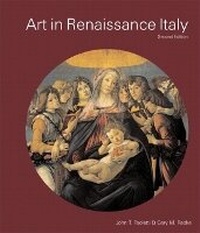
Art in Renaissance Italy
2nd Edition
Published on 12. May 2003
Book
Paperback/Softback
512 pages
978-0-13-091830-7 (ISBN)
Description
For upper-level undergraduate courses in Italian Renaissance Art.
"Art mattered in the Renaissance... People expected painting, sculpture, architecture, and other forms of visual art to have a meaningful effect on their lives," write the authors of this important new look at Italian Renaissance art. A glance at the pages of Art in Renaissance Italy shows at once its freshness and breadth of approach, which includes thorough explanation into how and why works of art, buildings, prints, and other forms of visual production came to be. The authors also discuss how men and women of the Renaissance regarded art and artists, why works of Renaissance art look the way they do, and what this means to us.
Unlike other books on the subject, this one covers not only Florence and Rome, but also Venice and the Veneto, Assisi, Siena, Milan, Pavia, Padua, Mantua, Verona, Ferrara, Urbino, and Naples-each governed in a distinctly different manner, every one with individual, political, and social structures that inevitably affected artistic styles. Spanning more than three centuries, the narrative brings to life the rich tapestry of Italian Renaissance society and the art that is its enduring legacy. Throughout, special features, including textual sources from the period and descriptions of social rituals, evoke and document the people and places of this dynamic age.
"Art mattered in the Renaissance... People expected painting, sculpture, architecture, and other forms of visual art to have a meaningful effect on their lives," write the authors of this important new look at Italian Renaissance art. A glance at the pages of Art in Renaissance Italy shows at once its freshness and breadth of approach, which includes thorough explanation into how and why works of art, buildings, prints, and other forms of visual production came to be. The authors also discuss how men and women of the Renaissance regarded art and artists, why works of Renaissance art look the way they do, and what this means to us.
Unlike other books on the subject, this one covers not only Florence and Rome, but also Venice and the Veneto, Assisi, Siena, Milan, Pavia, Padua, Mantua, Verona, Ferrara, Urbino, and Naples-each governed in a distinctly different manner, every one with individual, political, and social structures that inevitably affected artistic styles. Spanning more than three centuries, the narrative brings to life the rich tapestry of Italian Renaissance society and the art that is its enduring legacy. Throughout, special features, including textual sources from the period and descriptions of social rituals, evoke and document the people and places of this dynamic age.
More details
Edition
2nd edition
Language
English
Place of publication
United States
Publishing group
Pearson Education (US)
Target group
Professional and scholarly
Dimensions
Height: 280 mm
Width: 241 mm
Thickness: 22 mm
Weight
1586 gr
ISBN-13
978-0-13-091830-7 (9780130918307)
Copyright in bibliographic data and cover images is held by Nielsen Book Services Limited or by the publishers or by their respective licensors: all rights reserved.
Schweitzer Classification
Other editions
New editions
John T. Paoletti | Gary M. Radke
Art, Power, and Patronage in Renaissance Italy
Book
08/2005
3rd Edition
Prentice Hall
Unfortunately, price unknown
Article is exhausted; no reprint
Persons
John T. Paoletti is Professor of the History of Art at Wesleyan University in Middletown, Connecticut. Educated at Yale, he has published widely, including Collaboration in Italian Renaissance Art (co-editor and contributor, 1978), The Siena Baptistery Font (1979), and Art as Culture (1986). He was formerly editor-in-chief of The Art Bulletin of the College Art Association in the United States of America.
Gary M. Radke is a Renaissance specialist at Syracuse University and a fellow of the American Academy in Rome. He holds degrees from Syracuse University, Michigan State University, and New York University's Institute of Fine Arts. He is the author of Viterbo: Profile of a Thirteenth-Century Papal Palace (1997) and a guest curator for exhibitions of Italian art at the High Museum of Art, Atlanta, Georgia.
Gary M. Radke is a Renaissance specialist at Syracuse University and a fellow of the American Academy in Rome. He holds degrees from Syracuse University, Michigan State University, and New York University's Institute of Fine Arts. He is the author of Viterbo: Profile of a Thirteenth-Century Papal Palace (1997) and a guest curator for exhibitions of Italian art at the High Museum of Art, Atlanta, Georgia.
Content
Introduction: Art in Context.
Materials and Methods.
1. Traditions and Innovations: The Thirteenth Century.
Venice, Florence, and Siena: Communal Myths and Institutions. ROME: Artists, Popes, and Cardinals Renewing the Church, 1277-c. 1310. Assisi: Papal Influence Outside Rome.
2. Varieties of Style and Patronage: The Early Fourteenth Century.
Padua and Florence: Private Patronage. Florence and Siena: Promoting Church and State. Naples and Milan: Images of Dynasty, Power and Magnificence.
3. Art and Society: The Later Fourteenth Century.
Venice: Images of the State and the Individual. Pisa and Florence: Morality, Judgement, and Crisis. Milan and Pavia: The Visconti. Padua: The Carrara Court.
4. Fashioning Images of Rulership and Authority: The Early Fifteenth Century.
The Courts: Gothic and Classical Inspirations. Florence: Expressions of the Restored Republic. Siena: Renewing the Image of the Commune.
5. Elaborating Local and Classical Traditions: The Mid-Fifteenth Century.
Florence: Civic and Personal Commissions under the Medici. Rome: Re-establishing Papal Power. Venice and the Veneto: Affirmations of Past and Present.
6. Splendor and Magnificence: The Later Fifteenth Century.
The Courts: Art Reflecting the Ruler. Venice: Heir of East and West. Florence: The Golden Age under Lorenzo the Magnificent. Roma Caput Mundi. Milan: The Sforza and a Grand Classical Style.
7. Rivaling Ancient Rome: The Early Sixteenth Century.
Florence: The Renewed Republic. Rome: The Imperial Style under Julius II and the Dissolution of Papal Power under the Medici Popes. Florence II: Return of the Medici. Venice: Vision and Monumentality. Ferrara, Manuta, Parma, and Genoa: Exquisite Delights.
8. Renewing the City: The Mid-Sixteenth Century.
Venice and the Veneto: The City Triumphant. Florence under Cosimo I (1537-74) and His Successors. Roma Restaurata: Paul III (r. 1534-49) and Michelangelo.
9. Innovation and Reform: The Later Sixteenth Century.
The Demands of the Council of Trent. Sixtus V and the Replanning of Rome.
Map of Italy.
Genealogies.
List of Popes.
List of Venetian Doges.
Time Chart.
City Plans.
Glossary.
Bibliography.
Literary Credits, Picture Credits.
Index.
Materials and Methods.
1. Traditions and Innovations: The Thirteenth Century.
Venice, Florence, and Siena: Communal Myths and Institutions. ROME: Artists, Popes, and Cardinals Renewing the Church, 1277-c. 1310. Assisi: Papal Influence Outside Rome.
2. Varieties of Style and Patronage: The Early Fourteenth Century.
Padua and Florence: Private Patronage. Florence and Siena: Promoting Church and State. Naples and Milan: Images of Dynasty, Power and Magnificence.
3. Art and Society: The Later Fourteenth Century.
Venice: Images of the State and the Individual. Pisa and Florence: Morality, Judgement, and Crisis. Milan and Pavia: The Visconti. Padua: The Carrara Court.
4. Fashioning Images of Rulership and Authority: The Early Fifteenth Century.
The Courts: Gothic and Classical Inspirations. Florence: Expressions of the Restored Republic. Siena: Renewing the Image of the Commune.
5. Elaborating Local and Classical Traditions: The Mid-Fifteenth Century.
Florence: Civic and Personal Commissions under the Medici. Rome: Re-establishing Papal Power. Venice and the Veneto: Affirmations of Past and Present.
6. Splendor and Magnificence: The Later Fifteenth Century.
The Courts: Art Reflecting the Ruler. Venice: Heir of East and West. Florence: The Golden Age under Lorenzo the Magnificent. Roma Caput Mundi. Milan: The Sforza and a Grand Classical Style.
7. Rivaling Ancient Rome: The Early Sixteenth Century.
Florence: The Renewed Republic. Rome: The Imperial Style under Julius II and the Dissolution of Papal Power under the Medici Popes. Florence II: Return of the Medici. Venice: Vision and Monumentality. Ferrara, Manuta, Parma, and Genoa: Exquisite Delights.
8. Renewing the City: The Mid-Sixteenth Century.
Venice and the Veneto: The City Triumphant. Florence under Cosimo I (1537-74) and His Successors. Roma Restaurata: Paul III (r. 1534-49) and Michelangelo.
9. Innovation and Reform: The Later Sixteenth Century.
The Demands of the Council of Trent. Sixtus V and the Replanning of Rome.
Map of Italy.
Genealogies.
List of Popes.
List of Venetian Doges.
Time Chart.
City Plans.
Glossary.
Bibliography.
Literary Credits, Picture Credits.
Index.