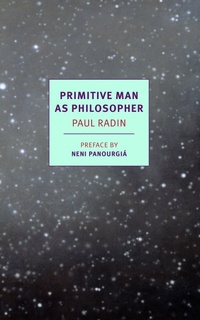
Primitive Man As Philosopher
Published on 21. February 2017
Book
Paperback/Softback
496 pages
978-1-59017-768-6 (ISBN)
Description
Anthropology is a science whose most significant discoveries have come when it has taken its bearings from literature, and what makes Paul Radin’s Primitive Man as Philosopher a seminal piece of anthropological inquiry is that it is also a book of enduring wonder. Writing in the 1920s, when anthropology was still young, Radin set out to show that “primitive” cultures are as intellectually sophisticated and venturesome as any of their “civilized” counterparts. The basic questions about the structure of the natural world, the nature of right and wrong, and the meaning of life and death, as well as basic methods of considering the truth or falsehood of the answers those questions give rise to, are, Radin argues, recognizably consistent across the whole range of human societies. He rejects both the romantic myth of the noble savage and the rationalist dismissal of the primitive mind as essentially undeveloped, averring that the anthropologist and the anthropologist’s subject meet on the same philosophical ground, and only when that is acknowledged can anthropology begin in earnest. The argument is clearly and forcibly made in pages that also contain an extraordinary collection of poems, proverbs, myths, and tales from a host of different cultures, making Primitive Man as Philosopher not only a lasting contribution to the discipline of anthropology but a unique, rich, and fascinating anthology, one that both illuminates and enlarges our imagination of the human.
More details
Edition
Main
Language
English
Place of publication
New York
United States
Dimensions
Height: 200 mm
Width: 126 mm
Thickness: 32 mm
Weight
518 gr
ISBN-13
978-1-59017-768-6 (9781590177686)
Copyright in bibliographic data and cover images is held by Nielsen Book Services Limited or by the publishers or by their respective licensors: all rights reserved.
Schweitzer Classification
Other editions
Additional editions