

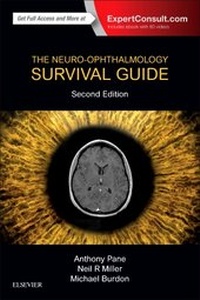
The Neuro-Ophthalmology Survival Guide
2nd Edition
Published on 25. September 2017
Book
Paperback/Softback
408 pages
978-0-7020-7267-3 (ISBN)
Description
This book is a practical, symptom-based, 'how-to' guide to neuro-ophthalmology and acquired strabismus for all trainee and practising ophthalmologists and optometrists. Each chapter focusses on a specific clinical symptom and includes an introduction to the clinical assessment of a symptom; an examination checklist; a management flowchart to be followed; clinical diagnostic criteria checklists; and further information on the diseases that can cause the symptom with a brief discussion of appropriate management.
A practical and accessible handbook for the ophthalmologist or optometrist without a specialist interest in neuro-ophthalmology and acquired strabismus.
The text simplifies a subject which is often a cause of litigation against practising ophthalmologists and exam failure for trainees and residents.
The book aids diagnosis in a field in which mistakes may lead to medico-legal problems, e.g. brain tumours presenting with blurred or double vision.
The book leads the reader from the symptom, through a series of simple but safe flowcharts and check-lists, to the diagnosis or the tests which need to be ordered.
The first chapter presents 20 'golden rules' to keep you and your patients out of trouble.
A revised text with some new illustrations brings this highly-praised book up to date.
New online videos demonstrate abnormal eye movements, eyelid problems and pupil abnormalities.
A practical and accessible handbook for the ophthalmologist or optometrist without a specialist interest in neuro-ophthalmology and acquired strabismus.
The text simplifies a subject which is often a cause of litigation against practising ophthalmologists and exam failure for trainees and residents.
The book aids diagnosis in a field in which mistakes may lead to medico-legal problems, e.g. brain tumours presenting with blurred or double vision.
The book leads the reader from the symptom, through a series of simple but safe flowcharts and check-lists, to the diagnosis or the tests which need to be ordered.
The first chapter presents 20 'golden rules' to keep you and your patients out of trouble.
A revised text with some new illustrations brings this highly-praised book up to date.
New online videos demonstrate abnormal eye movements, eyelid problems and pupil abnormalities.
Reviews / Votes
"This is a great book to have close to your consulting room" --2018 BMA Awards: Highly Commended, Surgical SpecialtiesReview of 2nd Edition: New Zealand Optics 2018
"I anticipated this small text book would be a good read and live up to expectations ... I was not disappointed, especially after reading the first chapter 'Staying out of trouble' which lists 20 neuro "rules" to keep you out of strife.
This is a short text book designed to be of everyday practical use for ophthalmologists, trainees, optometrists and neurologists, based on clinical symptoms, examination checklists, management flowcharts and referral guidelines.
The chapter on 'Double vision' is a wonderful synthesis of an extremely complex topic, but presented in an easily understandable and clinically significant format.
One of my favourite chapters, however, dealt with 'Seeing things'...and reminds the reader that if the patient presents with visual phenomena that are not consistent with visible intraocular disease processes then referral to a neuro-ophthalmologist or a neurologist is appropriate.
This is a great book to have close to your consulting room. It comes with an eBook version which is downloadable to your electronic screen ensuring great portability and a fantastic set of clinical videos." --Dr Stephen Best
Reviews of the First Edition:
This is a well-organized and well-illustrated text designed for the comprehensive ophthalmologist as a practical reference for addressing most neuro-ophthalmologic problems. The organization of the book by patient symptoms and signs makes it very easy for the reader to find relevant information. The text is comprehensive but succinct. This is an excellent, clinically relevant book essential to any physician who evaluates patients with potential neuro-ophthalmologic problems. --Journal of Neuro-Ophthalmology
The Neuro-Ophthalmology Survival Guide is a valuable asset in guiding the clinician through the diagnosis, potential management, or referral of the patient with neuro-ophthalmic signs and symptoms. Each chapter is enhanced by color clinical photos, visual fields, and imaging results of clinical cases that are examples of the major disorders associated with each chapter topic. It is an excellent clinical guide to the practicing optometrist for the clinical evaluation and management of adults presenting with the signs and symptoms of neuro-ophthalmic symptoms." --Optometry & Vision Science
The Neuro-Ophthalmology Survival Guide is an excellent clinical guide for ophthalmologists, orthoptists and undergraduate orthoptic students. This is a book that should be kept available in clinic for quick reference. --British and Irish Orthoptic Journal
More details
Edition
2nd edition
Language
English
Place of publication
London
United Kingdom
Target group
College/higher education
Professional and scholarly
Illustrations
Approx. 411 illustrations (275 in full color); Illustrations
Dimensions
Height: 234 mm
Width: 156 mm
Weight
680 gr
ISBN-13
978-0-7020-7267-3 (9780702072673)
Copyright in bibliographic data and cover images is held by Nielsen Book Services Limited or by the publishers or by their respective licensors: all rights reserved.
Schweitzer Classification
Other editions
New editions
Anthony Pane | Neil R. Miller | Michael Burdon
The Neuro-Ophthalmology Survival Guide
Book
07/2024
3rd Edition
Churchill Livingstone
€61.95
Shipment within 15-20 days
Additional editions
Anthony Pane MBBS MMedSc FRANZCO | Neil R. Miller MD FACS | Michael Burdon BSc MB BS MRCP FRCOphth
The Neuro-Ophthalmology Survival Guide E-Book
The Neuro-Ophthalmology Survival Guide E-Book
E-Book
07/2017
2nd Edition
Elsevier
€43.99
Available for download
Previous edition
Anthony Pane | Mike Burdon | Neil R. Miller
The Neuro-ophthalmology Survival Guide
The Survival Guide for Every Opthalmologist
Book
03/2007
Mosby
€78.17
Article exhausted; check for reprint
Persons
Author
Neuro-Ophthalmologist, Queensland Eye Institute, Brisbane, Australia
Professor of Ophthalmology, Neurology and Neurosurgery, Frank B Walsh Professor of Neuro-ophthalmology, Wilmer Eye Institute, Johns Hopkins Hospital, Baltimore, MD, USA
Consultant Neuro-Ophthalmologist, Selly Oak Hospital, Birmingham, UK
Content
Staying out of trouble
Blurred vision or field loss
Swollen disc(s), normal vision
Transient visual loss
Double vision
'Seeing things'
Abnormal movement or orientation of the visual world
Abnormal eye movements without visual symptoms
Unequal pupils
Ptosis
Facial weakness or spasm
Unexplained eye pain, orbital pain or headache
Neuro-ophthalmic history and examination.
Blurred vision or field loss
Swollen disc(s), normal vision
Transient visual loss
Double vision
'Seeing things'
Abnormal movement or orientation of the visual world
Abnormal eye movements without visual symptoms
Unequal pupils
Ptosis
Facial weakness or spasm
Unexplained eye pain, orbital pain or headache
Neuro-ophthalmic history and examination.