

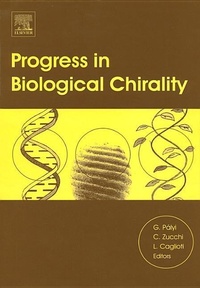
Progress in Biological Chirality
Published on 21. September 2004
Book
Hardback
444 pages
978-0-08-044396-6 (ISBN)
Description
Following on from Advances in BioChirality, Progress in Biological Chirality provides a unique summary and review of the most recent developments in the field of biochirality. Living organisms use only one enantiomer of chiral molecules in the majority of biologically important processes. The exact origin and mechanisms for this surprising selectivity are not yet known. This book discusses current research aimed at identifying the scientific reasons that may contribute to this phenomenon.
Progress in Biological Chirality takes an interdisciplinary approach to this exciting field, covering a wide range of topics, such as, theory, palaeontology and food technology, to name but a few. This book presents findings via a broad spectrum of scientific approaches making it an excellent overview of Biological Chirality, suitable for postgraduate students, practitioners and researchers in the field of chemistry, biochemistry, biology, palaeontology, and food science with an interest in Chirality.
Progress in Biological Chirality takes an interdisciplinary approach to this exciting field, covering a wide range of topics, such as, theory, palaeontology and food technology, to name but a few. This book presents findings via a broad spectrum of scientific approaches making it an excellent overview of Biological Chirality, suitable for postgraduate students, practitioners and researchers in the field of chemistry, biochemistry, biology, palaeontology, and food science with an interest in Chirality.
Reviews / Votes
"The book gives a many-sided and very concentrated up-to-date picture of biological chirality. This book offers broad information for interested specialists, as well as for scientists who are working actively at the border of stereo-chemistry and biological chemistry." --Vladik A. Avetisov, MENDELEEV COMMUNICATIONS, No. 6, 2004More details
Language
English
Place of publication
Oxford
United Kingdom
Publishing group
Elsevier Science & Technology
Target group
Professional and scholarly
suitable for postgraduate students, practitioners and researchers in the field of biochemistry.
Product notice
sewn/stitched
Cloth over boards
Dimensions
Height: 242 mm
Width: 171 mm
Thickness: 22 mm
Weight
925 gr
ISBN-13
978-0-08-044396-6 (9780080443966)
Copyright in bibliographic data and cover images is held by Nielsen Book Services Limited or by the publishers or by their respective licensors: all rights reserved.
Schweitzer Classification
Other editions
Additional editions

Gyula Palyi | Gyula Palyi | Claudia Zucchi
Progress in Biological Chirality
E-Book
12/2004
Elsevier
€295.00
Available for download
Persons
Dr. Palyi is a Professor (Retired) of Chemistry of the University of Modena and Reggio Emilia (Modena, Italy) and member of the (Italian) National Academy of Science as well as other Academies. He has authored and edited 5 books on chemistry, patents, and 250 publications cited more than 2000 times by other authors. He has been the chief organizer of the International Symposia on Biological Chirality (since 1998) and of the International Symposia on the Soai Reaction (since 2008). Dr. Zucchi is Coordinator and Lecturer of the masters course in Handling of Chemical Substances (REACH & CLP) at the University of Modena and Reggio Emilia (Modena, Italy), under the patronage of the (Italian) Ministry of Health, as well as Tutor or Co-Tutor of Masters Theses at this University. She also served as Chair of the Scientific Committee of the 3rd International Symposium on the Soai Reaction and Related Topic (2015). She earned her MA (Diploma) in Chemistry (1989), PhD in Chemistry (1994) both at the University of Modena. Dr. Zucchi is the co-editor of 5 books (including 3 with Elsevier) and is author of 84 publications with over 700 citations.
Content
Origin of Biomacromolecular Chirality: In Search of Evolutional Dynamics.
Carbon Monoxide Clusters in the Formation of D-Sugars, L-Amino Acids, Ribonucleotides and Deoxyribonucleic Acids in Prebiotic Molecular Evolution on Earth.
Molecular Clockworks as Tools for Biological Chirality.
Diastereomers Do, What They Should Not.
Molecular Origins of Life: Homochirality as a Cosequence ot the Dynamic Co-Emergence and Co-Evolution of Peptides and Chemical Energetics.
Use of Amino Acids and Amino Acid Racemization for Age Determination in Archaeometry.
Enantiomeric Enrichment in Nonracemic Conglomerates. A Possible Component of the Solution to the Problem of the Origin of.
Genetic Code: Self Referential and Functional Model.
Specific Symmetry of Living Systems.
Chiral Crystal Faces of Common Rock-Forming Minerals.
Origin of Biomolecules - Origin of Homochirality.
Implication of Polya's Urn Experiment and Celebral Lateralization.
Theory of Hierarchical Homochirality.
Possible Mechanisms for Production of Larger Enantiomeric Excess.
Sugar C-Sulfonic Acids.
Racemization of Amino Acids in Hydrothermal Environments: a Contribution of Temperature Gradient.
The Theory of Chirality Induction and Chirality Reduction in Biomolecules.
The Theory of Chirality Induction and Chirality Reduction in Biomolecules.
Transfer of the Chiral Information of Natural Amino Acids in Biomimetic Organic Syntheses.
CD and Visual Science.
Volatile Components of Food Aroma: Biosynthesis and Biotransformations.
Chiral Spaces in Encapsulation Complexes.
Serum Albumin and Natural Products.
Chiral Spaces in Encapsulation Complexes.
Selection in the Model Process of Prebiotic Synthesis of RNA Using Metal Ion Catalyst and Template.
Different Internal Gradients for L and D Homochiral Solutions in Homogeneous Magnetic Fields.
Tryptophanase Activity on D-Tryptophan.
Deviation from Physical Identity Between D- and L-tyrosine.
Occurence of D-Amino Acids in Food.
Asymmetric Autocatalysis, Absolute Asymmetric Synthesis and Origin of Homochirality of Biomolecules.
Deviation from Chemical Identity Between D and L Tyrosine?
Charophyte Gyrogonites, the Result of Enantioselective Influence 250 Million Years Ago.
Chirality Transfer in the Formation of the Indole Alkaloids Derived from Secologanin.
Carbon Monoxide Clusters in the Formation of D-Sugars, L-Amino Acids, Ribonucleotides and Deoxyribonucleic Acids in Prebiotic Molecular Evolution on Earth.
Molecular Clockworks as Tools for Biological Chirality.
Diastereomers Do, What They Should Not.
Molecular Origins of Life: Homochirality as a Cosequence ot the Dynamic Co-Emergence and Co-Evolution of Peptides and Chemical Energetics.
Use of Amino Acids and Amino Acid Racemization for Age Determination in Archaeometry.
Enantiomeric Enrichment in Nonracemic Conglomerates. A Possible Component of the Solution to the Problem of the Origin of.
Genetic Code: Self Referential and Functional Model.
Specific Symmetry of Living Systems.
Chiral Crystal Faces of Common Rock-Forming Minerals.
Origin of Biomolecules - Origin of Homochirality.
Implication of Polya's Urn Experiment and Celebral Lateralization.
Theory of Hierarchical Homochirality.
Possible Mechanisms for Production of Larger Enantiomeric Excess.
Sugar C-Sulfonic Acids.
Racemization of Amino Acids in Hydrothermal Environments: a Contribution of Temperature Gradient.
The Theory of Chirality Induction and Chirality Reduction in Biomolecules.
The Theory of Chirality Induction and Chirality Reduction in Biomolecules.
Transfer of the Chiral Information of Natural Amino Acids in Biomimetic Organic Syntheses.
CD and Visual Science.
Volatile Components of Food Aroma: Biosynthesis and Biotransformations.
Chiral Spaces in Encapsulation Complexes.
Serum Albumin and Natural Products.
Chiral Spaces in Encapsulation Complexes.
Selection in the Model Process of Prebiotic Synthesis of RNA Using Metal Ion Catalyst and Template.
Different Internal Gradients for L and D Homochiral Solutions in Homogeneous Magnetic Fields.
Tryptophanase Activity on D-Tryptophan.
Deviation from Physical Identity Between D- and L-tyrosine.
Occurence of D-Amino Acids in Food.
Asymmetric Autocatalysis, Absolute Asymmetric Synthesis and Origin of Homochirality of Biomolecules.
Deviation from Chemical Identity Between D and L Tyrosine?
Charophyte Gyrogonites, the Result of Enantioselective Influence 250 Million Years Ago.
Chirality Transfer in the Formation of the Indole Alkaloids Derived from Secologanin.