

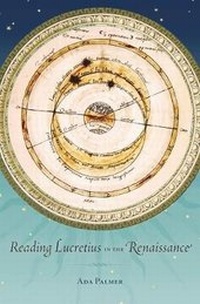
Reading Lucretius in the Renaissance
Published on 13. October 2014
Book
Hardback
416 pages
978-0-674-72557-7 (ISBN)
Description
After its rediscovery in 1417, Lucretius's Epicurean didactic poem De Rerum Natura threatened to supply radicals and atheists with the one weapon unbelief had lacked in the Middle Ages: good answers. Scholars could now challenge Christian patterns of thought by employing the theory of atomistic physics, a sophisticated system that explained natural phenomena without appeal to divine participation, and argued powerfully against the immortality of the soul, the afterlife, and a creator God.
Ada Palmer explores how Renaissance readers, such as Machiavelli, Pomponio Leto, and Montaigne, actually ingested and disseminated Lucretius, and the ways in which this process of reading transformed modern thought. She uncovers humanist methods for reconciling Christian and pagan philosophy, and shows how ideas of emergent order and natural selection, so critical to our current thinking, became embedded in Europe's intellectual landscape before the seventeenth century. This heterodoxy circulated in the premodern world, not on the conspicuous stage of heresy trials and public debates, but in the classrooms, libraries, studies, and bookshops where quiet scholars met the ideas that would soon transform the world. Renaissance readers-poets and philologists rather than scientists-were moved by their love of classical literature to rescue Lucretius and his atomism, thereby injecting his theories back into scientific discourse.
Palmer employs a new quantitative method for analyzing marginalia in manuscripts and printed books, exposing how changes in scholarly reading practices over the course of the sixteenth century gradually expanded Europe's receptivity to radical science, setting the stage for the scientific revolution.
Ada Palmer explores how Renaissance readers, such as Machiavelli, Pomponio Leto, and Montaigne, actually ingested and disseminated Lucretius, and the ways in which this process of reading transformed modern thought. She uncovers humanist methods for reconciling Christian and pagan philosophy, and shows how ideas of emergent order and natural selection, so critical to our current thinking, became embedded in Europe's intellectual landscape before the seventeenth century. This heterodoxy circulated in the premodern world, not on the conspicuous stage of heresy trials and public debates, but in the classrooms, libraries, studies, and bookshops where quiet scholars met the ideas that would soon transform the world. Renaissance readers-poets and philologists rather than scientists-were moved by their love of classical literature to rescue Lucretius and his atomism, thereby injecting his theories back into scientific discourse.
Palmer employs a new quantitative method for analyzing marginalia in manuscripts and printed books, exposing how changes in scholarly reading practices over the course of the sixteenth century gradually expanded Europe's receptivity to radical science, setting the stage for the scientific revolution.
Reviews / Votes
The great atomist poet has finally attracted the attention that students of modern culture should have given him long ago. Seeing so much new and innovative work on offer, readers with questions about Lucretius in the Renaissance will take Ada Palmer's book as the new standard: Reading Lucretius is our best guide to a thinker whose ideas lit the flames of modernity. -- Brian Copenhaver, University of California, Los Angeles This is a brilliant scholarly work that is deeply relevant to today. In exploring the influence of Lucretius on the Renaissance, Ada Palmer shows how the modern world became open to the ramifications of mechanical science. More broadly, her book is a fascinating look at how ideas ripple and spread. -- Walter IsaacsonMore details
Series
Language
English
Place of publication
Cambridge, Mass
United States
Target group
Professional and scholarly
Illustrations
26 halftones, 6 tables
Dimensions
Height: 235 mm
Width: 156 mm
ISBN-13
978-0-674-72557-7 (9780674725577)
Copyright in bibliographic data and cover images is held by Nielsen Book Services Limited or by the publishers or by their respective licensors: all rights reserved.
Schweitzer Classification
Other editions
Additional editions
Ada Palmer
Reading Lucretius in the Renaissance
E-Book
10/2014
1st Edition
Harvard University Press
€66.59
Available for download
Person
Ada Palmer is Assistant Professor of History at the University of Chicago.