

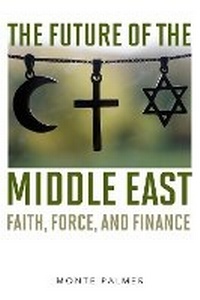
The Future of the Middle East
Faith, Force, and Finance
Published on 24. November 2018
Book
Hardback
216 pages
978-1-5381-1788-0 (ISBN)
Description
This deeply informed book considers the intertwined roles of faith, force, and finance in shaping the modern Middle East. Leading expert Monte Palmer argues that these factors will continue to have a major impact on the Middle East as the United States and other major powers increasingly find themselves embedded in conflicts that defy resolution. Palmer considers the lessons learned from past and current conflicts: the limits of using tyrants as avenues of force; the transformation of faith into force; the root causes of terror; and the perils of a global environment that threatens a new cold war between Russia and the United States, a war of religions between the Abrahamic faiths, and a war of terror that is rapidly becoming global. As he clearly shows, the relative dominance of faith, force, or finance is always shifting, depending on time, place, and local conditions. Drawing on cases from ten critical periods, from World War I through the current chaos and stalemate, the author offers constructive paths forward for building a Middle East of peace and stability.
Reviews / Votes
From the burdens of history to the despotism that afflicts the region, Monte Palmer knows the Middle East and calls it like it is. Palmer makes clear that the United States must rein in its regional allies and prevail on them to coexist peacefully with moderate Islam in order to break the chain of terror. -- Hilal Khashan, American University of Beirut Powers interested in the Middle East's natural resources have for a century exacerbated its instability to ensure a global energy hegemony. Monte Palmer explains why an intrinsically unstable region has been made even more unstable. He highlights the toxic mix of local, cultural, and revolutionary turmoil and the cynical interventions of global powers-who have chosen to do what they could, rather than what they should. His excellent analysis shows why it is essential for us to understand this crisis-riven region. -- Tony Allan, SOAS London and King's College London Monte Palmer has developed an important framework to evaluate the Middle East's complex ongoing turmoil. As he analyzes his three concepts of faith, force, and finance, he adds a fourth essential dimension-the role of major powers in the game of force. His indispensable book provides a critical assessment of the Middle East at large. -- Michel Nehme, Notre Dame University LouaizeMore details
Language
English
Place of publication
United States
Publishing group
Bloomsbury Publishing Plc
Illustrations
1 Tables
Dimensions
Height: 238 mm
Width: 157 mm
Thickness: 22 mm
Weight
463 gr
ISBN-13
978-1-5381-1788-0 (9781538117880)
Copyright in bibliographic data and cover images is held by Nielsen Book Services Limited or by the publishers or by their respective licensors: all rights reserved.
Schweitzer Classification
Other editions
Additional editions
E-Book
11/2018
1st Edition
Rowman & Littlefield
€34.99
Available for download
E-Book
11/2018
1st Edition
Rowman & Littlefield
€34.99
Available for download
Person
Monte Palmer is professor emeritus of government at Florida State University, where he directed the Middle East Studies Center. He was also director of the Center for Arab and Middle Eastern Studies at the American University of Beirut from 1998 to 2000. His books include The Arab Psyche and American Frustrations, Politics in the Middle East, and Islamic Extremism: Causes, Diversity, and Challenges.
Content
Preface
1 The Power of Faith, Force, and Finance
The Power of Faith
The Power of Force
The Power of Finance
Arms Purchases as Power
Gifts as Soft Influence and Image Building
Finance as the Key to Regional Control
Finance as Alliance Building
Finance as a Social Contract
Using Finance to Promote Faith and Force
The United States' Soft Power in the Middle East
Between Faith, Force, and Finance
2 World War I Sets the Stage for the Modern Middle East (1914-1940)
Turkey: Force versus Islam
Egypt: The Muslim Brotherhood Pits Popular Islam against Colonialism
Israel: Palestine Becomes a Homeland for the Jews
Iraq: British Control of the Iraqi Shia
Lessons Learned
Faith
Force
Finance
The Balance of Faith, Force, and Finance
3 World War II Reshapes the Middle East (1940-1967)
Egypt and Arab Unity: Using Charisma, Nationalism, and Socialism as Faith Alternatives to Islam
Israel Reborn: War, Peace, and Biblical Prophecy
Saudi Arabia: Tribal Force, Islamic Faith, and the Country's Creation
Iran: The Danger of Puppet Rulers
Lessons Learned
4 A Surge of Religious Extremism (1967-1980)
Egypt: Arab Nationalism Collapses and Religious
Extremism Surges
Israel: Force Gives Way to Extremism
Saudi Arabia: Finance to the Fore
Syria and Iraq: Minority Rule
Iraq: Same Formula, Different Faith
Lessons Learned
5 Religious Violence Unleashed (1975-1990)
Egypt: The Rise of Salafi-Jihadist Terror and the Muslim Brotherhood
The Peaceful Salafi and the Salafi-Jihadists
Salafi-Jihadists versus the Muslim Brotherhood: How They Differ
Saudi Arabia: The Expansion of Salafi Doctrine
Iran: The First Islamic State in the Modern Era
Using Faith to Build a Nation
Transforming Faith into Military Force
Lessons Learned
6 The Era of Peace, Stability, and Illusion (1990-2000)
How the Collapse of the Soviet Union Fueled Islamic Extremism in the Middle East
Control of the Middle Eastern Tyrants
The Passing of the Ayatollah Khomeini and the Transfer of Faith
The Illusion of Peace between the Israelis and the Palestinians
The Formation of International Islamic Terrorist Networks
The Turabi Terrorist Network
Lessons Learned
7 The Era of Global Terror and Counter-Terror (2000-2010)
Afghanistan and the Restructuring of Bin-Laden's Al-Qaeda Network
The War on Terror Expands into Iraq
Israel and the War on Terror
Saudi Arabia and the War of Terror
Lessons Learned
8 The Era of Islamic Rule (2010-2013)
Islam Lite: The Turkish Model
Egypt: Why Rule by the Muslim Brotherhood Failed
The Islamic State of Iraq and Syria (ISIS)
Is Iran a Greater Threat than ISIS?
Lessons Learned
9 The Old Order Strikes Back (2017)
The United States Forges an Alliance of Peace and Stability to Build a New Middle East
Turkey as a Link between the Past and Present
Israel Strikes Back at the New Islamic Order
Egypt: The United States Declares Coups the First Step toward Democracy
Saudi Arabia: Can the Protector of Islam Protect Itself from Islam?
Lessons Learned
10 Solutions to an Era of Stalemate (Post-2017)
The Stairway to Terror
Step 1. Festering Frustration
Step 2: Despair Breeds Violent Groups
Step 3: Seeking and Risk Taking
Step 4: Weeding Out the Chaff
Step 5: Becoming a Warrior for God
Step 6: Consolidation and Globalization
The Failure of Prevailing Counter-Terror
Harsh Realities and Lessons Learned
Five Vital Problems to Be Addressed
Stopping the Terrorists
Preventing the Despair Base of Terror
Preventing Religious Extremists from Exploiting the Despair of the Masses
Working with Islam
Resolving Conflicts that Trigger Violence in the Middle East
Solutions
Stop the Terror without Accentuating the Causes and Facilitators of Terror
Prevent the Despair Base of Terror
Use Moderate Islam as a Solution to Extremism
Integrate Muslims into the World Community
Resolve Conflicts Triggering Violence in the Middle East
Ultimate Solutions
Works Cited
About the Author
1 The Power of Faith, Force, and Finance
The Power of Faith
The Power of Force
The Power of Finance
Arms Purchases as Power
Gifts as Soft Influence and Image Building
Finance as the Key to Regional Control
Finance as Alliance Building
Finance as a Social Contract
Using Finance to Promote Faith and Force
The United States' Soft Power in the Middle East
Between Faith, Force, and Finance
2 World War I Sets the Stage for the Modern Middle East (1914-1940)
Turkey: Force versus Islam
Egypt: The Muslim Brotherhood Pits Popular Islam against Colonialism
Israel: Palestine Becomes a Homeland for the Jews
Iraq: British Control of the Iraqi Shia
Lessons Learned
Faith
Force
Finance
The Balance of Faith, Force, and Finance
3 World War II Reshapes the Middle East (1940-1967)
Egypt and Arab Unity: Using Charisma, Nationalism, and Socialism as Faith Alternatives to Islam
Israel Reborn: War, Peace, and Biblical Prophecy
Saudi Arabia: Tribal Force, Islamic Faith, and the Country's Creation
Iran: The Danger of Puppet Rulers
Lessons Learned
4 A Surge of Religious Extremism (1967-1980)
Egypt: Arab Nationalism Collapses and Religious
Extremism Surges
Israel: Force Gives Way to Extremism
Saudi Arabia: Finance to the Fore
Syria and Iraq: Minority Rule
Iraq: Same Formula, Different Faith
Lessons Learned
5 Religious Violence Unleashed (1975-1990)
Egypt: The Rise of Salafi-Jihadist Terror and the Muslim Brotherhood
The Peaceful Salafi and the Salafi-Jihadists
Salafi-Jihadists versus the Muslim Brotherhood: How They Differ
Saudi Arabia: The Expansion of Salafi Doctrine
Iran: The First Islamic State in the Modern Era
Using Faith to Build a Nation
Transforming Faith into Military Force
Lessons Learned
6 The Era of Peace, Stability, and Illusion (1990-2000)
How the Collapse of the Soviet Union Fueled Islamic Extremism in the Middle East
Control of the Middle Eastern Tyrants
The Passing of the Ayatollah Khomeini and the Transfer of Faith
The Illusion of Peace between the Israelis and the Palestinians
The Formation of International Islamic Terrorist Networks
The Turabi Terrorist Network
Lessons Learned
7 The Era of Global Terror and Counter-Terror (2000-2010)
Afghanistan and the Restructuring of Bin-Laden's Al-Qaeda Network
The War on Terror Expands into Iraq
Israel and the War on Terror
Saudi Arabia and the War of Terror
Lessons Learned
8 The Era of Islamic Rule (2010-2013)
Islam Lite: The Turkish Model
Egypt: Why Rule by the Muslim Brotherhood Failed
The Islamic State of Iraq and Syria (ISIS)
Is Iran a Greater Threat than ISIS?
Lessons Learned
9 The Old Order Strikes Back (2017)
The United States Forges an Alliance of Peace and Stability to Build a New Middle East
Turkey as a Link between the Past and Present
Israel Strikes Back at the New Islamic Order
Egypt: The United States Declares Coups the First Step toward Democracy
Saudi Arabia: Can the Protector of Islam Protect Itself from Islam?
Lessons Learned
10 Solutions to an Era of Stalemate (Post-2017)
The Stairway to Terror
Step 1. Festering Frustration
Step 2: Despair Breeds Violent Groups
Step 3: Seeking and Risk Taking
Step 4: Weeding Out the Chaff
Step 5: Becoming a Warrior for God
Step 6: Consolidation and Globalization
The Failure of Prevailing Counter-Terror
Harsh Realities and Lessons Learned
Five Vital Problems to Be Addressed
Stopping the Terrorists
Preventing the Despair Base of Terror
Preventing Religious Extremists from Exploiting the Despair of the Masses
Working with Islam
Resolving Conflicts that Trigger Violence in the Middle East
Solutions
Stop the Terror without Accentuating the Causes and Facilitators of Terror
Prevent the Despair Base of Terror
Use Moderate Islam as a Solution to Extremism
Integrate Muslims into the World Community
Resolve Conflicts Triggering Violence in the Middle East
Ultimate Solutions
Works Cited
About the Author