

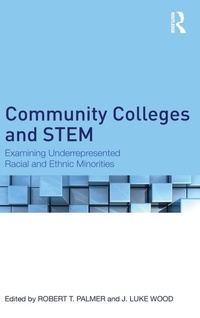
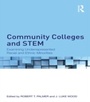
Community Colleges and STEM
Examining Underrepresented Racial and Ethnic Minorities
1st Edition
Published on 5. June 2013
Book
Hardback
248 pages
978-0-415-82110-0 (ISBN)
Description
As United States policymakers and national leaders are increasing their attention to producing workers skilled in science, technology, engineering, and mathematics (STEM), community colleges are being called on to address persistence of minorities in these disciplines. In this important volume, contributors discuss the role of community colleges in facilitating access and success to racial and ethnic minority students in STEM. Chapters explore how community colleges can and do facilitate the STEM pipeline, as well as the experiences of these students in community college, including how psychological factors, developmental coursework, expertiential learning, and motivation affect student success. Community Colleges and STEM ultimately provides recommendations to help increase retention and persistence. This important book is a crucial resource for higher education institutions and community colleges as they work to advance success among racial and ethnic minorities in STEM education.
Reviews / Votes
The book Community Colleges And Stem: Examining Underrepresented Racial And Ethnic Minorities by R. T. Palmer & J. L. Wood, emphasizes various aspects of the role of community colleges in promoting URM students success in STEM. This book advances the discourse about enrollment, persistence and achievement for URM students in STEM as well as promising strategies that can enhance URM students' academic achievement and expereinces at community colleges. - Yu "April" Chen, Postdoctoral Research Associate, Iowa State UniversityMore details
Language
English
Place of publication
London
United Kingdom
Publishing group
Taylor & Francis Ltd
Target group
College/higher education
Product notice
sewn/stitched
Cloth over boards
Illustrations
19 s/w Tabellen
19 Tables, black and white
Dimensions
Height: 231 mm
Width: 155 mm
Thickness: 18 mm
Weight
476 gr
ISBN-13
978-0-415-82110-0 (9780415821100)
Copyright in bibliographic data and cover images is held by Nielsen Book Services Limited or by the publishers or by their respective licensors: all rights reserved.
Schweitzer Classification
Other editions
Additional editions
Robert T. Palmer | J. Luke Wood
Community Colleges and STEM
Examining Underrepresented Racial and Ethnic Minorities
Book
12/2016
1st Edition
Routledge
€58.00
Shipment within 10-20 days
Robert T. Palmer | J. Luke Wood
Community Colleges and STEM
Examining Underrepresented Racial and Ethnic Minorities
Book
12/2013
Routledge
€124.79
The article will not be published
Robert T. Palmer | J. Luke Wood
Community Colleges and STEM
Examining Underrepresented Racial and Ethnic Minorities
E-Book
07/2013
1st Edition
Routledge
€59.49
Available for download
Robert T. Palmer | J. Luke Wood
Community Colleges and STEM
Examining Underrepresented Racial and Ethnic Minorities
E-Book
07/2013
1st Edition
Routledge
€59.49
Available for download
Persons
Robert T. Palmer is Assistant Professor of Student Affairs at the State University of New York-Binghamton, USA.
J. Luke Wood is Assistant Professor of Administration, Rehabilitation, and Postsecondary Education at San Diego State University, USA.
J. Luke Wood is Assistant Professor of Administration, Rehabilitation, and Postsecondary Education at San Diego State University, USA.
Content
Part I: Pathways to Success: The Role of Community Colleges in Promoting Access to Minorities in STEM
Chapter 1: Community Colleges and Underrepresented Racial and Ethnic Minorities in STEM Education: A National Picture, Xueli Wang
Chapter 2: The Impact of State Policy on Community College STEM Programs, Pamela Eddy and Tiffany Pugh
Chapter 3: The Need for Integrated Workforce Development Systems to Broaden the Participation of Underrepresented Students in STEM-related Fields, Victor Hernandez-Gantes & Edward C. Fletcher Jr
Part II: A New Dimension to the Discourse on Minority Students, STEM, and Community Colleges
Chapter 4: An Expectancy-Value Model for the STEM Persistence of Ninth Grade Underrepresented Minority Students, Lori Andersen & Thomas J. Ward
Chapter 5: The Effect of Non-Cognitive Predictors on Academic Integration Measures: A Multinomial Analysis of STEM Students of Color in the Community College, Marissa Vasquez Urias, Royel M. Johnson, & J. Luke Wood
Chapter 6: STEMming the Tide: Psychological Factors Influencing Racial and Ethnic Minority Students' Success in STEM at Community Colleges, Terrell L. Strayhorn, Michael Steven Williams, Derrick L. Tillman-Kelly, & Marjorie Dorime-Williams
Chapter 7: The Propensity to Avoid Developmental Math in Community College: A Focus on Minority Students, Bobbie Everett Frye & Kelly D. Smith
Chapter 8: Moving Beyond the Barrier of Mathematics and Engaging Culturally Relevant Pedagogy in the Classroom for Racial and Ethnic Minority STEM Students in Community Colleges, Denise Yull
Part 3: Examining the Experiences of Minority Students in Community Colleges: Diverse Contexts Chapter 9: Minority Serving Community Colleges and the Production of STEM Associate Degrees, Frances King Stage, Ginelle John, Valerie C. Lundy-Wagner & Katherine Mary Conway
Chapter 10: Creating Successful Pathways for Asian Americans and Pacific Islander Community College Students (AAPIs) in STEM, Dina C. Maramba
Chapter 11: Constraints and Opportunities for Practitioner Agency in STEM Programs in Hispanic Serving Community Colleges, Megan M. Chase, Estela Mara Bensimon, Linda Shieh, Tiffany Jones, & Alicia C. Dowd
Chapter 12: Achieving Success: A Model of Success for Black Males in STEM at Community Colleges, Robert T. Palmer & Zachary M. DuBord
Chapter 1: Community Colleges and Underrepresented Racial and Ethnic Minorities in STEM Education: A National Picture, Xueli Wang
Chapter 2: The Impact of State Policy on Community College STEM Programs, Pamela Eddy and Tiffany Pugh
Chapter 3: The Need for Integrated Workforce Development Systems to Broaden the Participation of Underrepresented Students in STEM-related Fields, Victor Hernandez-Gantes & Edward C. Fletcher Jr
Part II: A New Dimension to the Discourse on Minority Students, STEM, and Community Colleges
Chapter 4: An Expectancy-Value Model for the STEM Persistence of Ninth Grade Underrepresented Minority Students, Lori Andersen & Thomas J. Ward
Chapter 5: The Effect of Non-Cognitive Predictors on Academic Integration Measures: A Multinomial Analysis of STEM Students of Color in the Community College, Marissa Vasquez Urias, Royel M. Johnson, & J. Luke Wood
Chapter 6: STEMming the Tide: Psychological Factors Influencing Racial and Ethnic Minority Students' Success in STEM at Community Colleges, Terrell L. Strayhorn, Michael Steven Williams, Derrick L. Tillman-Kelly, & Marjorie Dorime-Williams
Chapter 7: The Propensity to Avoid Developmental Math in Community College: A Focus on Minority Students, Bobbie Everett Frye & Kelly D. Smith
Chapter 8: Moving Beyond the Barrier of Mathematics and Engaging Culturally Relevant Pedagogy in the Classroom for Racial and Ethnic Minority STEM Students in Community Colleges, Denise Yull
Part 3: Examining the Experiences of Minority Students in Community Colleges: Diverse Contexts Chapter 9: Minority Serving Community Colleges and the Production of STEM Associate Degrees, Frances King Stage, Ginelle John, Valerie C. Lundy-Wagner & Katherine Mary Conway
Chapter 10: Creating Successful Pathways for Asian Americans and Pacific Islander Community College Students (AAPIs) in STEM, Dina C. Maramba
Chapter 11: Constraints and Opportunities for Practitioner Agency in STEM Programs in Hispanic Serving Community Colleges, Megan M. Chase, Estela Mara Bensimon, Linda Shieh, Tiffany Jones, & Alicia C. Dowd
Chapter 12: Achieving Success: A Model of Success for Black Males in STEM at Community Colleges, Robert T. Palmer & Zachary M. DuBord