


Breaking the Political Glass Ceiling
Women and Congressional Elections
2nd Edition
Will be published approx. on 28. January 2008
Book
Hardback
270 pages
978-0-415-96470-8 (ISBN)
Description
Why has the integration of women into Congress been so slow? Is there a "political glass ceiling" for women? Although women use the same strategic calculations as men to decide when to run, the decision regarding where to run is something else. While redistricting has increasingly protected incumbents, it also has the unintended consequence of shaping the opportunities for female candidates. The political geography and socio-economic profile of districts that elect women differ substantially from districts that elect men. With data on over 10,000 elections and 30,000 candidates from 1916 to the present, Palmer and Simon explore how strategy and the power of incumbency affect women's decisions to run for office.
Breaking the Political Glass Ceiling is the most comprehensive analysis of women in congressional elections available. The Second Edition is fully updated to reflect the pivotal 2006 mid-term elections, including Nancy Pelosi's rise to Speaker of the House, Hillary Clinton's bid for the presidency, and a record number of women serving as committee chairs. Additionally, the authors have created a website, found at politicsandwomen.com, to highlight key features of the book and provide updates throughout the election cycle.
Breaking the Political Glass Ceiling is the most comprehensive analysis of women in congressional elections available. The Second Edition is fully updated to reflect the pivotal 2006 mid-term elections, including Nancy Pelosi's rise to Speaker of the House, Hillary Clinton's bid for the presidency, and a record number of women serving as committee chairs. Additionally, the authors have created a website, found at politicsandwomen.com, to highlight key features of the book and provide updates throughout the election cycle.
Reviews / Votes
"This engaging and accessible book provides a comprehensive account of the paths women have taken to Congress. Palmer and Simon's finding that women are much more likely to win in certain types of districts than others demonstrates that opportunities are not yet equal for women congressional candidates. The expanded, second edition of Breaking the Political Glass Ceiling is a must read for scholars and practitioners interested in congressional elections. Its timely analysis reveals the role of ambition, incumbency, and party in shaping women's representation." - Kira Sanbonmatsu, Senior Scholar, Center for American Women and Politics, Eagleton Institute of Politics, Associate Professor, Political Science, Rutgers University"Barbara Palmer and Dennis Simon's Breaking the Political Glass Ceiling provides a most extensive historical description of women and ambition in American politics and analysis of the contemporary experiences of women in the U.S. House and Senate and their quests for those positions. The methodological development of "women friendly" districts to explain the limits on the expansion of women's numerical representation in our national legislature is an exceptionally fine conceptual and empirical advancement. They teach us much about the gains women have made as elected officials and the limitations on their achieving equality in political leadership positions." - Barbara Burrell, Professor, Political Science, Northern Illinois University
"It's about time. Palmer and Simon masterfully scour modern history for the smoking gun behind why women continue to be hindered in their quest for integration into Congress." - Representative Debbie Wasserman Schultz (D-FL)
"You can't break through the glass ceiling unless you know where it is. Palmer and Simon have given women important research in an easily read and understood form that will help them locate the best places to break through. Knowing this past is essential to shaping our future...a future with more elected women." - Ann E. W. Stone, Republican activist and one of the founders of the National Women's History Museum
More details
Series
Edition
2nd edition
Language
English
Place of publication
London
United Kingdom
Publishing group
Taylor & Francis Ltd
Target group
College/higher education
Illustrations
10 s/w Photographien bzw. Rasterbilder, 14 s/w Zeichnungen, 35 s/w Tabellen
35 Tables, black and white; 14 Line drawings, black and white; 10 Halftones, black and white
Dimensions
Height: 235 mm
Width: 157 mm
Thickness: 19 mm
Weight
549 gr
ISBN-13
978-0-415-96470-8 (9780415964708)
Copyright in bibliographic data and cover images is held by Nielsen Book Services Limited or by the publishers or by their respective licensors: all rights reserved.
Schweitzer Classification
Other editions
Additional editions
E-Book
11/2010
2nd Edition
Routledge
€65.99
Available for download
E-Book
11/2010
2nd Edition
Routledge
€65.99
Available for download
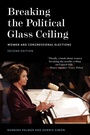
Book
01/2008
2nd Edition
Routledge
€72.60
Shipment within 15-20 days
Previous edition

Book
03/2006
1st Edition
Routledge
€133.70
Article exhausted; check for reprint
Persons
Barbara Palmer is Assistant Professor of Government and Affiliated Faculty in the Women and Politics Institute at American University.
Dennis Simon is Altshuler Distinguished Teaching Professor in the Political Science Department at Southern Methodist University.
Dennis Simon is Altshuler Distinguished Teaching Professor in the Political Science Department at Southern Methodist University.
Content
1. Where We Were: Women of the 1950s 2. The Rise and Persistence of the Political Glass Ceiling 3. Political Ambition and Running for the U.S. House 4. Political Ambition and Running for the U.S. Senate and Beyond 5. Understanding the Glass Ceiling: Women and the Competitive Environment 6. Understanding the Glass Ceiling: The "Party Gap" 7. Understanding the Glass Ceiling: Women-Friendly Districts 8. Where We Are: Women in the 21st Century