

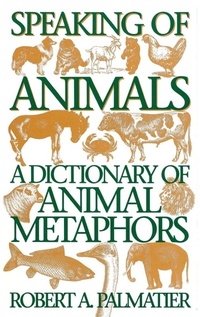
Speaking of Animals
A Dictionary of Animal Metaphors
Published on 30. April 1995
Book
Hardback
496 pages
978-0-313-29490-7 (ISBN)
Description
No other nonhuman source has served as the basis for more metaphors than animals. Speaking of Animals is a dictionary of animal metaphors that are current in American English. It is comprehensive, historical, and metaphor-based. Each entry refers to the other dictionaries that catalog that same metaphor, and the dates of first appearance in writing are supplied, where possible, for both the metaphor and the name of the source. The main text is organized alphabetically by metaphor rather than by animal or animal behavior; all the metaphors are classified according to their animal source in a list at the end of the book.
An animal metaphor is a word, phrase, or sentence that expresses a resemblance or similarity between someone or something and a particular animal or animal class. True metaphors are single words, such as the noun tiger, the verb hog, and the adjective chicken. Phrasal metaphors combine true metaphors with other words, such as blind tiger, hog the road, and chicken colonel. Other animal metaphors take the form of similes, such as like rats leaving a sinking ship and prickly as a hedgehog. Still others take the form of proverbs, such as Don't count your chickens before they hatch and Let sleeping dogs lie. The horse is the animal most frequently referred to in metaphors, followed closely by the dog. The Bible is the most prolific literary source of animal metaphors, followed closely by Shakespeare.
An animal metaphor is a word, phrase, or sentence that expresses a resemblance or similarity between someone or something and a particular animal or animal class. True metaphors are single words, such as the noun tiger, the verb hog, and the adjective chicken. Phrasal metaphors combine true metaphors with other words, such as blind tiger, hog the road, and chicken colonel. Other animal metaphors take the form of similes, such as like rats leaving a sinking ship and prickly as a hedgehog. Still others take the form of proverbs, such as Don't count your chickens before they hatch and Let sleeping dogs lie. The horse is the animal most frequently referred to in metaphors, followed closely by the dog. The Bible is the most prolific literary source of animal metaphors, followed closely by Shakespeare.
More details
Language
English
Place of publication
United States
Publishing group
Bloomsbury Publishing Plc
Target group
Interest Age: From 7 to 17 years
Dimensions
Height: 240 mm
Width: 161 mm
Thickness: 31 mm
Weight
904 gr
ISBN-13
978-0-313-29490-7 (9780313294907)
Copyright in bibliographic data and cover images is held by Nielsen Book Services Limited or by the publishers or by their respective licensors: all rights reserved.
Schweitzer Classification
Other editions
Additional editions
E-Book
04/1995
1st Edition
Greenwood Press
€85.59
Available for download
Person
ROBERT A. PALMATIER is Professor Emeritus of Linguistics, Department of Foreign Languages and Literatures, Western Michigan University./e His earlier works dealt with Middle English syntax, technical terms in transformational grammar, sports metaphors (Sports Talk, Greenwood, 1989), and sports idioms. He is currently conducting research on popular metaphors derived from the arts, the entertainment industry, and the mass media.
Content
Preface
Acknowledgments
Abbreviations and Symbols
References
Reading the Entries
The Dictionary
Classification of Metaphors According to Animal
Acknowledgments
Abbreviations and Symbols
References
Reading the Entries
The Dictionary
Classification of Metaphors According to Animal