

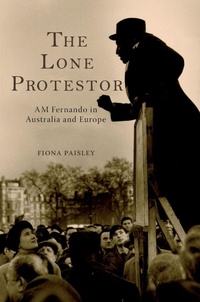
The Lone Protestor
A M Fernando in Australia and Europe
Will be published approx. on 1. May 2012
Book
Paperback/Softback
256 pages
978-1-922059-05-5 (ISBN)
Description
The late 1920s saw an extraordinary protest by an Australian Aboriginal man on the streets of London. Standing outside Australia House, cloaked in tiny skeletons, Anthony Martin Fernando condemned the failure of British rule in his country. Fernando is believed to be the first Aboriginal person to protest conditions in Australia from the streets of Europe. His various forms of action, from pamphlets on the streets of Rome to the famous Speaker's Corner in Hyde Park, distinguish this lone protestor as a unique Aboriginal activist of his time.
More details
Language
English
Place of publication
Canberra
Australia
Target group
College/higher education
Illustrations
Illustrations
Dimensions
Height: 230 mm
Width: 152 mm
Thickness: 16 mm
Weight
439 gr
ISBN-13
978-1-922059-05-5 (9781922059055)
Copyright in bibliographic data and cover images is held by Nielsen Book Services Limited or by the publishers or by their respective licensors: all rights reserved.
Schweitzer Classification
Person
Fiona Paisley is a historian of internationalist, progressive and humanitarian campaigns in the first half of the twentieth century with a focus on Australia in the Pacific region and in relation to the British empire. "I study debates about colonialism within national and international networks in the era of the League of Nations in which colonised labour, women's rights, and educational reform were among issues of concern to predominantly white members of transnational organisations meeting in the Pacific as well as in Europe and the US when the moral authority of imperial and settler nations was coming under increased scrutiny. I am particularly interested in the actual or potential intersections between campaigns by internationalists, informed by social sciences and who proclaimed humane intentions while at the same time ultimately contributing to the renewal of white claims to authority, and the activities of colonial and Indigenous leaders and activists who campaigned in some cases using similar arguments and also internationally."