


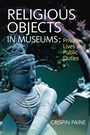
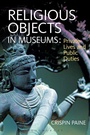
Religious Objects in Museums
Private Lives and Public Duties
Published on 31. January 2013
Book
Hardback
192 pages
978-1-84788-774-0 (ISBN)
Description
In the past, museums often changed the meaning of icons or statues of deities from sacred to aesthetic, or used them to declare the superiority of Western society, or simply as cultural and historical evidence. The last generation has seen faith groups demanding to control 'their' objects, and curators recognising that objects can only be understood within their original religious context. In recent years there has been an explosion of interest in the role religion plays in museums, with major exhibitions highlighting the religious as well as the historical nature of objects.
Using examples from all over the world, Religious Objects in Museums is the first book to examine how religious objects are transformed when they enter the museum, and how they affect curators and visitors. It examines the full range of meanings that religious objects may bear - as scientific specimen, sacred icon, work of art, or historical record. Showing how objects may be used to argue a point, tell a story or promote a cause, may be worshipped, ignored, or seen as dangerous or unlucky, this highly accessible book is an essential introduction to the subject.
Using examples from all over the world, Religious Objects in Museums is the first book to examine how religious objects are transformed when they enter the museum, and how they affect curators and visitors. It examines the full range of meanings that religious objects may bear - as scientific specimen, sacred icon, work of art, or historical record. Showing how objects may be used to argue a point, tell a story or promote a cause, may be worshipped, ignored, or seen as dangerous or unlucky, this highly accessible book is an essential introduction to the subject.
Reviews / Votes
The author takes his readers on a magical world tour of tangible things that were once-and in some cases still are-used in a huge variety of religious settings. With a cosmopolitan lightness of touch, Paine demonstrates the radical instability of such things, even once they have found their way into museums. They do not have a single meaning or use, but are almost infinitely adaptable. Above all, he deftly shows that the "distinction between 'religious' and 'mundane' is a curious modern Western idea, incomprehensible to most people at most times." No other book introduces readers more engagingly to the puzzles surrounding how museums address the sacred realm worldwide. * Ivan Gaskell, Professor of Cultural History, and of Museum Studies, Bard Graduate Center, New York City * This excellent study of museum exhibitions of religiously significant objects provides an illuminating overview of the issues and challenges arising from such exhibitions...Crispin Paine's book is a welcome new resource and will appeal to all who seek to understand the material dimensions of religious activity. * Journal of the American Academy of Religion *More details
Series
Language
English
Place of publication
United Kingdom
Publishing group
Taylor & Francis Ltd
Target group
College/higher education
Illustrations
21 bw illus
Dimensions
Height: 234 mm
Width: 156 mm
Weight
410 gr
ISBN-13
978-1-84788-774-0 (9781847887740)
Copyright in bibliographic data is held by Nielsen Book Services Limited or its licensors: all rights reserved.
Schweitzer Classification
Other editions
Additional editions
E-Book
05/2020
1st Edition
Routledge
€52.49
Available for download
Book
01/2013
1st Edition
Berg Publishers
€60.30
Shipment within 3-4 weeks
Person
Crispin Paine is Honorary Lecturer at the Institute of Archaeology, UCL, UK.
Content
Introduction
Objects Curated
Objects Visited
Objects Worshipped and Worshipping
Objects Claimed
Objects Respected
Objects Demanding and Dangerous
Objects Elevating
Objects Militant
Objects Promotional
Objects Explanatory and Evidential
Conclusion
Notes
References
Objects Curated
Objects Visited
Objects Worshipped and Worshipping
Objects Claimed
Objects Respected
Objects Demanding and Dangerous
Objects Elevating
Objects Militant
Objects Promotional
Objects Explanatory and Evidential
Conclusion
Notes
References