

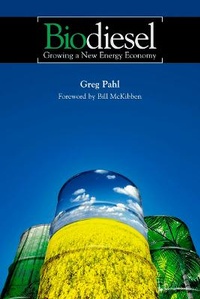
Biodiesel
Growing a New Energy Economy
Published on 1. January 2005
Book
Paperback/Softback
296 pages
978-1-931498-65-4 (ISBN)
Description
Today, 95 percent of global oil is consumed for transportation, and other alternatives are distant possibilities at best. We need a solution now, one that will pave the way to a saner, more sustainable energy future without massive reinvestments in infrastructure and technology transfer. We need biodiesel.
A crop-derived liquid fuel, biodiesel can be made from a wide range of renewable, locally grown plant sources--even from recycled cooking oils or animal fats. The technology is simple and available today, and the benefits of biodiesel are enormous, as both a cleaner-burning vehicle fuel and a source for residential or commercial heating.
Greg Pahlis new book explores the history and technology of biodiesel, its current use around the world, and its exciting potential in the United States and beyond. While biodiesel is not the answer to all our energy problems, it is an important step in the long overdue process of weaning ourselves from fossil fuels. Biodiesel is now coming onstream in Britain: a new plant being built in Scotland this Spring will boost output of the green fuel by up to 35,000 tonnes a year.
Biodiesel is:
More biodegradable than sugar and less toxic than table salt
Produced from domestic feedstocks, reducing the need for foreign oil while boosting the local economy and supporting the agricultural community.
Biodiesel can:
Reduce net CO2 emissions by 78 percent compared with petroleum diesel fuel, cutting greenhouse gases that lead to global warming
Be mixed with petroleum diesel at any level to produce a cleaner-burning biodiesel blend
Be blended with oil for home heating, usually without any retrofits required.
A crop-derived liquid fuel, biodiesel can be made from a wide range of renewable, locally grown plant sources--even from recycled cooking oils or animal fats. The technology is simple and available today, and the benefits of biodiesel are enormous, as both a cleaner-burning vehicle fuel and a source for residential or commercial heating.
Greg Pahlis new book explores the history and technology of biodiesel, its current use around the world, and its exciting potential in the United States and beyond. While biodiesel is not the answer to all our energy problems, it is an important step in the long overdue process of weaning ourselves from fossil fuels. Biodiesel is now coming onstream in Britain: a new plant being built in Scotland this Spring will boost output of the green fuel by up to 35,000 tonnes a year.
Biodiesel is:
More biodegradable than sugar and less toxic than table salt
Produced from domestic feedstocks, reducing the need for foreign oil while boosting the local economy and supporting the agricultural community.
Biodiesel can:
Reduce net CO2 emissions by 78 percent compared with petroleum diesel fuel, cutting greenhouse gases that lead to global warming
Be mixed with petroleum diesel at any level to produce a cleaner-burning biodiesel blend
Be blended with oil for home heating, usually without any retrofits required.
More details
Language
English
Place of publication
White River Junction
United States
Target group
Professional and scholarly
Illustrations
No
Dimensions
Height: 234 mm
Width: 156 mm
ISBN-13
978-1-931498-65-4 (9781931498654)
Copyright in bibliographic data and cover images is held by Nielsen Book Services Limited or by the publishers or by their respective licensors: all rights reserved.
Schweitzer Classification
Person
Greg Pahl has been involved with renewable energy issues for more than 25 years. He is a founding member of the Vermont Biofuels Association. He is also the author of Natural Home Heating: The Complete Guide to Renewable Energy Options (Chelsea Green, 2003), The Citizen-Powered Energy Handbook: Community Solutions to a Global Crisis (Chelsea Green, 2007), and has written about wind power, solar energy, electric cars, sustainable forestry management, and biodiesel home heating. He lives in Weybridge, Vermont. Visit Greg's Web site at www.gregpahl.com
Content
List of Figures
Acknowledgements
Foreword
Introduction.
Part One n Biodiesel Basics:
1. Rudolf Diesel
2. Vegetable Oil Revival
3. Biodiesel
4. Biodieselis Many Uses.
Part Two n Biodiesel around the World:
5. Europe, the Global Leader
6. Other European Countries
7. Non-European Countries.
Part Three n Biodiesel in the United States:
8. A Brief History
9. The Main Players
10. Biodiesel Politics
11. Recent Developments.
Part Four n Biodiesel in the Future:
12. Looking Ahead.
Organizations and Online Resources
Notes
Glossary
Bibliography
Index
Acknowledgements
Foreword
Introduction.
Part One n Biodiesel Basics:
1. Rudolf Diesel
2. Vegetable Oil Revival
3. Biodiesel
4. Biodieselis Many Uses.
Part Two n Biodiesel around the World:
5. Europe, the Global Leader
6. Other European Countries
7. Non-European Countries.
Part Three n Biodiesel in the United States:
8. A Brief History
9. The Main Players
10. Biodiesel Politics
11. Recent Developments.
Part Four n Biodiesel in the Future:
12. Looking Ahead.
Organizations and Online Resources
Notes
Glossary
Bibliography
Index