

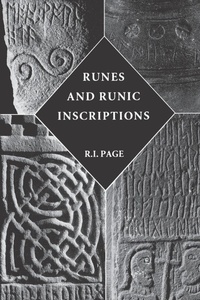
Runes and Runic Inscriptions
Collected Essays on Anglo-Saxon and Viking Runes
Published on 5. February 1998
Book
Paperback/Softback
360 pages
978-0-85115-599-9 (ISBN)
Description
Of outstanding value to both runologist and Anglo-Saxonist alike. EARLY MEDIEVAL EUROPE Discussion of the forms of the runic alphabet and interpretations of individual inscriptions, with consideration of wider matters on which runes throw light - magic, paganism and literacy.
How, where and why runes were used is still often mysterious; they continue to set puzzles for those who study them, among whom few are better known than the author of this book. Here he investigates evidence from Anglo-Saxon runic coins to Manx inscribed stones, including many of the known Anglo-Saxon runic inscriptions (notably the Ruthwell cross and the Franks casket) and manuscripts, and looks in passing at some Scandinavian material, both in Great Britain and elsewhere. In addition to these detailed descriptions of inscriptions, and of the runic futhorc, or alphabet, on which they are based, Page also considers wider issues on which runes throw light: magic, paganism and literacy. Archaeologists, historians and others will find this a uniquely useful and authoritative volume on Anglo-Saxon runes.
The late R.I. PAGE was a Fellow of Corpus Christi College, Cambridge, and Emeritus Professor ofAnglo-Saxon, Cambridge University.
How, where and why runes were used is still often mysterious; they continue to set puzzles for those who study them, among whom few are better known than the author of this book. Here he investigates evidence from Anglo-Saxon runic coins to Manx inscribed stones, including many of the known Anglo-Saxon runic inscriptions (notably the Ruthwell cross and the Franks casket) and manuscripts, and looks in passing at some Scandinavian material, both in Great Britain and elsewhere. In addition to these detailed descriptions of inscriptions, and of the runic futhorc, or alphabet, on which they are based, Page also considers wider issues on which runes throw light: magic, paganism and literacy. Archaeologists, historians and others will find this a uniquely useful and authoritative volume on Anglo-Saxon runes.
The late R.I. PAGE was a Fellow of Corpus Christi College, Cambridge, and Emeritus Professor ofAnglo-Saxon, Cambridge University.
More details
Language
English
Place of publication
Woodbridge
United Kingdom
Publishing group
Boydell & Brewer Ltd
Target group
Professional and scholarly
Product notice
Paperback (trade)
Illustrations
10 b/w, 15 line illus.
Dimensions
Height: 234 mm
Width: 156 mm
Thickness: 20 mm
Weight
553 gr
ISBN-13
978-0-85115-599-9 (9780851155999)
Copyright in bibliographic data and cover images is held by Nielsen Book Services Limited or by the publishers or by their respective licensors: all rights reserved.
Schweitzer Classification
Other editions
Additional editions
Book
08/1995
Boydell Press
€88.09
Article exhausted; check different version
Person
R.I. Page
Content
Quondam et futurus (1994); Northumbrian "aefter" (in memory of) + accusative (1958); an early drawing of the Ruthwell Cross (1959); language and dating in Old English inscriptions (1959); the Bewcastle Cross (1960); the Old English rune "ear" (1961); a note on the transliteration of Old English runic inscriptions (1962); the use of double runes in Old English inscriptions (1962); Anglo-Saxon runes and magic (1964); Ralph Thoresby's runic coins (1965); the Old English rune "eoh, ih" (Yew Tree) (1968); the runic solidus of Schweindorf, Ostfriesland, and related runic solidi (1968); runes and non-runes (1969); how long did the Scandinavian language survive in England? - the epigraphical evidence (1971); Anglo-Saxon texts in early modern transcripts - 1 The Anglo-Saxon runic poem (1973); some thoughts on Manx runes (1980); the Manx rune-stones (1983); on the transliteration of English runes (1984); new runic finds in England (1987); a 16th-century runic manuscript (1987); runeukyndige risteres skriblerier - the English evidence (1989); Roman and runic on St Cuthbert's coffin (1989); dating Old English inscriptions - the limits of inference (1990).