


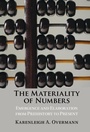
The Materiality of Numbers
Emergence and Elaboration from Prehistory to Present
Published on 25. May 2023
Book
Hardback
444 pages
978-1-009-36124-8 (ISBN)
Description
This is a book about numbers - what they are as concepts and how and why they originate - as viewed through the material devices used to represent and manipulate them. Fingers, tallies, tokens, and written notations, invented in both ancestral and contemporary societies, explain what numbers are, why they are the way they are, and how we get them. Overmann is the first to explore how material devices contribute to numerical thinking, initially by helping us to visualize and manipulate the perceptual experience of quantity that we share with other species. She explores how and why numbers are conceptualized and then elaborated, as well as the central role that material objects play in both processes. Overmann's volume thus offers a view of numerical cognition that is based on an alternative set of assumptions about numbers, their material component, and the nature of the human mind and thinking.
More details
Language
English
Place of publication
Cambridge
United Kingdom
Product notice
sewn/stitched
Cloth over boards
Illustrations
Worked examples or Exercises
Dimensions
Height: 232 mm
Width: 155 mm
Thickness: 29 mm
Weight
740 gr
ISBN-13
978-1-009-36124-8 (9781009361248)
Copyright in bibliographic data and cover images is held by Nielsen Book Services Limited or by the publishers or by their respective licensors: all rights reserved.
Schweitzer Classification
Other editions
Additional editions
Karenleigh A. Overmann
Materiality of Numbers
E-Book
05/2023
Cambridge University Press
€132.99
Available for download
Persons
Karenleigh A. Overmann earned her doctorate in archaeology from the University of Oxford as a Clarendon scholar after retiring from twenty-five years of active service in the US Navy. She currently directs the Center for Cognitive Archaeology at the University of Colorado, Colorado Springs.
Content
1. Numbers in a nutshell; 2. Converging perspectives on numbers; 3. The brain in numbers; 4. Bodies and behaviors; 5. Language in numbers; 6. Global and regional patterns; 7. Materiality in numbers; 8. Materiality in cognition; 9. Making quantity tangible and manipulable; 10. Tallies and other devices that accumulate; 11. Interpreting prehistoric artifacts; 12. Devices that accumulate and group; 13. Handwritten notations; 14. The materiality of numbers.