

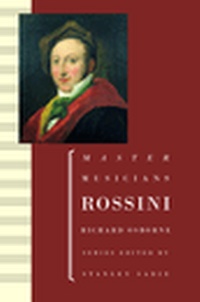
Rossini
3rd Edition
Published on 1. August 2001
Book
Paperback/Softback
348 pages
978-0-19-816490-6 (ISBN)
Description
A classical musician by training and a conservative by inclination, Rossini none the less broke the mould of the old Italian operatic order, and laid the foundations for a new generation of romantically inspired music-dramatists. One of the most influential of nineteenth-century composers, in touch with many leading musicians of his day, Rossini was also the most complex of men - a mixture of affability and reserve, industry and indolence, wit and melancholy. This detailed biography also includes a survey of Rossini's choral works, and the vocal and solo piano music written during the last decade of his life.
Reviews / Votes
"Richard Osborne has written a book in every way worthy of his hero: well informed, witty, and civilized." Music and LettersMore details
Edition
3rd Revised edition
Language
English
Place of publication
Oxford
United Kingdom
Target group
College/higher education
Professional and scholarly
Edition type
Revised edition
Illustrations
12 Fotos bzw. Rasterbilder
12pp halftones
ISBN-13
978-0-19-816490-6 (9780198164906)
Copyright in bibliographic data and cover images is held by Nielsen Book Services Limited or by the publishers or by their respective licensors: all rights reserved.
Schweitzer Classification
Other editions

Content
List of Illustrations; Key to sigla; Preface; 1. The formative years (1792-1810); 2. Venice and Milan (1810-14); 3. Arrival in Naples; 4. Rome and Il barbiere de Siviglia(1816); 5. Naples, Rome, and Milan (1816-17); 6. Mose in Egittoand return to Peasro (1818); 7. 1819-21; 8. Vienna, Verona, Venice (1822-3); 9. Paris and London (1823-4); 10. Paris (1824-9); 11. Retirement from operatic composition; 12. Bologna, Paris, Madrid (1829-35); 13. Paris, the Rhineland, and return to Italy (1847-55); 14. Times of Barricades and Assassinations: Bologna, Florence, and departure from Italy (1847-55); 15. Return to Paris; 16. Saturday soirees and a new Mass; 17. Last years (1865-8); 18. Entr'acte: some problems of approach to the works; 19. The early operas; 20. Overtures; 21. Tancredi: heroic comedy and the forming of a method; 22. L'Italiana in Algeri: formal mastery in the comic style; 23. Milan and Venice (1813-14); 24. Arrival in Naples (1815-16); 25. Il barbiere di Seviglia and the transformation of a tradition; 26. La Cenerentola: an essay in comic pathos; 27. La gazza ladraand the semiseria style; 28. Armida and the new romanticism; 29. Mose in Egitto(1818-19) and Moise et Pharaon(1827); 30. Ermione and other operas; 31. Rossini and Scott: La donna del lago; 32. Final operas in Italy; 33. Maometto II(1820) and Le siege de Corinthe (1826); 34. Il viaggio a Reims and Le Comte Ory(1828); 35. Guillaume Tell; 36. Sacred music; 37. Vocal and piano music; Appendices; Index