

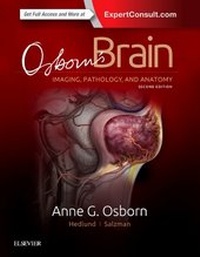
Osborn's Brain
2nd Edition
Published on 20. October 2017
Book
Hardback
1300 pages
978-0-323-47776-5 (ISBN)
Description
Comprehensive, visually appealing, and easy to understand, Osborn's Brain, second edition, by the highly esteemed Dr. Anne G. Osborn, provides a solid framework for understanding the complex subject of brain imaging when studied cover to cover. Almost completely rewritten and featuring 75% new illustrations, it combines essential anatomy with gross pathology and imaging, clearly demonstrating why and how diseases appear the way they do. The most immediate emergent diagnostic topics are followed by nonemergent pathologies, integrating the most relevant information from Dr. Osborn's entire career of accumulated knowledge, experience, and interest in neuropathology, neurosurgery, and clinical neurosciences.
Covers the "must-know" aspects of brain imaging together with spectacular pathology examples, relevant anatomy, and up-to-date techniques in neuroradiology-perfect for radiologists, neuroradiologists, neurosurgeons, and neurologists at all levels
Begins with emergent topics such as trauma, nontraumatic hemorrhage, stroke, and vascular lesions, followed by infections, demyelinating and inflammatory diseases, neoplasms, toxic-metabolic-degenerative disorders, and congenital brain malformations
Features more than 4,000 stunning, high-resolution radiologic images and medical illustrations, all of which are annotated to describe the most clinically significant features
Includes Dr. Osborn's trademark summary boxes scattered throughout for quick review of essential facts, as well as the most recent and up-to-date references available
Helps readers think clearly about diagnoses, types of diagnoses, and the various pathologies that can affect the brain
Includes new WHO classifications of brain tumors, new entities including IgG4-related disease and CLIPPERS, new and emerging infectious diseases, and updated insights into brain trauma and brain degeneration
Expert ConsultT eBook version included with purchase. This enhanced eBook experience allows you to search all of the text, figures, Q&As, and references from the book on a variety of devices.
Covers the "must-know" aspects of brain imaging together with spectacular pathology examples, relevant anatomy, and up-to-date techniques in neuroradiology-perfect for radiologists, neuroradiologists, neurosurgeons, and neurologists at all levels
Begins with emergent topics such as trauma, nontraumatic hemorrhage, stroke, and vascular lesions, followed by infections, demyelinating and inflammatory diseases, neoplasms, toxic-metabolic-degenerative disorders, and congenital brain malformations
Features more than 4,000 stunning, high-resolution radiologic images and medical illustrations, all of which are annotated to describe the most clinically significant features
Includes Dr. Osborn's trademark summary boxes scattered throughout for quick review of essential facts, as well as the most recent and up-to-date references available
Helps readers think clearly about diagnoses, types of diagnoses, and the various pathologies that can affect the brain
Includes new WHO classifications of brain tumors, new entities including IgG4-related disease and CLIPPERS, new and emerging infectious diseases, and updated insights into brain trauma and brain degeneration
Expert ConsultT eBook version included with purchase. This enhanced eBook experience allows you to search all of the text, figures, Q&As, and references from the book on a variety of devices.
Reviews / Votes
"a fantastic book and I would recommend it to anyone who wants to know anything about neuroradiology"More details
Edition
2nd edition
Language
English
Place of publication
Philadelphia
United States
Target group
Professional and scholarly
Illustrations
3300 illustrations (3300 in full color); Illustrations
Dimensions
Height: 276 mm
Width: 216 mm
Weight
4120 gr
ISBN-13
978-0-323-47776-5 (9780323477765)
Copyright in bibliographic data and cover images is held by Nielsen Book Services Limited or by the publishers or by their respective licensors: all rights reserved.
Schweitzer Classification
Other editions
New editions
Anne G. Osborn | Luke L. Linscott | Karen L. Salzman
Osborn's Brain
Book
11/2023
3rd Edition
Churchill Livingstone
€368.50
Shipment within 15-20 days
Previous edition
Book
11/2012
Amirsys, Inc
€361.60
Article exhausted; check for reprint
Persons
Dr. Anne G. Osborn is an internationally recognized lecturer and acclaimed professor of neuroradiology noted around the world for helping establish the field of neuroradiology, and contributing valuable knowledge about the head, neck, spine, and the central and peripheral nervous system. She is regarded as one of the world's most prominent neuroradiologists. Prior to writing Osborn's Brain, her award-winning publishing efforts cited her as one of the "20 Most Influential? people in radiology as well as one of four innovative educators inspiring a generation of radiologists to excel in research, clinical skill, and leadership. Osborn is currently a University of Utah Distinguished Professor Emeritus. She is author of the prior 2 editions of her signature bestselling title, Osborn's Brain which as well as the author of Diagnostic Imaging: Brain, 4th edition. Karen L. Salzman, MD, FACR, is Professor of Radiology and Imaging Sciences and Neuroradiology Section Chief, as well as Leslie W. Davis Endowed Chair in Neuroradiology and Vice Chair of Education at the Spencer Fox Eccles School of Medicine with the University of Utah in Salt Lake City, Utah
Author
Distinguished Professor Emeritus, Spencer Fox Eccles School of Medicine, University of Utah, Salt Lake City, Utah
Adjunct Professor of Radiology, University of Utah School of Medicine, Director, Pediatric Neuroimaging, Pediatric Neuroradiologist, Department of Medical Imaging, Primary Children's Hospital, Salt Lake City, Utah
Professor of Radiology and Imaging Sciences, Neuroradiology Section Chief, Leslie W. Davis Endowed Chair in Neuroradiology, Vice Chair of Education, Spencer Fox Eccles School of Medicine, University of Utah, Salt Lake City, Utah
Content
Trauma
1 Trauma Overview
2 Primary Effects of CNS Trauma
3 Secondary Effects and Sequelae of CNS Trauma
Nontraumatic Hemorrhage and Vascular Lesions
4 Approach to Nontraumatic Hemorrhage and Vascular Lesions
5 Spontaneous Parenchymal Hemorrhage
6 Subarachnoid Hemorrhage and Aneurysms
7 Vascular Malformations
8 Arterial Anatomy and Strokes
9 Venous Anatomy and Occlusions
10 Vasculopathy
Infection, Inflammation, and Demyelinating Diseases
11 Approach to Infection, Inflammation, and Demyelination
12 Congenital Infections, Acquired Pyogenic and Viral Infections
13 Tuberculosis, Fungal, Parasitic, and Other Infections
14 HIV/AIDS
15 Demyelinating and Inflammatory Diseases
Neoplasms, Cysts, and Tumor-like Lesions
16 Introduction to Neoplasms, Cysts, and Tumor-like Lesions
17 Astrocytomas
18 Nonastrocytic Glial Neoplasms
19 Neuronal and Mixed Neuronal-Glial Tumors
20 Pineal and Germ Cell Tumors
21 Embryonal and Neuroblastic Tumors
22 Tumors of the Meninges
23 Cranial Nerves and Nerve Sheath Tumors
24 Lymphomas, Hemopoietic and Histiocytic Tumors
25 Sellar Neoplasms and Tumor-like Lesions
26 Miscellaneous Tumors and Tumor-like Conditions
27 Metastases and Paraneoplastic Syndromes
28 Nonneoplastic Cysts
Toxic, Metabolic, and Degenerative Disorders
29 Approach to Toxic, Metabolic, and Systemic Diseases
30 Toxic Encephalopathy
31 Inherited Metabolic Disorders
32 Acquired Metabolic Disorders and Systemic Diseases
33 Dementias and Brain Degenerations
34 Hydrocephalus and CSF Disorders
Congenital Malformations of the Skull and Brain
35 Embryology and Classification
36 Posterior Fossa Malformations
37 Commissural and Cortical Maldevelopment
38 Holoprosencephalies, Related Disorders, and Mimics
39 Familial Tumor Syndromes
40 Neurocutaneous Syndromes without Associated Tumors
41 Anomalies of the Skull and Meninges
1 Trauma Overview
2 Primary Effects of CNS Trauma
3 Secondary Effects and Sequelae of CNS Trauma
Nontraumatic Hemorrhage and Vascular Lesions
4 Approach to Nontraumatic Hemorrhage and Vascular Lesions
5 Spontaneous Parenchymal Hemorrhage
6 Subarachnoid Hemorrhage and Aneurysms
7 Vascular Malformations
8 Arterial Anatomy and Strokes
9 Venous Anatomy and Occlusions
10 Vasculopathy
Infection, Inflammation, and Demyelinating Diseases
11 Approach to Infection, Inflammation, and Demyelination
12 Congenital Infections, Acquired Pyogenic and Viral Infections
13 Tuberculosis, Fungal, Parasitic, and Other Infections
14 HIV/AIDS
15 Demyelinating and Inflammatory Diseases
Neoplasms, Cysts, and Tumor-like Lesions
16 Introduction to Neoplasms, Cysts, and Tumor-like Lesions
17 Astrocytomas
18 Nonastrocytic Glial Neoplasms
19 Neuronal and Mixed Neuronal-Glial Tumors
20 Pineal and Germ Cell Tumors
21 Embryonal and Neuroblastic Tumors
22 Tumors of the Meninges
23 Cranial Nerves and Nerve Sheath Tumors
24 Lymphomas, Hemopoietic and Histiocytic Tumors
25 Sellar Neoplasms and Tumor-like Lesions
26 Miscellaneous Tumors and Tumor-like Conditions
27 Metastases and Paraneoplastic Syndromes
28 Nonneoplastic Cysts
Toxic, Metabolic, and Degenerative Disorders
29 Approach to Toxic, Metabolic, and Systemic Diseases
30 Toxic Encephalopathy
31 Inherited Metabolic Disorders
32 Acquired Metabolic Disorders and Systemic Diseases
33 Dementias and Brain Degenerations
34 Hydrocephalus and CSF Disorders
Congenital Malformations of the Skull and Brain
35 Embryology and Classification
36 Posterior Fossa Malformations
37 Commissural and Cortical Maldevelopment
38 Holoprosencephalies, Related Disorders, and Mimics
39 Familial Tumor Syndromes
40 Neurocutaneous Syndromes without Associated Tumors
41 Anomalies of the Skull and Meninges