

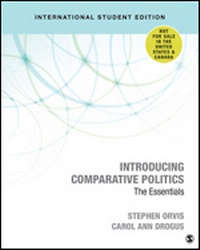
Introducing Comparative Politics
The Essentials
1st Edition
Published on 30. January 2018
Book
Paperback/Softback
464 pages
978-1-5443-2684-9 (ISBN)
Description
For Introducing Comparative Politics: The Essentials, the driving force is the pluralist, objective stance on introducing students to core concepts in Comparative Politics. The authors introduce key comparative questions while providing equal strengths and weaknesses of commonly debated theories, structures, and beliefs that push students beyond memorization of country profiles and ever-changing statistics and generate in-class debate over key concepts used in the science of comparative politics. While detailed case studies can go in-depth on specific countries and political systems, Introducing Comparative Politics: The Essentials, distills its country material into paragraph-long examples woven seamlessly into the narrative of the text, increasing diverse global awareness, current-event literacy, and critical-thinking skills.
More details
Edition
International Student Edition
Language
English
Place of publication
Washington
United States
Publishing group
SAGE Publications Inc
Target group
College/higher education
Dimensions
Height: 254 mm
Width: 203 mm
Weight
872 gr
ISBN-13
978-1-5443-2684-9 (9781544326849)
Copyright in bibliographic data and cover images is held by Nielsen Book Services Limited or by the publishers or by their respective licensors: all rights reserved.
Schweitzer Classification
Persons
Stephen Orvis is Professor of Government at Hamilton College. He is a specialist on sub-Saharan Africa (Kenya in particular), identity politics, democratic transitions, and the political economy of development. He has been teaching introduction to comparative politics for more than twenty-five years, as well as courses on African politics, nationalism and the politics of identity, political economy of development, and weak states. He has written a book and articles on agricultural development in Kenya, as well as several articles on civil society in Africa and Kenya, and is currently doing research on political institutions in Africa.
Carol Ann Drogus is a retired Professor of Government at Hamilton College. She is a specialist on Brazil, religion, and women's political participation. She taught introduction to comparative politics for more than twenty years, as well as courses on Latin American politics, gender and politics, and women in Latin America. She has written two books and numerous articles on the political participation of women in religious movements in Brazil.
Carol Ann Drogus is a retired Professor of Government at Hamilton College. She is a specialist on Brazil, religion, and women's political participation. She taught introduction to comparative politics for more than twenty years, as well as courses on Latin American politics, gender and politics, and women in Latin America. She has written two books and numerous articles on the political participation of women in religious movements in Brazil.
Content
Part I A Framework for Understanding Comparative Politics
Chapter 1. Introduction
The Big Issues
Comparative Politics: What Is It? Why Study It? How to Study It?
Three Key Questions in Comparative Politics
Chapter 2. The Modern State
Characteristics of the Modern State
Historical Origins of Modern States
Strong, Weak, and Failed States
Chapter 3. States, Citizens, and Regimes
Citizens and Civil Society
Regimes, Ideologies, and Citizens
Chapter 4. States and Identity
Understanding Identity
The Policy Debate
Nations and Nationalism
Ethnicity
Race
Religion: Recognition, Autonomy, and the Secular State
Gender and Sexual Orientation: The Continuing Struggle for Recognition, Social Status, and Representation
Part II Political Systems and How They Work
Chapter 5. Governing Institutions in Democracies
Executives and Legislatures
Comparing Executive-Legislative Institutions
Judiciary
Bureaucracy
Federalism
Chapter 6. Institutions of Participation and Representation in Democracies
The Electoral System
Formal Institutions: Political Parties and Party Systems
Civil Society
Chapter 7. Contentious Politics: Social Movements, Political Violence, and Revolution
Framing Contentious Politics
Political Violence
Revolution
Chapter 8. Authoritarian Institutions
Authoritarian Rule around the World
Governing Institutions in Authoritarian Regimes
Elections, Parties, and Civil Society in Authoritarian Regimes
Chapter 9. Regime Change
The Military in Politics: Coups d'Etat
Revolution
Democratization
Part III Political Economy and Policy
Chapter 10. Political Economy of Wealth
The Market, Capitalism, and the State
Key Economic Debates
Types of Capitalist Economies
Globalization: A New World Order, or Deja Vu All Over Again?
Chapter 11. Political Economy of Development
What Is "Development"?
Development and Globalization
The Development Debate
Chapter 12. Public Policies When Markets Fail: Welfare, Health, and the Environment
"Welfare": Social Policy in Comparative Perspective
Health Care and Health Policy
Environmental Problems and Policy
Chapter 1. Introduction
The Big Issues
Comparative Politics: What Is It? Why Study It? How to Study It?
Three Key Questions in Comparative Politics
Chapter 2. The Modern State
Characteristics of the Modern State
Historical Origins of Modern States
Strong, Weak, and Failed States
Chapter 3. States, Citizens, and Regimes
Citizens and Civil Society
Regimes, Ideologies, and Citizens
Chapter 4. States and Identity
Understanding Identity
The Policy Debate
Nations and Nationalism
Ethnicity
Race
Religion: Recognition, Autonomy, and the Secular State
Gender and Sexual Orientation: The Continuing Struggle for Recognition, Social Status, and Representation
Part II Political Systems and How They Work
Chapter 5. Governing Institutions in Democracies
Executives and Legislatures
Comparing Executive-Legislative Institutions
Judiciary
Bureaucracy
Federalism
Chapter 6. Institutions of Participation and Representation in Democracies
The Electoral System
Formal Institutions: Political Parties and Party Systems
Civil Society
Chapter 7. Contentious Politics: Social Movements, Political Violence, and Revolution
Framing Contentious Politics
Political Violence
Revolution
Chapter 8. Authoritarian Institutions
Authoritarian Rule around the World
Governing Institutions in Authoritarian Regimes
Elections, Parties, and Civil Society in Authoritarian Regimes
Chapter 9. Regime Change
The Military in Politics: Coups d'Etat
Revolution
Democratization
Part III Political Economy and Policy
Chapter 10. Political Economy of Wealth
The Market, Capitalism, and the State
Key Economic Debates
Types of Capitalist Economies
Globalization: A New World Order, or Deja Vu All Over Again?
Chapter 11. Political Economy of Development
What Is "Development"?
Development and Globalization
The Development Debate
Chapter 12. Public Policies When Markets Fail: Welfare, Health, and the Environment
"Welfare": Social Policy in Comparative Perspective
Health Care and Health Policy
Environmental Problems and Policy