

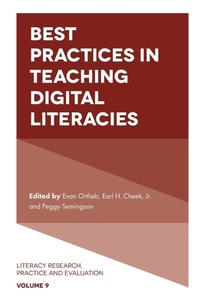
Best Practices in Teaching Digital Literacies
Published on 22. August 2018
Book
Paperback/Softback
272 pages
978-1-78754-434-5 (ISBN)
Description
The almost universal reliance upon digital
tools for social, academic, and career development will only become more
pronounced in the years to come. Teacher education programs remain ill-equipped
to adequately prepare educators with the pedagogies needed to foster digital
literacies. What is needed is a set of best practices towards teaching digital
literacies so that teachers can better meet the emerging needs of their
students in today's classrooms.
Where should teachers begin? What are the
essentials of digital literacies within K-12 contexts? And how might we
reimagine teacher education programs to optimally prepare teachers for working
with technologically connected youth, whose literacies are more complex,
interconnected, and diverse than ever?
This volume provides a practical
framework for teacher education programs to develop K-12 students' digital
literacies. It offers a set of best practices in teaching digital
literacies that promote access to research-based pedagogies for immediate
implementation in classrooms.
tools for social, academic, and career development will only become more
pronounced in the years to come. Teacher education programs remain ill-equipped
to adequately prepare educators with the pedagogies needed to foster digital
literacies. What is needed is a set of best practices towards teaching digital
literacies so that teachers can better meet the emerging needs of their
students in today's classrooms.
Where should teachers begin? What are the
essentials of digital literacies within K-12 contexts? And how might we
reimagine teacher education programs to optimally prepare teachers for working
with technologically connected youth, whose literacies are more complex,
interconnected, and diverse than ever?
This volume provides a practical
framework for teacher education programs to develop K-12 students' digital
literacies. It offers a set of best practices in teaching digital
literacies that promote access to research-based pedagogies for immediate
implementation in classrooms.
Reviews / Votes
Contributed by researchers from the US, the 15 essays in this volume describe best practices in teaching digital literacies. They discuss how disruptive innovations related to digital literacy can improve traditional approaches to teacher education; the use of the Technology Integration Planning Cycle to prepare pre-service teachers for multimodal instruction; how making ebooks can facilitate digital literacy skills among teacher candidates; preparing pre-service teachers to teach digital literacies in under-resourced elementary schools; the use of metacognition and critical-thinking to support literacy development in a digital age; using backchanneling technologies to facilitate dialogic discussions about literature; and how two pre-service teachers evaluated digital information sources about climate change, to illustrate the challenges and possibilities of an instructional approach aimed at cultivating digital literacies among pre-service teachers. Others address the design of a digital internship to meet the learning goals of students and teacher candidates; pre-service teachers' use of multimodal text sets and technology in teaching reading; a book review podcast project in an adolescent and young adult literature course in a teacher education program; the use of the software platform TechScaffold in teacher education for decision-making processes to support technology integration; promoting English language arts content area learning through collaboratively engaged social media practice; the use of tactile picture book making and multimodal composition for equity in English language arts; a visual framework, the beginning, acting, telling model, for teaching digital literacy through inquiry and information seeking; and empowering students as critical readers and writers and online spaces. -- Annotation (c)2018 * (protoview.com) *More details
Series
Language
English
Place of publication
Bingley
United Kingdom
Target group
Professional and scholarly
Dimensions
Height: 229 mm
Width: 152 mm
Thickness: 15 mm
Weight
399 gr
ISBN-13
978-1-78754-434-5 (9781787544345)
Copyright in bibliographic data and cover images is held by Nielsen Book Services Limited or by the publishers or by their respective licensors: all rights reserved.
Schweitzer Classification
Other editions
Additional editions
Evan Ortlieb | Earl H. Cheek | Peggy Semingson
Best Practices in Teaching Digital Literacies
E-Book
08/2018
Emerald Publishing Limited
€72.99
Available for download
Persons
Evan Ortlieb is Professor and Coordinator of the Literacy Program in the Department of Education Specialties at St. John's University, USA. He has previous work experience in Singapore and Australia and expertise on literacy improvement, literacy teacher preparation, language diversity, and differentiated literacy instruction. He is President of the Specialized Literacy Professionals SIG of the International Literacy Association and Section Editor of the Journal of Adolescent & Adult Literacy. Earl H. Cheek, Jr. is Patrick and Edwidge Olinde Endowed Professor Emeritus in the Department of Educational Theory, Policy, and Practice at Louisiana State University, USA. As a lifelong literacy leader, he has published widely across fields of content area reading, reading teacher education, diagnostic-perspective methods, and dyslexia. He has served on committees within the International Literacy Association, the Literacy Research Association, and the Association of Literacy Educators and Researchers.
Peggy Semingson is Associate Professor of Curriculum and Instruction at The University of Texas at Arlington, USA. Her research interests include social contexts of literacy learning, digital pedagogies, and online literacy teacher education. She has received multiple awards including the President's Award for Excellence in Distance Education Teaching at UT Arlington and the 2017 International Literacy Association (ILA) Jerry Johns Outstanding Teacher Educator in Reading Award.
Peggy Semingson is Associate Professor of Curriculum and Instruction at The University of Texas at Arlington, USA. Her research interests include social contexts of literacy learning, digital pedagogies, and online literacy teacher education. She has received multiple awards including the President's Award for Excellence in Distance Education Teaching at UT Arlington and the 2017 International Literacy Association (ILA) Jerry Johns Outstanding Teacher Educator in Reading Award.
Content
Disruptive Innovations in Teacher Education; Evan Ortlieb, Annalisa Susca, Jean
Votypka, and Earl H. Cheek Jr.Using the Technology Integration Planning Cycle to Prepare Pre-Service Teachers for Multimodal Instruction; Beth Beschorner, Jamie Colwell, Amy Carter Hutchison, and Lindsay
Woodward
Designing Ebooks: Enhancing Prospective Teachers' Digital Literacy Skills; Chinwe H. Ikpeze
Only One iPad: Preparing Pre-Service Teachers to Teach Digital Literacies in Under-Resourced Elementary Schools; Chrystine Cooper Mitchell and Jennifer Dandridge Turner
Locating Meaning in a Digital Age; Heather Casey
Using Backchanneling Technology to Facilitate Dialogic Discussions about Literature; James S. Chisholm
Digital Literacies and Climate Change: Exploring Reliability and Truth(s) with Pre-Service Teachers; James Damico, Alexandra Panos, and Michelle Myers
Digital Internships: Enriching Teaching and Learning with Primary Resources; Jenny M. Martin
Pre-Service Teachers' Multimodal Text Sets and Use of Technology in Teaching Reading: Lessons Learned from a Design-Based Study; Lisa M. O'Brien, Alejandra Salinas, Kelly C. Reinhart, and
Jeanne R. Paratore
Taking the Book Review on Air: Bringing Young Adult Literature to Life in Teacher Education; Molly Buckley-Marudas
Using TechScaffold to Foster Teachers' Decision-Making Processes to Support Technology Integration; Richard Beach, John Michael Scott, and Greg Klotz
Language Today: Promoting ELA Content Area Learning through Collaboratively Engaged Social Media Practice; Carl A. Young,
Nicolette Filson, and Rachael Debnam-O'Dea
Tactile Picture Book Making and Multimodal Composition: Students Design for Equity in English Language Arts; Bridget Dalton and Kirsten Musetti
The Beginning, Acting, Telling (BAT) Model: A Visual Framework for Teaching Digital Literacy through Inquiry and Information Seeking; Valerie Nesset and Mary McVee
Empowering Students as Critical Readers and Writers in Online Spaces; Ian O'Byrne
Votypka, and Earl H. Cheek Jr.Using the Technology Integration Planning Cycle to Prepare Pre-Service Teachers for Multimodal Instruction; Beth Beschorner, Jamie Colwell, Amy Carter Hutchison, and Lindsay
Woodward
Designing Ebooks: Enhancing Prospective Teachers' Digital Literacy Skills; Chinwe H. Ikpeze
Only One iPad: Preparing Pre-Service Teachers to Teach Digital Literacies in Under-Resourced Elementary Schools; Chrystine Cooper Mitchell and Jennifer Dandridge Turner
Locating Meaning in a Digital Age; Heather Casey
Using Backchanneling Technology to Facilitate Dialogic Discussions about Literature; James S. Chisholm
Digital Literacies and Climate Change: Exploring Reliability and Truth(s) with Pre-Service Teachers; James Damico, Alexandra Panos, and Michelle Myers
Digital Internships: Enriching Teaching and Learning with Primary Resources; Jenny M. Martin
Pre-Service Teachers' Multimodal Text Sets and Use of Technology in Teaching Reading: Lessons Learned from a Design-Based Study; Lisa M. O'Brien, Alejandra Salinas, Kelly C. Reinhart, and
Jeanne R. Paratore
Taking the Book Review on Air: Bringing Young Adult Literature to Life in Teacher Education; Molly Buckley-Marudas
Using TechScaffold to Foster Teachers' Decision-Making Processes to Support Technology Integration; Richard Beach, John Michael Scott, and Greg Klotz
Language Today: Promoting ELA Content Area Learning through Collaboratively Engaged Social Media Practice; Carl A. Young,
Nicolette Filson, and Rachael Debnam-O'Dea
Tactile Picture Book Making and Multimodal Composition: Students Design for Equity in English Language Arts; Bridget Dalton and Kirsten Musetti
The Beginning, Acting, Telling (BAT) Model: A Visual Framework for Teaching Digital Literacy through Inquiry and Information Seeking; Valerie Nesset and Mary McVee
Empowering Students as Critical Readers and Writers in Online Spaces; Ian O'Byrne