

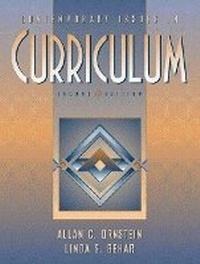
Contemporary Issues in Curriculum
2nd Edition
Published on 5. July 1998
Book
Paperback/Softback
456 pages
978-0-205-28323-1 (ISBN)
Description
The second edition of this issues-oriented collection offers forty articles by the major thinkers in curriculum study. Balanced, yet eclectic in its approach, Contemporary Issues in Curriculum reflects the emergent trends in the field of curriculum. Designed for students in curriculum, instruction, administration, and teacher education, it explores the issues that affect implementation, planning, and evaluation of curriculum at all levels of learning.
The editors have organized the collection into six parts: Curriculum and Philosophy, Curriculum and Teaching, Curriculum and Learning, Curriculum and Instruction, Curriculum and Supervision, and Curriculum and Policy. The readings reflect both traditionally held beliefs and those that are more controversial in nature, providing students and practitioners the opportunity to investigate the breadth of issues that affect curriculum and to access such information in a single source. Readers are encouraged to examine and debate these issues, to formulate their own ideas, and to shape what direction the field of curriculum should take.
The editors have organized the collection into six parts: Curriculum and Philosophy, Curriculum and Teaching, Curriculum and Learning, Curriculum and Instruction, Curriculum and Supervision, and Curriculum and Policy. The readings reflect both traditionally held beliefs and those that are more controversial in nature, providing students and practitioners the opportunity to investigate the breadth of issues that affect curriculum and to access such information in a single source. Readers are encouraged to examine and debate these issues, to formulate their own ideas, and to shape what direction the field of curriculum should take.
More details
Edition
2nd edition
Language
English
Place of publication
United States
Publishing group
Pearson Education (US)
Target group
Professional and scholarly
Dimensions
Width: 235 mm
Thickness: 22 mm
Weight
679 gr
ISBN-13
978-0-205-28323-1 (9780205283231)
Copyright in bibliographic data and cover images is held by Nielsen Book Services Limited or by the publishers or by their respective licensors: all rights reserved.
Schweitzer Classification
Other editions
New editions
Allan C. Ornstein | Linda S. Behar-Horenstein | Edward G. Pajak
Contemporary Issues in Curriculum
Book
05/2003
3rd Edition
Pearson
€84.36
Article exhausted; check for reprint
Content
I.CURRICULUM AND PHILOSOPHY.
Introduction.
1.From Theory to Practice: Contemporary Curriculum Issues, Linda S. Behar-Horenstein, Ellen S. Amatea, and Peter A. D. Sherrard.
2.Philosophy as a Basis for Curriculum Decisions, Allan C. Ornstein.
3.Goals and Objectives, Ronald S. Brandt and Ralph W. Tyler.
4.Alternative Curriculum Conceptions and Designs, M. Frances Klein.
5.Teachers, Public Life and Curriculum Reform, Henry A. Giroux.
6.Art and Imagination: Overcoming a Desperate Stasis, Maxine Greene.
PRO-CON Chart 1: Should The Schools Introduce a Values-Centered Curriculum For All Students?
Case Study 1-A: Clash Concerning the Arts Curriculum.
II.CURRICULUM AND TEACHING.
Introduction.
7.Preparing Teachers to Support Inclusion: Preservice and Inservice Programs, Richard A. Villa, Jacqueline S. Thousand, and James W. Chapple.
8.Research for Improving Teaching, Allan C. Ornstein.
9.The Art and Craft of Teaching, Elliot Eisner.
10.Narrative Research: Understanding Teaching and Teacher Thinking, Linda S. Behar-Horenstein.
11.Knowledge and Teaching: Foundations of the New Reform, Lee S. Shulman.
12.Investigations of Expertise in Teaching, Katherine S. Cushing, Donna S. Sabers, and David C. Berliner.
PRO-CON Chart 2: Should Teachers Be Held Accountable for Their Teaching?
Case Study 2: School District Proposes Evaluations by Students.
III.CURRICULUM AND LEARNING.
Introduction.
13.Motivation: What Teachers Need to Know, Carol A. Ames.
14.Critical Thinking - What Can It Be? Matthew Lipman.
15.Creating Creative Minds, Robert J. Sternberg and Todd I. Lubart.
16.The Cognitive-Developmental Approach to Moral Education, Lawrence Kohlberg.
17.A Critical Examination of Character Education, Alfie Kohn.
18.Synthesis of Research on Cooperative Learning, Robert Slavin.
PRO-CON Chart 3: Should Special Education Students Be Mainstreamed into Regular Education Classes?
Case Study 3: Parents Seek to Dismantle the Tracking System.
IV.CURRICULUM AND INSTRUCTION.
Introduction.
19.The Search for Methods of Instruction, Benjamin S. Bloom.
20.Limiting Students' School Success and Life Chances: The Impact of Tracking, Jeannie S. Oakes.
21.Reflections on Multiple Intelligences: Myths and Messages, Howard Gardner.
22.Synthesis of Research on Compensatory and Remedial Education, Lorin W. Anderson and Leonard O. Pellicer.
23.Teaching, Instruction, and Technology, Simon Hooper and Lloyd P. Rieber.
24.Curriculum Trends Revisited, Allan C. Ornstein.
PRO-CON Chart 4: Should Academic Achievement Be the Main Criteria for Assessing Student Outcomes?
Case Study 4: An Advocate for Longer School Days.
V.CURRICULUM AND SUPERVISION.
Introduction.
25.Curriculum, Instruction, and Supervision: Essential Leadership Roles for Principals, Linda S. Behar-Horenstein and Allan C. Ornstein.
26.The Politics of Virtue: A New Framework for School Leadership, Thomas Sergiovanni.
27.Five Models of Staff Development for Teachers, Dennis Sparks and Susan Loucks-Horsley.
28.The Evolution of Peer Coaching, Beverly Showers and Bruce Joyce.
29.Results-Oriented Professional Development, Thomas R. Guskey.
30.Reconceiving the Principal's Role for More Turbulent Times, Linda S. Behar-Horenstein and Ellen S. Amatea.
PRO-CON Chart 5: Does Site-Based Management Improve Staff Morale?
Case Study 5: Principals to Assume New Roles as Curriculum Leaders.
VI.CURRICULUM AND POLICY.
Introduction.
31.Bridging Multicultural Theory and Practice, Geneva Gay.
32.Challenges for Educators: Lesbian, Gay, and Bisexual Families, James T. Sears.
33.Performance-Based Assessment and Educational Equity, Linda Darting-Hammond.
34.Educational Reform and the Ecology of Schooling, Elliot W. Eisner.
35.Turning Systemic Thinking on Its Head, Michael G. Fullan.
36.Creating School/Family/Community Partnerships, Joyce L. Epstein.
PRO-CON Chart 6: Should Parent Voice Be a Major Consideration in Determining Where Students Attend School?
Case Study 6: School Board Debates Bilingual Education Program.
Introduction.
1.From Theory to Practice: Contemporary Curriculum Issues, Linda S. Behar-Horenstein, Ellen S. Amatea, and Peter A. D. Sherrard.
2.Philosophy as a Basis for Curriculum Decisions, Allan C. Ornstein.
3.Goals and Objectives, Ronald S. Brandt and Ralph W. Tyler.
4.Alternative Curriculum Conceptions and Designs, M. Frances Klein.
5.Teachers, Public Life and Curriculum Reform, Henry A. Giroux.
6.Art and Imagination: Overcoming a Desperate Stasis, Maxine Greene.
PRO-CON Chart 1: Should The Schools Introduce a Values-Centered Curriculum For All Students?
Case Study 1-A: Clash Concerning the Arts Curriculum.
II.CURRICULUM AND TEACHING.
Introduction.
7.Preparing Teachers to Support Inclusion: Preservice and Inservice Programs, Richard A. Villa, Jacqueline S. Thousand, and James W. Chapple.
8.Research for Improving Teaching, Allan C. Ornstein.
9.The Art and Craft of Teaching, Elliot Eisner.
10.Narrative Research: Understanding Teaching and Teacher Thinking, Linda S. Behar-Horenstein.
11.Knowledge and Teaching: Foundations of the New Reform, Lee S. Shulman.
12.Investigations of Expertise in Teaching, Katherine S. Cushing, Donna S. Sabers, and David C. Berliner.
PRO-CON Chart 2: Should Teachers Be Held Accountable for Their Teaching?
Case Study 2: School District Proposes Evaluations by Students.
III.CURRICULUM AND LEARNING.
Introduction.
13.Motivation: What Teachers Need to Know, Carol A. Ames.
14.Critical Thinking - What Can It Be? Matthew Lipman.
15.Creating Creative Minds, Robert J. Sternberg and Todd I. Lubart.
16.The Cognitive-Developmental Approach to Moral Education, Lawrence Kohlberg.
17.A Critical Examination of Character Education, Alfie Kohn.
18.Synthesis of Research on Cooperative Learning, Robert Slavin.
PRO-CON Chart 3: Should Special Education Students Be Mainstreamed into Regular Education Classes?
Case Study 3: Parents Seek to Dismantle the Tracking System.
IV.CURRICULUM AND INSTRUCTION.
Introduction.
19.The Search for Methods of Instruction, Benjamin S. Bloom.
20.Limiting Students' School Success and Life Chances: The Impact of Tracking, Jeannie S. Oakes.
21.Reflections on Multiple Intelligences: Myths and Messages, Howard Gardner.
22.Synthesis of Research on Compensatory and Remedial Education, Lorin W. Anderson and Leonard O. Pellicer.
23.Teaching, Instruction, and Technology, Simon Hooper and Lloyd P. Rieber.
24.Curriculum Trends Revisited, Allan C. Ornstein.
PRO-CON Chart 4: Should Academic Achievement Be the Main Criteria for Assessing Student Outcomes?
Case Study 4: An Advocate for Longer School Days.
V.CURRICULUM AND SUPERVISION.
Introduction.
25.Curriculum, Instruction, and Supervision: Essential Leadership Roles for Principals, Linda S. Behar-Horenstein and Allan C. Ornstein.
26.The Politics of Virtue: A New Framework for School Leadership, Thomas Sergiovanni.
27.Five Models of Staff Development for Teachers, Dennis Sparks and Susan Loucks-Horsley.
28.The Evolution of Peer Coaching, Beverly Showers and Bruce Joyce.
29.Results-Oriented Professional Development, Thomas R. Guskey.
30.Reconceiving the Principal's Role for More Turbulent Times, Linda S. Behar-Horenstein and Ellen S. Amatea.
PRO-CON Chart 5: Does Site-Based Management Improve Staff Morale?
Case Study 5: Principals to Assume New Roles as Curriculum Leaders.
VI.CURRICULUM AND POLICY.
Introduction.
31.Bridging Multicultural Theory and Practice, Geneva Gay.
32.Challenges for Educators: Lesbian, Gay, and Bisexual Families, James T. Sears.
33.Performance-Based Assessment and Educational Equity, Linda Darting-Hammond.
34.Educational Reform and the Ecology of Schooling, Elliot W. Eisner.
35.Turning Systemic Thinking on Its Head, Michael G. Fullan.
36.Creating School/Family/Community Partnerships, Joyce L. Epstein.
PRO-CON Chart 6: Should Parent Voice Be a Major Consideration in Determining Where Students Attend School?
Case Study 6: School Board Debates Bilingual Education Program.