

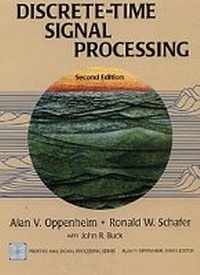
Discrete-Time Signal Processing
United States Edition
2nd Edition
Published on 14. January 1999
Book
Hardback
870 pages
978-0-13-754920-7 (ISBN)
Description
For senior/graduate-level courses in Discrete-Time Signal Processing. THE definitive, authoritative text on DSP - ideal for those with an introductory-level knowledge of signals and systems. Written by prominent, DSP pioneers, it provides thorough treatment of the fundamental theorems and properties of discrete-time linear systems, filtering, sampling, and discrete-time Fourier Analysis. By focusing on the general and universal concepts in discrete-time signal processing, it remains vital and relevant to the new challenges arising in the field -without limiting itself to specific technologies with relatively short life spans.
More details
Edition
2nd edition
Language
English
Place of publication
United States
Publishing group
Pearson Education (US)
Target group
College/higher education
Dimensions
Height: 242 mm
Width: 197 mm
Thickness: 38 mm
Weight
1512 gr
ISBN-13
978-0-13-754920-7 (9780137549207)
Copyright in bibliographic data and cover images is held by Nielsen Book Services Limited or by the publishers or by their respective licensors: all rights reserved.
Schweitzer Classification
Other editions
New editions
Alan Oppenheim | Ronald Schafer
Discrete-Time Signal Processing
Book
08/2009
3rd Edition
Pearson
€273.58
Article exhausted; check different version
Previous edition

Alan V. Oppenheim | Ronald W. Schafer
Discrete-time Signal Processing
Book
12/1988
Prentice-Hall
€40.80
Article exhausted; check for reprint
Content
1. Introduction.
2. Discrete-Time Signals and Systems.
Introduction. Discrete-time Signals: Sequences. Discrete-time Systems. Linear Time-Invariant Systems. Properties of Linear Time-Invariant Systems. Linear Constant-Coefficient Difference Equations. Frequency-Domain Representation of Discrete-Time Signals and Systems. Representation of Sequence by Fourier Transforms. Symmetry Properties of the Fourier Transform. Fourier Transform Theorems. Discrete-Time Random Signals. Summary.
3. The z-Transform.
Introduction. The z-Transform. Properties of the Region of Convergence for the z-Transform. The Inverse z-Transform. z-Transform Properties. Summary.
4. Sampling of Continuous-Time Signals.
Introduction. Periodic Sampling. Frequency-Domain Representation of Sampling. Reconstruction of a Bandlimited Signal from its Samples. Discrete-Time Processing of Continuous-Time Signals. Continuous-Time Processing of Discrete-Time Signals. Changing the Sampling Rate Using Discrete-Time Processing. Practical Considerations. Oversampling and Noise Shaping. Summary.
5. Transform Analysis of Linear Time-Invariant Systems.
Introduction. The Frequency Response of LTI Systems. System Functions for Systems Characterized by Linea. Frequency Response for Rational System Functions. Relationship Between Magnitude and Phase. All-Pass Systems. Minimum-Phase Systems. Linear Systems with Generalized Linear Phase. Summary.
6. Structures for Discrete-Time Systems.
Introduction. Block Diagram Representation of Linear Constant-Coefficient Difference Equations. Signal Flow Graph Representation of Linear Constant-Coefficient Difference Equations. Basic Structures for IIR Systems. Transposed Forms. Basic Network Structures for FIR Systems. Overview of Finite-Precision Numerical Effects. The Effects of Coefficient Quantization. Effects of Roundoff Noise in Digital Filters. Zero-Input Limit Cycles in Fixed-Point Realizations of IIR Digital Filters. Summary.
7. Filter Design Techniques.
Introduction. Design of Discrete-Time IIR Filters from Continuous-Time Filters. Design of FIR Filters by Windowing. Examples of FIR Filter Design by the Kaiser Window Method. Optimum Approximations of FIR Filters. Examples of FIR Equiripple Approximation. Comments on IIR and FIR Digital Filters. Summary.
8. The Discrete Fourier Transform.
Introduction. Representation of Periodic Sequences: the Discrete Fourier Series. Summary of Properties of the DFS Representation of Periodic Sequences. The Fourier Transform of Periodic Signals. Sampling the Fourier Transform. Fourier Representation of Finite-Duration Sequences: The Discrete-Fourier Transform. Properties of the Discrete Fourier Transform. Summary of Properties of the Discrete Fourier Transform. Linear Convolution Using the Discrete Fourier Transform. The Discrete Cosine Transform (DCT). Summary.
9. Computation of the Discrete Fourier Transform.
Introduction. Efficient Computation of the Discrete Fourier Transform. The Goertzel Algorithm Decimation-in-Time FFT Algorithms. Decimation-in-Frequency FFT Algorithms. Practical Considerations Implementation of the DFT Using Convolution. Summary.
10. Fourier Analysis of Signals Using the Discrete Fourier Transform.
Introduction. Fourier Analysis of Signals Using the DFT. DFT Analysis of Sinusoidal Signals. The Time-Dependent Fourier Transform. Block Convolution Using the Time-Dependent Fourier Transform. Fourier Analysis of Nonstationary Signals. Fourier Analysis of Stationary Random Signals: the Periodogram. Spectrum Analysis of Random Signals Using Estimates of the Autocorrelation Sequence. Summary.
11. Discrete Hilbert Transforms.
Introduction. Real and Imaginary Part Sufficiency of the Fourier Transform for Causal Sequences. Sufficiency Theorems for Finite-Length Sequences. Relationships Between Magnitude and Phase. Hilbert Transform Relations for Complex Sequences. Summary.
Appendix A: Random Signals.
Discrete-Time Random Process. Averages. Properties of Correlation and Covariance Sequences. Transform Representation of Random Signals.
Appendix B: Continuous-Time Filters.
Butterworth Lowpass Filters. Chebyshev Filters. Elliptic Filters.
2. Discrete-Time Signals and Systems.
Introduction. Discrete-time Signals: Sequences. Discrete-time Systems. Linear Time-Invariant Systems. Properties of Linear Time-Invariant Systems. Linear Constant-Coefficient Difference Equations. Frequency-Domain Representation of Discrete-Time Signals and Systems. Representation of Sequence by Fourier Transforms. Symmetry Properties of the Fourier Transform. Fourier Transform Theorems. Discrete-Time Random Signals. Summary.
3. The z-Transform.
Introduction. The z-Transform. Properties of the Region of Convergence for the z-Transform. The Inverse z-Transform. z-Transform Properties. Summary.
4. Sampling of Continuous-Time Signals.
Introduction. Periodic Sampling. Frequency-Domain Representation of Sampling. Reconstruction of a Bandlimited Signal from its Samples. Discrete-Time Processing of Continuous-Time Signals. Continuous-Time Processing of Discrete-Time Signals. Changing the Sampling Rate Using Discrete-Time Processing. Practical Considerations. Oversampling and Noise Shaping. Summary.
5. Transform Analysis of Linear Time-Invariant Systems.
Introduction. The Frequency Response of LTI Systems. System Functions for Systems Characterized by Linea. Frequency Response for Rational System Functions. Relationship Between Magnitude and Phase. All-Pass Systems. Minimum-Phase Systems. Linear Systems with Generalized Linear Phase. Summary.
6. Structures for Discrete-Time Systems.
Introduction. Block Diagram Representation of Linear Constant-Coefficient Difference Equations. Signal Flow Graph Representation of Linear Constant-Coefficient Difference Equations. Basic Structures for IIR Systems. Transposed Forms. Basic Network Structures for FIR Systems. Overview of Finite-Precision Numerical Effects. The Effects of Coefficient Quantization. Effects of Roundoff Noise in Digital Filters. Zero-Input Limit Cycles in Fixed-Point Realizations of IIR Digital Filters. Summary.
7. Filter Design Techniques.
Introduction. Design of Discrete-Time IIR Filters from Continuous-Time Filters. Design of FIR Filters by Windowing. Examples of FIR Filter Design by the Kaiser Window Method. Optimum Approximations of FIR Filters. Examples of FIR Equiripple Approximation. Comments on IIR and FIR Digital Filters. Summary.
8. The Discrete Fourier Transform.
Introduction. Representation of Periodic Sequences: the Discrete Fourier Series. Summary of Properties of the DFS Representation of Periodic Sequences. The Fourier Transform of Periodic Signals. Sampling the Fourier Transform. Fourier Representation of Finite-Duration Sequences: The Discrete-Fourier Transform. Properties of the Discrete Fourier Transform. Summary of Properties of the Discrete Fourier Transform. Linear Convolution Using the Discrete Fourier Transform. The Discrete Cosine Transform (DCT). Summary.
9. Computation of the Discrete Fourier Transform.
Introduction. Efficient Computation of the Discrete Fourier Transform. The Goertzel Algorithm Decimation-in-Time FFT Algorithms. Decimation-in-Frequency FFT Algorithms. Practical Considerations Implementation of the DFT Using Convolution. Summary.
10. Fourier Analysis of Signals Using the Discrete Fourier Transform.
Introduction. Fourier Analysis of Signals Using the DFT. DFT Analysis of Sinusoidal Signals. The Time-Dependent Fourier Transform. Block Convolution Using the Time-Dependent Fourier Transform. Fourier Analysis of Nonstationary Signals. Fourier Analysis of Stationary Random Signals: the Periodogram. Spectrum Analysis of Random Signals Using Estimates of the Autocorrelation Sequence. Summary.
11. Discrete Hilbert Transforms.
Introduction. Real and Imaginary Part Sufficiency of the Fourier Transform for Causal Sequences. Sufficiency Theorems for Finite-Length Sequences. Relationships Between Magnitude and Phase. Hilbert Transform Relations for Complex Sequences. Summary.
Appendix A: Random Signals.
Discrete-Time Random Process. Averages. Properties of Correlation and Covariance Sequences. Transform Representation of Random Signals.
Appendix B: Continuous-Time Filters.
Butterworth Lowpass Filters. Chebyshev Filters. Elliptic Filters.