

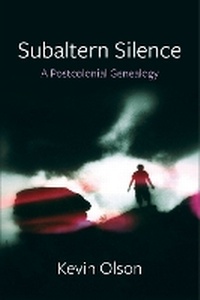
Subaltern Silence
A Postcolonial Genealogy
Published on 14. May 2024
Book
Hardback
368 pages
978-0-231-21446-9 (ISBN)
Description
Winner, 2025 Charles Taylor Book Award, APSA Interpretive Methodologies and Methods Conference Group
Subordination did not simply fade away in the aftermath of colonialism. Instead, this illuminating book shows, a host of subtle new techniques have arisen that dominate vast categories of people by rendering them silent. Kevin Olson investigates how contemporary societies silence the subaltern: sometimes a literal silencing, often a metaphor for other ways of making people unheard. Such forms of silence make some people invisible, push others to the margins, and devalue the voices and actions of still others.
Subaltern Silence traces the development of these techniques to the early years of European colonialism, focusing on Haiti's revolution and postcolonial trajectory. Exploring rich archives from Europe and the postcolonial world, Olson critiques fundamental modern institutions and technologies, such as the public sphere, the free press, and even progressively minded democratic revolution, as sites of exclusion. With the emergence of postcoloniality, he argues, subordination has become increasingly abstract, virtual, and symbolic. Nonetheless, it lies at the heart of contemporary racial politics, divides Global South from Global North, and allocates privileges and burdens in ways that are often scarcely perceptible. Engaging deeply with the thought of Gayatri Spivak and Michel Foucault, Subaltern Silence offers a new genealogy of colonialism and postcoloniality that is both historically informed and theoretically rich.
Subordination did not simply fade away in the aftermath of colonialism. Instead, this illuminating book shows, a host of subtle new techniques have arisen that dominate vast categories of people by rendering them silent. Kevin Olson investigates how contemporary societies silence the subaltern: sometimes a literal silencing, often a metaphor for other ways of making people unheard. Such forms of silence make some people invisible, push others to the margins, and devalue the voices and actions of still others.
Subaltern Silence traces the development of these techniques to the early years of European colonialism, focusing on Haiti's revolution and postcolonial trajectory. Exploring rich archives from Europe and the postcolonial world, Olson critiques fundamental modern institutions and technologies, such as the public sphere, the free press, and even progressively minded democratic revolution, as sites of exclusion. With the emergence of postcoloniality, he argues, subordination has become increasingly abstract, virtual, and symbolic. Nonetheless, it lies at the heart of contemporary racial politics, divides Global South from Global North, and allocates privileges and burdens in ways that are often scarcely perceptible. Engaging deeply with the thought of Gayatri Spivak and Michel Foucault, Subaltern Silence offers a new genealogy of colonialism and postcoloniality that is both historically informed and theoretically rich.
Reviews / Votes
The arguments presented here are persuasive...recommended. * Choice * Olson's genealogy of subaltern silence is an urgent counterhistory of the public sphere as analyzed by its most influential theorists. Drawing on practices of silencing in the archives of the colonial and postcolonial Caribbean, Olson puts to rest the idea that colonial violence and subordination were ended with the creation of a modern public sphere. His careful attention to silences in and of the archive instead exposes the public sphere as a domain of subordination. -- Verena Erlenbusch-Anderson, author of <i>Genealogies of Terrorism: Revolution, State Violence, Empire</i> This important intervention shows how examining silence in the revolutionary Caribbean during the eighteenth and nineteenth centuries-along with their aftermaths-reveals crucial insights not only into the concepts of agency and freedom but also, as Kevin Olson provocatively contends, subordination. Subaltern Silence is a brilliant book that could very well change the landscape of the contemporary social sciences and humanities for the better. -- Neil Roberts, author of <i>Freedom as Marronage</i>More details
Series
Language
English
Place of publication
New York
United States
Target group
College/higher education
Product notice
Trade binding
Illustrations
35 b&w illustrations
Dimensions
Height: 235 mm
Width: 156 mm
ISBN-13
978-0-231-21446-9 (9780231214469)
Copyright in bibliographic data and cover images is held by Nielsen Book Services Limited or by the publishers or by their respective licensors: all rights reserved.
Schweitzer Classification
Other editions
Additional editions
E-Book
07/2024
1st Edition
Columbia University Press
€34.49
Available for download
Person
Kevin Olson is professor of political science at the University of California, Irvine. He is the author of Imagined Sovereignties: The Power of the People and Other Myths of the Modern Age (2016) and Reflexive Democracy: Political Equality and the Welfare State (2006) and the editor of Adding Insult to Injury: Nancy Fraser Debates Her Critics (2008).
Content
Acknowledgments
Part I. Innovations in Subordination: Colonial Public Spheres
1. The Sounds of Silence
2. Silence as an Achievement: Marronage
3. Unsettling Silences: The Perils of Poison
4. Phantasmatic Public Spheres: The Paranoid Style in French Colonialism
5. Disruptive Object: The Tricolor Cockade and the Fear of Black Jacobins
Interlude. The Shifting Horizon of Modernity: Placide Camus, Apprentice Printer
Part II. Postcolonial Transformations
6. Times of Exception: Subaltern Silence in the Revolutionary Caribbean
7. Revolution Within a Revolution: Postcolonial Liberalism and the Army of Sufferers
8. The Force of Farce: Emperor Soulouque and the Art of Racial Caricature
9. Silent in Plain Sight: We are All Postcolonial Now
Notes
Bibliography
Index
Part I. Innovations in Subordination: Colonial Public Spheres
1. The Sounds of Silence
2. Silence as an Achievement: Marronage
3. Unsettling Silences: The Perils of Poison
4. Phantasmatic Public Spheres: The Paranoid Style in French Colonialism
5. Disruptive Object: The Tricolor Cockade and the Fear of Black Jacobins
Interlude. The Shifting Horizon of Modernity: Placide Camus, Apprentice Printer
Part II. Postcolonial Transformations
6. Times of Exception: Subaltern Silence in the Revolutionary Caribbean
7. Revolution Within a Revolution: Postcolonial Liberalism and the Army of Sufferers
8. The Force of Farce: Emperor Soulouque and the Art of Racial Caricature
9. Silent in Plain Sight: We are All Postcolonial Now
Notes
Bibliography
Index