

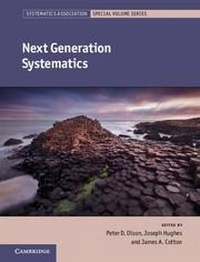
Next Generation Systematics
Published on 16. June 2016
Book
Hardback
351 pages
978-1-107-02858-6 (ISBN)
Description
We live in an age of ubiquitous genomics. Next generation sequencing (NGS) technology, both widely adopted and advancing at pace, has transformed the data landscape, opening up an enormous source of heritable characters to the comparative biologist. Its impact on systematics, like many other fields of biology, has been felt throughout its breadth: from defining species boundaries to estimating their evolutionary histories. This volume examines the broad range of ways in which NGS data are being used in systematics and in the fields that it underpins, from biodiversity prospecting to evo-devo. Experts in their fields draw on contemporary case studies to demonstrate state-of-the-art applications of NGS data. These, along with novel analyses, comprehensive reviews and lively perspectives, are combined to produce an authoritative account of contemporary issues in systematics that have been impacted by the adoption of NGS.
Reviews / Votes
'... the book provides a very good overview of how the field of systematics is being shaped by the impact of a promising technology. In focusing on the major achievements and the challenges ahead it conveys a realistic vision for the future. One that has the potential to motivate many readers to embrace these approaches or to focus on solving the mentioned challenges.' Toni Gabaldon, The Quarterly Review of BiologyMore details
Series
Language
English
Place of publication
Cambridge
United Kingdom
Target group
Professional and scholarly
Product notice
sewn/stitched
Cloth over boards
Illustrations
5 Tables, black and white; 8 Plates, color; 32 Halftones, unspecified; 8 Line drawings, unspecified
Dimensions
Height: 256 mm
Width: 191 mm
Thickness: 21 mm
Weight
957 gr
ISBN-13
978-1-107-02858-6 (9781107028586)
Copyright in bibliographic data and cover images is held by Nielsen Book Services Limited or by the publishers or by their respective licensors: all rights reserved.
Schweitzer Classification
Other editions
Additional editions
Peter D. Olson
Next Generation Systematics
E-Book
06/2016
Cambridge University Press
€66.49
Available for download
Peter D. Olson | Joseph Hughes | James A. Cotton
Next Generation Systematics
E-Book
06/2016
Cambridge University Press
€78.49
Available for download
Persons
Peter D. Olson is a Researcher in the Department of Life Sciences at the Natural History Museum, London. His research integrates comparative, developmental and genomic studies of parasitic flatworms aimed at unravelling the genetic basis of their evolution. He became involved in the field of molecular phylogenetics when PCR and manual sequencing were being widely used to generate the first ribosomal-based estimates of animal phylogeny. Joseph Hughes is an evolutionary biologist working at the Medical Research Council - at the University of Glasgow Centre for Virus Research. He is especially interested in understanding the evolutionary forces that have shaped the solutions that different species have found to adapt to their environment. He has embraced the deluge of data from high throughput sequencing platforms and currently mainly works on non-living particles known as viruses. James A. Cotton is a Senior Staff Scientist in the Parasite Genomics group at the Wellcome Trust Sanger Institute. His background is in phylogenetic theory and methods, and he now leads projects on comparative, evolutionary and population genomics of parasites of medical and veterinary importance.
Content
List of contributors; Introduction: studying diversity in an age of ubiquitous genomics James A. Cotton and Peter D. Olson; Part I. Next Generation Phylogenetics: 1. Perspective: challenges in assembling the 'next generation' tree of life Michael J. Sanderson; 2. The role of next generation sequencing technologies in shaping the future of insect molecular systematics Joseph Hughes and Stuart Longhorn; 3. Phylogenetics of Nematoda Mark Blaxter, Georgios Koutsovoulos, Martin Jones, Sujai Kumar and Ben Elsworth; 4. High throughput multiplexed mitogenomics for metazoans-prospects and limitations Peter G. Foster, Maria Stalteri, Andrea Waeschenbach and D. Timothy J. Littlewood; 5. Investigating bacterial microevolution through next generation sequencing Josephine M. Bryant and Simon R. Harris; Part II. Next Generation Biodiversity Science: 6. Perspective: apres le deluge: ubiquitous field barcoding should drive twenty-first-century taxonomy Richard M. Bateman; 7. Perspective: biodiversity and the (data) beast Holly M. Bik and W. Kelley Thomas; 8. Next generation biodiversity analysis Mehrdad Hajibabaei and Ian King; 9. Protist systematics, ecology and next generation sequencing David Bass and Thomas Bell; Part III. Next Generation Challenges and Questions: 10. Perspective: systematics in the age of genomics Antonis Rokas; 11. Perspective: the role of next generation sequencing for integrative approaches to evolutionary biology Ralf J. Sommer; 12. Next generation apomorphy: the ubiquity of taxonomically restricted genes Paul A. Nelson and Richard J. A. Buggs; 13. Utilizing next generation sequencing for evo-devo study of plant traits Rachael H. Walker, Paula J. Rudall and Beverley J. Glover; 14. An NGS approach to archaeobotanical museum specimens as genetic resources in systematics research Oliver Smith, Sarah A. Palmer, Rafal Gutaker and Robin G. Allaby; 15. From sequence reads to evolutionary inferences James A. Cotton; Index.