

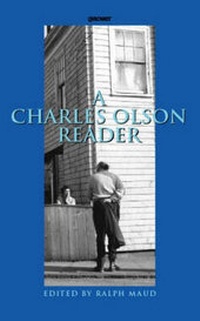
The Charles Olson Reader
Published on 31. August 2005
Book
Paperback/Softback
280 pages
978-1-85754-784-9 (ISBN)
Description
Charles Olson (1910-70) believed that poetry exists in an 'open field' through which the poet transmits energy to the receptive reader. Olson's influence on the development of British and American poetry through his writing and teaching is immense. His work encompasses myth, history, scholarship and politics, grand theories and delight in the particular variousness of life, all marked by the curiosity and openness to experience that he asked of his readers. Olson grew up and returned to live in the seafaring town of Gloucester, Massachusetts, and it was from the life and language of its citizens that his poetry drew its strengths.
The Reader includes extracts from the full range of Olson's poetry and prose, including letters, interviews and the full text of the key essay 'Projective Verse'. Ralph Maud, a colleague of Olson's from 1963-5 and the editor of Olson's letters, has supplied an introduction, supporting illustrations, notes and bibliography to this essential resource.
The Reader includes extracts from the full range of Olson's poetry and prose, including letters, interviews and the full text of the key essay 'Projective Verse'. Ralph Maud, a colleague of Olson's from 1963-5 and the editor of Olson's letters, has supplied an introduction, supporting illustrations, notes and bibliography to this essential resource.
Reviews / Votes
'My favourite scholarly book of the moment...it effortlessly seduces the reader into a meaningful world of thought and study.'Tears in the Fence Ian Brinton, PN Review, issue 167, January - February 2006
Black Mountain in England
Ralph Maud's A Charles Olson Reader, recently published by Carcanet, will probably stand for some years to come as the most intelligent and informative introduction to the American poet's life and work that is available. In his introduction Maud refers to Charles Tomlinson's special issue of Ian Hamilton's magazine of poetry and criticism, The Review. As the guest editor, in January 1964, Tomlinson produced an anthology of work related to the Black Mountain poets including poems by Olson, Zukofsky, Dorn and Levertov, Robert Duncan's essay 'Notes on Poetics' and an interview between the editor and Robert Creeley. It was particularly appropriate that this introduction to American poetry should have been taken on by Charles Tomlinson since the work of the British poet had been more readily recognised in the States than in his own country. Tomlinson's volume, The Necklace, had been published in 1955 by the Fantasy Press and in his absorbing autobiographical sketches, 'Some Americans: A Personal Record' (published in the volume American Essays: Making It New, Carcanet 2001), he suggests that it 'would not have appeared then, had Donald Davie not contributed an introduction.' Hugh Kenner reviewed the volume in the summer 1956 issue of Poetry and, as Tomlinson points out, by the date of the review 'I had virtually completed a full-scale collection, Seeing is Believing, adding a few more poems to the manuscript in the following year. This book found no English publisher--I tried most of them--until 1960.' With Kenner's assistance the manuscript went off to a new publishing house in New York, McDowell Obolensky, and in the winter of 1957 they accepted it for publication.
In Tomlinson's interview with Creeley some discussion takes place concerning the nature of reading with Tomlinson recalling that Creeley's own poem 'I Know a Man' had been referred to in the Times Literary Supplement. Tomlinson remembers that 'where the name John occurs and someone says "for Christ's sake", in the TLS account, both John and Christ had to be gone into on a very symbolic level. I think this is the kind of thing the English tend to do when they read Williams, when they read Pound, when they read you: they can't take what you're presenting--they must somehow try to dig down for something which they think ought to be there and they get frustrated when they find it isn't.' Creeley's response to this posits the view that 'that's partly due to the fact that the two cultures are separated really by the terms of a whole spiritual environment. I mean, when one lives in the States, even so recently as, say, my own childhood, the terms of that environment are most usually ones that demand an immediate recognition of facts and substantial data in that environment. Now this is what Williams meant, I think, when he said, "No ideas but in things". It's the old characteristic that has become so associated with American pragmatism.' Inevitably this recognition of facts leads to discussion of localism and Tomlinson registers the difficulty some English readers have with Williams's interpretation of environment as placed in New Jersey. Creeley's reply is central:
Well, I know, for example, of your own interest in Machado, and I certainly think of Chaucer and a number of other major figures of all nationalities who depended on, let's say, a very particular, close local reference for the substance of their detail. This has been remarked over and over and I don't think Williams' emphasis upon a body of local detail has limited him any more than it has Chaucer or Machado...I'm sentimental enough to believe that one proceeds from the immediate and particular--this is where the universal is to be embodied, if anywhere.
In February 1957 Tomlinson had incorporated this idea into his own 'Sea Poem' which he sent to Williams, prompting the reply:
'Sea Poem' is a fine piece that impresses me both for its scholarly composition in the English sense of the term and for its generosity toward the American idiom and all it implies for me...
The poem was the first of Tomlinson's experiments with the Williams three-ply line:
A whiter bone:
the sea-voice
in a multiple monody
crowding towards that end.
It is as if
the transparencies of sound
composing such whiteness
disposed many layers
with a sole movement
of the various surface,
the depths, bottle-glass green
the bed, swaying
like a fault in the atmosphere, each
shift
with its separate whisper, each whisper
a breath of that singleness
that 'moves together
if it moves at all',
and its movement is ceaseless,
and to one end--
the grinding
a whiter bone.
Tomlinson was not simply imitating Williams and as he puts it in Some Americans, 'it was the three-ply poems that appealed to me most, perhaps because they afforded the possibility of a more meditative movement.' 'Sea Poem' has an English echo contained in its awareness of Shakespeare's Sonnet 60 in the sound and wording of 'crowding towards that end' and the reference to Wordsworth's 'Resolution and Independence' in the moving together 'if it move at all'. Richard Swigg points out in Charles Tomlinson and the Objective Tradition (Associated University Presses,1994).
Where the whole is seen via the part and the part reverberates within the whole, the Wordsworthian quotation gains further resonance inside Tomlinson's new verse-tune. It speaks of the tremulous balance between self and the world, local and universal, besides offering resistance to mere flux and fatalism--as Wordsworth sees in the consoling strength of the leech-gatherer on the lonely moor.
Some three months after the publication of the Black Mountain Poets issue of The Review Tomlinson published 'One World' in the second number of The Resuscitator where he appeared alongside Olson, Corman and Zukofsky:
One world you say
eyeing the way the air
inherits it. The year
is dying and the grass
dead that the sunlight burnishes
and breeds distinctions in. Against
its withered grain the shadow
pits and threads it, and your one
lies tracked and tussocked, disparate,
abiding in, yet not obedient
to your whim. Your quiet ministers
to windless air, but the ear
pricks at an under-stir
as the leaves clench tighter
in their shrivellings. The breath of circumstance
is warm, a greeting in their going
and under each death, a birth.
Whilst there is a clear memory here of Williams's poem from the 1923 volume, Spring And All, 'By the road to the contagious hospital' there is also that particular English echo of Coleridge's 'Frost at Midnight' which 'performs its secret ministry,/Unhelped by any wind'.
In Tomlinson's introduction to the Black Mountain anthology he refers to The Black Mountain Review, published 1954-57 and edited by Creeley:
It transmitted what was viable in the post-Williams, post-Pound era; its poetry deepened, among other things, our sense of what Olson called the projective, our sense of the syllable and of the breath.
Tomlinson was introduced to Olson's 'Projective Verse' in 1960 when he was sent a copy by his friend Fred Siegal and in a review of books about Olson for the TLS on 14/12/79 he comments:
'Projective Verse' still seems to me, for all its unevenness, a genuine attempt to measure where things stood with verse in the late 1940s. it is certainly a work of discipleship and one can track many of its formulations to Pound's 'Treatise on Metre' and to Williams's manifesto statements. But Olson knew this: his intention in 'Projective Verse' was not originality, but the extending of a tradition forward from the two masters he acknowledged and quoted as openly in his work as Pope did Dryden and Milton.
His recognition of the importance of Olson's work is also registered by his inclusion of Robert Duncan's 'Notes on Poetics: Regarding Olson's "Maximus"' in the Black Mountain anthology. He calls it 'one of the most trenchant works of aesthetic theory from the Black Mountain ambience...It brings together brilliantly strands from both Olson and Zukofsky and will, one trusts, send the reader back to their prose.' Duncan suggests that 'conception cannot be abstracted from doing; beauty is related to the beauty of an archer hitting the mark':
Referred to its source in the act, the intellect actually manifest as energy, as presence in doing, is the measure of our artt (as vision, claritas, light, illumination, was the measure of Medieval artt)).
Duncan goes on to quote from 'Letter 7' of The Maximus Poems, written in April 1953 at Black Mountain, where Olson refers to the American painter Marsden Hartley:
In 'Maximus', Olson points to Marsden Hartley: 'to get that rock in paint'--a getting, a taking grasp, a hand that is the eye. 'But what he did with that bald jaw of stone'. 'Did with', not 'saw in'. And here Olson comes to the hand--Hartley's hand. Jake's hand: 'a man's hands,/as his eyes'.
This energy of grasp is reflected in Tomlinson's own poem, 'Swimming Chenango Lake', written in September 1967 and published in The Way of a World, Oxford 1969:
But he has looked long enough, and now
Body must recall the eye to its dependence
As he scissors the waterscape apart
And sways it to tatters. Its coldness
Holding him to itself, he grants the grasp,
For to swim is also to take hold
On water's meaning, to move in its embrace
And to be, between grasp and grasping, free.
He reaches in-and-through to that space
The body is heir to, making a where
In water, a possession to be relinquished
Willingly at each stroke.
As Richard Swigg makes clear:
The observer visually, like the swimmer physically, enters that changeful flux, but still retains an unsubmerged awareness...The self is not anarchically doing what it likes and has kinship with Lawrence's idea of freedom in the American Studies, when one is bound by place and obedient to the 'IT', the 'deepest self'.
In The Poem as Initiation: An Address delivered at Phi Beta Kappa Convocation, Colgate University, 30 October 1967, Tomlinson speaks about 'Swimming Chenango Lake' linking it to a Hopi initiation ceremony where a child's coming of age is ritually celebrated by clansmen wearing masks. The Hopi elders remove their masks at the end of the ceremony to reveal to the child the sense of new-born kinship and Tomlinson says 'the naked reality, the spreading, pulsating water takes over from the swimmer, the mask of the poem (so to speak) is being put by, and the elusive reality of the lake, or of life, is admitted back into its own.'
Towards the end of the conversation between Tomlinson and Creeley, the American poet, referring to Olson's distinction in 'Projective Verse' between the 'head' and the 'heart', suggests that 'the head, the intelligence by way of the ear to the syllable--which he [Olson] calls also 'the king and pin'--is the unit upon which all builds.' By contrast, the heart stands 'as the primary feeling term' whilst the head 'is discriminating':
It is discriminating by way of what it hears. People talk about what they see in a poem--that's fine--I understand that. A lot of poetry in our particular period has been written as a visual occasion, but the finer occasion seems to be one in which one is hearing a poem.
Richard Swigg's second major study of Tomlinson's work, Look with the Ears (Peter Lang 2002) was subtitled 'Charles Tomlinson's Poetry of Sound'. Referring to the lines from 'Swimming Chenango Lake' quoted above, he recognises that the swimmer 'cuts through the element with a force that unegotistically yields and actively shapes:
Subject to water's 'coldness / Holding' (with an aspirate clutch that tightens : 'Holding him to itself') the swimmer nevertheless 'grants the grasp'--closely accorded in the sound-match, but with room for volition's awareness. There is more room still when the sentence balances out the infinitives in enactment of reason's physicality. 'For to swim' is 'to take hold', thence 'to move' in the 'embrace' of 'water's meaning', with the verse-line stretched now over a space of discrimination:
And to be--between grasp and grasping--free.
The last question that Tomlinson put to Robert Creeley in that published 'Conversation' concerned T.S. Eliot and whether he was still available to the American poet as a useful influence. Creeley's response was a clear 'No'. Instead, he mentions 'the figure the New Critics and the universities to this day have conspired to ignore: that is Walt Whitman.' In Some Americans, Tomlinson mentions his own 'growing dissatisfaction with Whitman' and quotes D.H. Lawrence's diagnosis of the American poet as 'always wanting to merge himself into the womb of something or other.' Perhaps this distrust informs the Olson review, 'From Amateur to Impresario' which is reprinted in American Essays:
Olson wrote 'Projective Verse' when he was unknown. The earlier Maximus Poems, printed in Stuttgart (1953-6), found fit but limited audience. Later Olson passed from the elite public grouped round the Black Mountain experiment to the over-exposure of a fame that seems to have followed the publication of The New American Poetry, edited by Donald Allen, in 1960. In the prose , you can trace the path from the dignity and care of essays like 'Human Universe' or the conventional epistolatory style of Mayan Letters, to the garrulous improvisation of 'The Beloits' [Poetry and Truth, The Beloit Lectures and Poems, 1968]....Whatever happened to the writer of Call Me Ishmael?
Creeley also pointed out that Olson 'wanted something that could encompass a whole cultural reality...and deal with all the variability of presence in a total social organism' and it is, perhaps, with this idea in mind that Tomlinson wrote 'The Littleton Whale, in memory of Charles Olson' in February 1980 (published in The Flood, Oxford 1981). The poem starts by referring to a letter Tomlinson had received from Olson:
What you wrote to know
was whether
the old ship canal
still paralleled the river
south
of Gloucester (England)...
What I never told
in my reply
was of the morning
on that same stretch
(it was a cold
January day in '85)
when Isobel Durnell
saw the whale...
Richard Swigg points to the source of the poem as Christopher Jordan's Severnside Memories where he tells of a whale washed up on the shore by Littleton Pill on January 5th 1885:
The village itself had a brick and tile works whose products would be transported to Bristol by the sloop Matilda: facts drawn from the source and a basis for the mystery of the creature. For the sense of the extraordinary is introduced by means of unportentous documentation that begins in the style of a letter to the late Charles Olson (himself a writer on Melville's White Whale in Call Me Ishmael).
When Isobel first sees the stranded whale there is an intrusive immediacy of its being there:
She was up at dawn
to get her man off on time
to the brickyard and
humping up over the banks
beyond Bunny Row
a slate-grey hill showed
that the night before
had not been there...
They both ran outside
and down to the shore:
the wind was blowing
as it always blows
so hard that the tide
comes creeping up under it
often unheard...
The great grey-blue thing
had an eye
that watched wearily
their miniature motions as they
debated its fate
for the tide
was already feeling beneath it
floating it away...
The placed reality of the whale's presence is caught in the slow Gloucestershire accent of Hector Knapp, one of the witnesses:
And Hector Knapp
wrote in his diary:
Thear was a Whal
cum ashore at Littleton Pill
and bid thear a fortnight
He was sixty eaight feet long
His mouth was twelve feet
The Queen claim it at last
and sould it for forty pound
Thear supposed to be
forty thousen pepeal to se it
from all parts of the cuntry...
In Letter 7 of The Maximus Poems, Olson recalls the rock 'Whale's Jaw' of Dogtown, Gloucester:
(As hands are put to the eyes' commands
There is this rock breaches
the earth: the Whale's Jaw
my father stood inside of
I have a photograph, him
a smiling Jonah forcing back those teeth
Or more Jehovah, he looks that strong
he could have split the rock
as it is split, and not
as Marsden Hartley painted it
so it's a canvas glove
Tomlinson seems to offer a nod towards this image when he writes of the reaction of George Sindry to the stranded whale:
The Methodist preacher
said that George Sindry
who was a very religious man
told himself when that whale came in
he'd heard so many arguments
about the tale of Jonah not being true
that he went to Littleton to
'satisfy people'. He was a tall man
a six footer
'but I got into that whale's mouth' he said
'and I stood in it
upright...'
In Tomlinson's verse-letter he reveals the way that the past lives on in Littleton:
You can still see the sign
toWhale Wharf as they renamed it
and Wintle's Brickworks became
the Whale Brick
Tile and Pottery Works...
Walking daily onto
the now-gone premises
through the 'pasture land
with valuable deposits of clay thereunder'
when the machine--and drying sheds
the five kilns, the stores and stables
stood permanent in that place
of their disappearance
Enoch Durnell still
relished his part in all that history begun
when Bella shook
and woke him with a tale that the tide
had washed up a whole house
with blue slates on it into Littleton Pill
and that house was a whale...
With the word 'Walking' we seem to be in the present day with the author but, as Swigg points out, it is not to him that the participle ultimately refers:
Through its everydayness, the syntax is 'Walking' through and past the list of solid yet transient facts--all that is commercially and mentally disposable in the 1928 advertisement for the sale of the brick and tile works. Past all that, there endures the memory of a relation--the present alive in a more-than-daily sense.
The importance of this poem being 'in memory of Charles Olson' is registered in its composition being two months after the T.L.S. published the Olson review which concludes:
In the early 1960s, in a scribbled P.S. at the end of one of his higgledy-piggledy letters, Olson asked me whether the old ship canal was still open south of Gloucester (England). I had no idea, having my eyes mostly on the limestone escarpment above that, and forgot the question till after his death. Then walking along the Severn one day, I climbed up the embankment to discover, hidden behind it and parallel to the river, the canal of which Olson had spoken. A barge was travelling up it with a load of mud dredged out of Sharpness docks. It was instantaneous, dripping evidence of 'what was and still is there', something that Olson's poetics could have rescued from the status of a mere image, bringing to bear the factual poetry of a whole region.
In the fourth section of A Charles Olson Reader, Ralph Maud writes:
The early Maximus poems were written literally to Gloucester by Olson in his wanderings in the same way that Maximus, a second-century neo-Platonist, sent sermons back to his own city of Tyre. Olson confessed that Maximus was not as interesting as he had hoped, but he found the analogy useful, especially when he discovered that Tyre was the last hold-out against the steam-roller of Alexander the Great, just as he wished Gloucester on the island of Cape Ann might resist the inroads of what the rest of the nation had become:
o tansy city, root city
let them not make you
as the nation is...
But polis, which in the Greek sense would be a city governed by citizens known to each other, neighbour accountable to neighbour, is not so easily defined today.
I speak to any of you, not to you all, to no group, not to you as citizens
as my Tyrian might have. Polis now
is a few, is a coherence not even yet new (the island of this city
is a mainland now of who? who can say who are
citizens?
Thus, 'Letter 3'. The rest of the poems of this section fill out what we can take to be Olson's tentative answer: 'Polis is eyes'.
This seems particularly appropriate to a vitally important English poet whose volume Seeing is Believing only appeared in England in 1960, two years after its American publication. David Caddy, Tears in the Fence, Autumn 2005, Number 42
My favourite scholarly book of the moment is A Charles Olson Reader edited by Ralph Maud because it effortlessly seduces the reader into a meaningful world of thought and study. It is an excellent introduction to the poetry, prose, letters, esays and thought of Charles Olson (1910-70). Olson grew up around the seafaring town of Gloucester, Massachusetts, drawing from the life and language of the place for his poetry. He became rector of the Black Mountain College 1951-56 and is forever associated with that name. He is a major figure, inspiring a range of poets, such as Robert Creeley, Edward Dorn, Denise Levertov, Cid Corman, Jeremy Prynne, Charles Tomlinson and Tom Raworth. The book contains invaluable background, family and career information with generous samples of the work, supporting illustrations, notes and bibliography. It has the classic 1950 essay 'Projective Verse', which was first shown to me at Essex University by Kevin Nolan in 1978, and has continued to inspire poets ever since. To be polemical for a moment, Olson is the type of American thinker and poet that the English Movement and post-Movement followers, such as our current Poet Laureate, cannot come to terms with. All this demand to be 'open', very suspect. You never know where it might lead? Olson liked to think 'outside the box', was profound (sometimes not) and could write well. Possibly like we might hope Norman Mailer might write poetry. Olson's prose is outstanding and where I would advise newcomers to start, especially the wonderful Mayan Letters, sent to Creeley in 1951. If you like reading W.G. Sebald or Iain Sinclair you will appreciate this writer.
More details
Language
English
Place of publication
Manchester
United Kingdom
Dimensions
Height: 216 mm
Width: 135 mm
Thickness: 15 mm
ISBN-13
978-1-85754-784-9 (9781857547849)
Copyright in bibliographic data and cover images is held by Nielsen Book Services Limited or by the publishers or by their respective licensors: all rights reserved.
Schweitzer Classification
Persons
Charles Olson (1910-1970) is credited with inventing the term 'post-modern'. Father of the Projectivist movement and one of the great teachers of his age, he is also one of its great poets, a writer whose work has had an abiding impact on radical currents of American and British poetry. He owes much to Pound and Williams, but Maximus is not an unproblematic child of the Cantos and Paterson. What these poems have in common is that they are unfinished and unfinishable.
Son of working-class immigrants, he grew up in Gloucester, Massachusetts, north of Boston, on the sea, and Gloucester is at the heart of his mature poetry. He studied at Harvard and became a scholar and teacher. He worked for the Roosevelt government during the war, and later taught at Black Mountain College, North Carolina, where as rector in the early 1950s he attracted creative artists and spearheaded the campaign against the New Criticism. A number of important artists and writers were associated with Black Mountain: De Kooning, Kline and Rauschenberg, John Cage, John Dewey. Robert Creeley's Black Mountain Review was an ambitious magazine. RALPH MAUD is Emeritus Professor of English and Associate of the Institute for the Humanities at Simon Fraser University, British Columbia. He is a major editor of the work of Dylan Thomas. He is also author of Charles Olson's Reading: A Biography (1995), What Does Not Change: The Significance of Charles Olson's 'The Kingfishers' (1997) and editor of The Selected Letters of Charles Olson (2000). He knew the poet from 1963 to 1965 when they were colleagues at the State University of New York at Buffalo.
Son of working-class immigrants, he grew up in Gloucester, Massachusetts, north of Boston, on the sea, and Gloucester is at the heart of his mature poetry. He studied at Harvard and became a scholar and teacher. He worked for the Roosevelt government during the war, and later taught at Black Mountain College, North Carolina, where as rector in the early 1950s he attracted creative artists and spearheaded the campaign against the New Criticism. A number of important artists and writers were associated with Black Mountain: De Kooning, Kline and Rauschenberg, John Cage, John Dewey. Robert Creeley's Black Mountain Review was an ambitious magazine. RALPH MAUD is Emeritus Professor of English and Associate of the Institute for the Humanities at Simon Fraser University, British Columbia. He is a major editor of the work of Dylan Thomas. He is also author of Charles Olson's Reading: A Biography (1995), What Does Not Change: The Significance of Charles Olson's 'The Kingfishers' (1997) and editor of The Selected Letters of Charles Olson (2000). He knew the poet from 1963 to 1965 when they were colleagues at the State University of New York at Buffalo.
Content
Table of Contents
Introduction
List of Abbreviations and References
I Prologue
La Prfface
The Resistance (for Jean Riboud)
II Parents
The Post Office
As the Dead Prey Upon Us
III Projective Verse
The Kingfishers
Projective Verse
IV Maximus (1): Polis
Letter 3
The Songs of Maximus
Letter 10
Capt Christopher Levett (of York)
Maximus to Gloucester, Letter 27 [withheld]
V In Thicket
La Chute
In Cold Hell, in Thicket
The Ring of
VI Outside the Box
The Gate & the Center
from Mayan Letters
To Gerhardt, There, Among Europe's Things... 1
Human Universe
Variations Done for Gerald Van De Wiele
VII Maximus (2): Cosmology
Letter-41 [broken off]
MAXIMUS, FROM DOGTOW - I
MAXIMUS, FROM DOGTOWN - II
The Poimanderes
I forced the calm grey waters
A Maximus Song
Maximus, at the Harbor
A Later Note on / Letter-15
'View': fr the Orontes / fr where Typhon
after the storm was over
3rd letter on Georges, unwritten
to enter into their bodies
The Cow of Dogtown
Gylfaginning VI
All night long
[MAXIMUS, FROM DOGTOWN - IV]
VIII Causal Mythology
from Causal Mythology
IX Maximus (3): Earthly Paradise
having descried the nation
Maximus to himself June 1964
Cole's Island
Maximus of Gloucester
[to get the rituals straight
Celestial evening, October 1967
* Added to making a Republic
I'm going to hate to leave this Earthly Paradise
The first of morning was always over there
I live underneath the light of day
Appendix: 'Maximus, to himself'
TYRE
from 'Paris Review Interview'
Notes
Introduction
List of Abbreviations and References
I Prologue
La Prfface
The Resistance (for Jean Riboud)
II Parents
The Post Office
As the Dead Prey Upon Us
III Projective Verse
The Kingfishers
Projective Verse
IV Maximus (1): Polis
Letter 3
The Songs of Maximus
Letter 10
Capt Christopher Levett (of York)
Maximus to Gloucester, Letter 27 [withheld]
V In Thicket
La Chute
In Cold Hell, in Thicket
The Ring of
VI Outside the Box
The Gate & the Center
from Mayan Letters
To Gerhardt, There, Among Europe's Things... 1
Human Universe
Variations Done for Gerald Van De Wiele
VII Maximus (2): Cosmology
Letter-41 [broken off]
MAXIMUS, FROM DOGTOW - I
MAXIMUS, FROM DOGTOWN - II
The Poimanderes
I forced the calm grey waters
A Maximus Song
Maximus, at the Harbor
A Later Note on / Letter-15
'View': fr the Orontes / fr where Typhon
after the storm was over
3rd letter on Georges, unwritten
to enter into their bodies
The Cow of Dogtown
Gylfaginning VI
All night long
[MAXIMUS, FROM DOGTOWN - IV]
VIII Causal Mythology
from Causal Mythology
IX Maximus (3): Earthly Paradise
having descried the nation
Maximus to himself June 1964
Cole's Island
Maximus of Gloucester
[to get the rituals straight
Celestial evening, October 1967
* Added to making a Republic
I'm going to hate to leave this Earthly Paradise
The first of morning was always over there
I live underneath the light of day
Appendix: 'Maximus, to himself'
TYRE
from 'Paris Review Interview'
Notes