

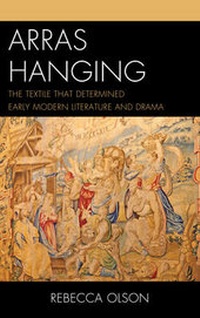
Arras Hanging
The Textile That Determined Early Modern Literature and Drama
Published on 27. March 2017
Book
Paperback/Softback
180 pages
978-1-61149-648-2 (ISBN)
Description
Textiles have long provided metaphors for storytelling: a compelling novel "weaves a tapestry" and we enjoy hearing someone "spin" a tale. To what extent, however, should we take these metaphors seriously? Arras Hanging: The Textile That Determined Early Modern Literature and Drama reveals that in the early modern period, when cloth-making was ubiquitous and high-quality tapestries called arras hangings were the most valuable objects in England, such metaphors were literal. The arras in particular provided a narrative model for writers such as Edmund Spenser and William Shakespeare, who exploited their audience's familiarity with weaving to engage them in highly idiosyncratic and "hands on" ways. Specifically, undescribed or "blank" tapestries in the period's fiction presented audiences with opportunities to "see" whatever they desired, and thus weave themselves into the story. Far more than background objects, literary and dramatic arras hangings have much to teach us about the intersections between texts and textiles at the dawn of print, and, more broadly, about the status of visual art in post-Reformation England.
Reviews / Votes
The book is an imaginative survey of tapestries as material objects, representations, theatrical furnishings, poetic figures, and still more. * American Behavioral Scientist *More details
Language
English
Place of publication
United States
Publishing group
Bloomsbury Publishing Plc
Target group
Professional and scholarly
Illustrations
3 Halftones, black and white
Dimensions
Height: 230 mm
Width: 149 mm
Thickness: 14 mm
Weight
277 gr
ISBN-13
978-1-61149-648-2 (9781611496482)
Copyright in bibliographic data and cover images is held by Nielsen Book Services Limited or by the publishers or by their respective licensors: all rights reserved.
Schweitzer Classification
Person
Rebecca Olson is assistant professor of English and affiliated faculty in womens' studies at Oregon State University. Her ongoing research interests include word and image studies, early modern material culture, and Tudor poetry and drama.
Content
Acknowledgments
Introduction: Hiding in Plain Sight
1. "Pliant, and Wel-Colored Threads": The Metatextual Textile
2. Tudor Tapestry Conventions and Spenser's Courts of Pride
3. Between the Tappet and the Wall
4. Weaving Device: Spenser's "Blank" Arras
5. Hamlet's Dramatic Arras
6. Cymbeline's Translated Tapestry
Conclusion: Refreshing Surface
Bibliography
Index
About the Author
Introduction: Hiding in Plain Sight
1. "Pliant, and Wel-Colored Threads": The Metatextual Textile
2. Tudor Tapestry Conventions and Spenser's Courts of Pride
3. Between the Tappet and the Wall
4. Weaving Device: Spenser's "Blank" Arras
5. Hamlet's Dramatic Arras
6. Cymbeline's Translated Tapestry
Conclusion: Refreshing Surface
Bibliography
Index
About the Author