

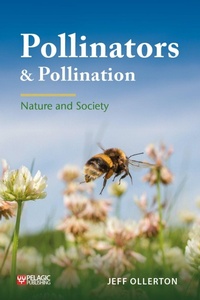
Pollinators and Pollination
Nature and Society
Published on 1. December 2020
Book
Paperback/Softback
289 pages
978-1-78427-228-9 (ISBN)
Description
A unique and personal insight into the ecology and evolution of pollinators, their relationships with flowers, and their conservation in a rapidly changing world.
The pollination of flowers by insects, birds and other animals is a fundamentally important ecological function that supports both the natural world and human society. Without pollinators to facilitate the sexual reproduction of plants, the world would be a biologically poorer place in which to live, there would be an impact on food security, and human health would suffer.
Written by one of the world's leading pollination ecologists, this book provides an introduction to what pollinators are, how their interactions with flowers have evolved, and the fundamental ecology of these relationships. It explores the pollination of wild and agricultural plants in a variety of habitats and contexts, including urban, rural and agricultural environments. The author also provides practical advice on how individuals and organisations can study, and support, pollinators.
As well as covering the natural history of pollinators and flowers, the author discusses their cultural importance, and the ways in which pollinator conservation has been portrayed from a political perspective. The book draws on field work experiences in South America, Africa, Australia, the Canary Islands and the UK.
For over 30 years the author has spent his career researching how plants and pollinators evolve relationships, how these interactions function ecologically, their importance for society, and how we can conserve them in a rapidly changing world. This book offers a unique and personal insight into the science of pollinators and pollination, aimed at anyone who is interested in understanding these fascinating and crucial ecological interactions.
The pollination of flowers by insects, birds and other animals is a fundamentally important ecological function that supports both the natural world and human society. Without pollinators to facilitate the sexual reproduction of plants, the world would be a biologically poorer place in which to live, there would be an impact on food security, and human health would suffer.
Written by one of the world's leading pollination ecologists, this book provides an introduction to what pollinators are, how their interactions with flowers have evolved, and the fundamental ecology of these relationships. It explores the pollination of wild and agricultural plants in a variety of habitats and contexts, including urban, rural and agricultural environments. The author also provides practical advice on how individuals and organisations can study, and support, pollinators.
As well as covering the natural history of pollinators and flowers, the author discusses their cultural importance, and the ways in which pollinator conservation has been portrayed from a political perspective. The book draws on field work experiences in South America, Africa, Australia, the Canary Islands and the UK.
For over 30 years the author has spent his career researching how plants and pollinators evolve relationships, how these interactions function ecologically, their importance for society, and how we can conserve them in a rapidly changing world. This book offers a unique and personal insight into the science of pollinators and pollination, aimed at anyone who is interested in understanding these fascinating and crucial ecological interactions.
Reviews / Votes
SUPERB. It contains everything I've spent the last 10 years trying to grasp, all in one book, AND written in a way I can understand! It makes such a difference to a non-scientist (like me) to be able to grasp the facts, and the science behind the facts, without having to first look up dozens of terms I don't understand. -- Brigit Strawbridge Howard * Author of Dancing with Bees: A Journey Back to Nature *More details
Series
Language
English
Place of publication
Exeter
United Kingdom
Target group
Professional and scholarly
Illustrations
78 farbige Abbildungen
78 Illustrations, color
Dimensions
Height: 234 mm
Width: 156 mm
Thickness: 16 mm
Weight
450 gr
ISBN-13
978-1-78427-228-9 (9781784272289)
Copyright in bibliographic data and cover images is held by Nielsen Book Services Limited or by the publishers or by their respective licensors: all rights reserved.
Schweitzer Classification
Other editions
Additional editions
E-Book
01/2021
Pelagic Publishing
€36.99
Available for download
Person
As a scientist and educator for over 30 years, Jeff Ollerton has developed an international profile in the field of biodiversity, focused particularly on understanding and conserving plant-pollinator interactions. His highly-cited, ground-breaking research has been used by national and international agencies to support efforts to conserve pollinators and their pollination services.
Content
Preface and Acknowledgements
1. The importance of pollinators and pollination
2. More than just bees: the diversity of pollinators
3. To be a flower
4. Fidelity and promiscuity in Darwin's entangled bank
5. The evolution of pollination strategies
6. A matter of time: from daily cycles to climate change
7. Agricultural perspectives
8. Urban environments
9. The significance of gardens
10. Shifting fates of pollinators
11. New bees on the block
12. Managing, restoring and connecting habitats
13. The politics of pollination
14. Studying pollinators and pollination
References
Index
1. The importance of pollinators and pollination
2. More than just bees: the diversity of pollinators
3. To be a flower
4. Fidelity and promiscuity in Darwin's entangled bank
5. The evolution of pollination strategies
6. A matter of time: from daily cycles to climate change
7. Agricultural perspectives
8. Urban environments
9. The significance of gardens
10. Shifting fates of pollinators
11. New bees on the block
12. Managing, restoring and connecting habitats
13. The politics of pollination
14. Studying pollinators and pollination
References
Index