

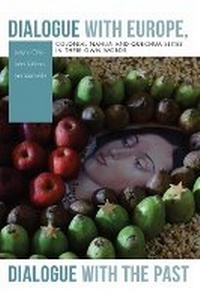
Dialogue with Europe, Dialogue with the Past
Colonial Nahua and Quechua Elites in Their Own Words
Will be published approx. on 30. November 2018
Book
Paperback/Softback
368 pages
978-1-60732-833-9 (ISBN)
Description
Dialogue with Europe, Dialogue with the Past is a critical, annotated anthology of indigenous-authored texts, including the Nahua, Quechua, and Spanish originals, through which native peoples and Spaniards were able to convey their own perspectives on Spanish colonial order. It is the first volume to bring together native testimonies from two different areas of Spanish expansion in the Americas to examine comparatively these geographically and culturally distant realities of indigenous elites in the colonial period.
In each chapter a particular document is transcribed exactly as it appears in the original manuscript or colonial printed document, with the editor placing it in historical context and considering the degree of European influence. These texts show the nobility through documents they themselves produced or caused to be produced-such as wills, land deeds, and petitions-and prioritize indigenous ways of expression, perspectives, and concepts. Together, the chapters demonstrate that native elites were independent actors as well as agents of social change and indigenous sustainability in colonial society. Additionally, the volume diversifies the commonly homogenous term "cacique" and recognizes the differences in elites throughout Mesoamerica and the Andes.
Showcasing important and varied colonial genres of indigenous writing, Dialogue with Europe, Dialogue with the Past reveals some of the realities, needs, strategies, behaviors, and attitudes associated with the lives of the elites. Each document and its accompanying commentary provide additional insight into how the nobility negotiated everyday life. The book will be of great interest to students and researchers of Mesoamerican and Andean history, as well as those interested in indigenous colonial societies in the Spanish Empire.
Contributors: Agnieszka Brylak, Maria Castaneda de la Paz, Katarzyna Granicka, Gregory Haimovich, Anastasia Kalyuta, Julia Madajczak, Patrycja Przadka-Giersz
In each chapter a particular document is transcribed exactly as it appears in the original manuscript or colonial printed document, with the editor placing it in historical context and considering the degree of European influence. These texts show the nobility through documents they themselves produced or caused to be produced-such as wills, land deeds, and petitions-and prioritize indigenous ways of expression, perspectives, and concepts. Together, the chapters demonstrate that native elites were independent actors as well as agents of social change and indigenous sustainability in colonial society. Additionally, the volume diversifies the commonly homogenous term "cacique" and recognizes the differences in elites throughout Mesoamerica and the Andes.
Showcasing important and varied colonial genres of indigenous writing, Dialogue with Europe, Dialogue with the Past reveals some of the realities, needs, strategies, behaviors, and attitudes associated with the lives of the elites. Each document and its accompanying commentary provide additional insight into how the nobility negotiated everyday life. The book will be of great interest to students and researchers of Mesoamerican and Andean history, as well as those interested in indigenous colonial societies in the Spanish Empire.
Contributors: Agnieszka Brylak, Maria Castaneda de la Paz, Katarzyna Granicka, Gregory Haimovich, Anastasia Kalyuta, Julia Madajczak, Patrycja Przadka-Giersz
Reviews / Votes
"This work provides new contributions and insights . . . the illustrative and comparative examination of documents from Mesoamerica and the Andes is refreshing and important. The analytical comparison between Central Mexico and the Andes is the work's greatest and most novel contribution."-Mark Christensen, Assumption College
"A meaningful collection . . . very strong, well--reasoned and convincing."
-John Schwaller, University at Albany, State University of New York "[An] eclectic collection of documents and commentaries that are of interest to Mexican and Andean ethnohistorians and ethnolinguists and useful as a source of primary texts for students."
-Hispanic American Historical Review
More details
Language
English
Place of publication
Colorado
United States
Target group
Professional and scholarly
Interest Age: From 18 to 99 years
Dimensions
Height: 229 mm
Width: 152 mm
Thickness: 25 mm
Weight
500 gr
ISBN-13
978-1-60732-833-9 (9781607328339)
Copyright in bibliographic data and cover images is held by Nielsen Book Services Limited or by the publishers or by their respective licensors: all rights reserved.
Schweitzer Classification
Other editions
Previous edition
Justyna Olko | John Sullivan | Jan Szeminski
Dialogue with Europe, Dialogue with the Past
Colonial Nahua and Quechua Elites in Their Own Words
Book
01/2019
University Press of Colorado
€126.76
Article exhausted; check for reprint
Persons
Justyna Olko Justyna Olko is a professor at the Faculty of "Artes Liberales" at the University of Warsaw and director of its Center for Research and Practice in Cultural Continuity. She specializes in Nahua ethnohistory, anthropology, and linguistics as well as cross-cultural transfer between indigenous and European worlds. She is also the author of Insignia of Rank in the Nahua World.
John Sullivan is professor of Nahua language and culture at the Universidad Autonoma de Zacatecas, visiting professor at the University of Warsaw's Center for Research and Practice in Cultural Continuity, and director of the Instituto de Docencia e Investigacion Etnologica de Zacatecas, A.C. He is a Guggenheim Fellowship recipient and works with indigenous students monolingually on teaching, research, and revitalization projects.
Jan Szeminski is professor emeritus at the Department of Spanish and Latin American Studies, Faculty of Humanities, at the Hebrew University of Jerusalem. He is an ethnohistorian interested in Inca ethnohistory, oral tradition, and Quechua language as a historical source in the sixth- to eighteenth-century central Andes.
John Sullivan is professor of Nahua language and culture at the Universidad Autonoma de Zacatecas, visiting professor at the University of Warsaw's Center for Research and Practice in Cultural Continuity, and director of the Instituto de Docencia e Investigacion Etnologica de Zacatecas, A.C. He is a Guggenheim Fellowship recipient and works with indigenous students monolingually on teaching, research, and revitalization projects.
Jan Szeminski is professor emeritus at the Department of Spanish and Latin American Studies, Faculty of Humanities, at the Hebrew University of Jerusalem. He is an ethnohistorian interested in Inca ethnohistory, oral tradition, and Quechua language as a historical source in the sixth- to eighteenth-century central Andes.