

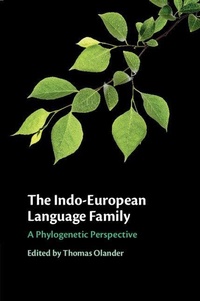
The Indo-European Language Family
Published on 17. April 2025
Book
Paperback/Softback
314 pages
978-1-108-73152-2 (ISBN)
Description
Modern languages like English, Spanish, Russian and Hindi as well as ancient languages like Greek, Latin and Sanskrit all belong to the Indo-European language family, which means that they all descend from a common ancestor. But how, more precisely, are the Indo-European languages related to each other? This book brings together pioneering research from a team of international scholars to address this fundamental question. It provides an introduction to linguistic subgrouping as well as offering comprehensive, systematic and up-to-date analyses of the ten main branches of the Indo-European language family: Anatolian, Tocharian, Italic, Celtic, Germanic, Greek, Armenian, Albanian, Indo-Iranian and Balto-Slavic. By highlighting that these branches are saliently different from each other, yet at the same time display striking similarities, the book demonstrates the early diversification of the Indo-European language family, spoken today by half the world's population. This title is also available as open access on Cambridge Core.
Reviews / Votes
'The volume presents a very useful discussion of the methodology of linguistic subgrouping, methods of computational cladistics and the features allowing the establishment of the individual subbranches of Indo-European and speaking for or against possible higher intermediate nodes.' Daniel Koelligan, Folia Linguistica 'This is an outstandingly valuable book, bringing together facts and hypotheses which have been scattered through the professional literature. It will surely become a convenient reference source and a starting-point for scholars who develop new hypotheses in this field.' Geoffrey Sampson, The Linguist List 'Olander and crew have provided us with a set of very fine analyses of the major issues in Indo-European subgrouping, and the extensive bibliographies themselves might be said to be worth the price of admission. No one will agree with all the conclusions, but the evidence is there for all to see and further development of the question, whether to reinforce the syntheses presented here or to forge new ones, must take this book as a point of reference.' Douglas Adams, The Journal of Indo-European StudiesMore details
Language
English
Place of publication
Cambridge
United Kingdom
Edition type
New edition
Product notice
Paperback (trade)
Illustrations
Worked examples or Exercises
Dimensions
Height: 227 mm
Width: 157 mm
Thickness: 22 mm
Weight
462 gr
ISBN-13
978-1-108-73152-2 (9781108731522)
Copyright in bibliographic data and cover images is held by Nielsen Book Services Limited or by the publishers or by their respective licensors: all rights reserved.
Schweitzer Classification
Other editions
Additional editions
Book
09/2022
Cambridge University Press
€113.50
Shipment within 15-20 days
Person
Thomas Olander is Associate Professor in the Department of Nordic Studies and Linguistics at the University of Copenhagen. He is the author of Balto-Slavic Accentual Mobility (2009) and Proto-Slavic Inflectional Morphology (2015), and has edited several books on Indo-European linguistics and the linguistics-archaeology interface.
Content
1. Introduction Thomas Olander; 2. Methodology in linguistic subgrouping James Clackson; 3. Computational approaches to linguistic chronology and subgrouping Dariusz Piwowarczyk; 4. What we can (and can't) learn from computational cladistics Don Ringe; 5. Anatolian Alwin Kloekhorst; 6. Tocharian Michael Peyrot; 7. Italo-Celtic Michael Weiss; 8. Italic Michael Weiss; 9. Celtic Anders Richardt Jorgensen; 10. Germanic Bjarne Simmelkjaer Sandgaard Hansen & Guus Jan Kroonen; 11. Greek Lucien van Beek; 12. Armenian Birgit Anette Olsen & Rasmus Thorso; 13. Albanian Adam Hyllested & Brian D. Joseph; 14. Indo-Iranian Martin Joachim Ku?mmel; 15. Balto-Slavic Tijmen Pronk.