

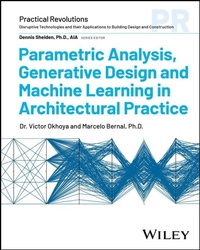
Parametric Analysis, Generative Design and Machine Learning in Architectural Practice
1st Edition
Will be published approx. on 20. September 2026
Book
Paperback/Softback
288 pages
978-1-394-19799-6 (ISBN)
Description
Let these cutting-edge tools revolutionize your architectural problem-solving
Recent technological advances, including rapid development of high-performance computing power, have produced computational tools for architects and designers that are swiftly revolutionizing the field. Two of these tools, parametric analysis and generative design, can be used together to model complex problems and test solutions with extraordinary speed and efficiency. The next generation of architects and designers will bring these tools to bear in a transformed professional landscape.
Parametric Analysis and Generative Design in Architectural Practice offers a detailed introduction to these tools and their applications. Balancing theory and practice, it is replete with useful examples and provides algorithms for three different architectural scales: urban design, building design, and interior design. A foundational discussion on machine learning in architectural practice is presented, along with examples of machine learning applications for energy analysis and solar analysis. It is a must-own for architects looking to leverage an unprecedented level of computational power.
The book also includes:
Detailed guidelines for building performance simulation for energy analysis and daylight analysis
Algorithms for scales from interiors to buildings to entire cityscapes
Discussion of how to implement machine learning in order to solve complex problems
Parametric Analysis and Generative Design in Architectural Practice is ideal for professionals and students at every level looking to diversify their architectural toolkit.
Recent technological advances, including rapid development of high-performance computing power, have produced computational tools for architects and designers that are swiftly revolutionizing the field. Two of these tools, parametric analysis and generative design, can be used together to model complex problems and test solutions with extraordinary speed and efficiency. The next generation of architects and designers will bring these tools to bear in a transformed professional landscape.
Parametric Analysis and Generative Design in Architectural Practice offers a detailed introduction to these tools and their applications. Balancing theory and practice, it is replete with useful examples and provides algorithms for three different architectural scales: urban design, building design, and interior design. A foundational discussion on machine learning in architectural practice is presented, along with examples of machine learning applications for energy analysis and solar analysis. It is a must-own for architects looking to leverage an unprecedented level of computational power.
The book also includes:
Detailed guidelines for building performance simulation for energy analysis and daylight analysis
Algorithms for scales from interiors to buildings to entire cityscapes
Discussion of how to implement machine learning in order to solve complex problems
Parametric Analysis and Generative Design in Architectural Practice is ideal for professionals and students at every level looking to diversify their architectural toolkit.
More details
Series
Language
English
Place of publication
New York
United States
Target group
Professional and scholarly
Product notice
Paperback (trade)
Unsewn / adhesive bound
Weight
666 gr
ISBN-13
978-1-394-19799-6 (9781394197996)
Copyright in bibliographic data and cover images is held by Nielsen Book Services Limited or by the publishers or by their respective licensors: all rights reserved.
Schweitzer Classification
Persons
Dr Victor Okhoya holds a Doctor of Design in Architecture from Carnegie Mellon University with a specialty in Computational Design, and has worked with architectural computational technology for more than twenty years. He has published widely on architectural computation technology and related subjects, has held leadership roles in digital design technology at leading architectural practices, and has trained hundreds of industry professionals on the use of digital design tools.
Marcelo Bernal, PhD, holds a doctoral degree in Architecture from the Georgia Institute of Technology with a specialty in Computational Design, and has more than two decades' experience in research and architectural practice. He has held professorial positions at the Universidad Techica Federico Santa Maria (UTFSM), Chile, and has published widely on architectural design and related subjects.
Marcelo Bernal, PhD, holds a doctoral degree in Architecture from the Georgia Institute of Technology with a specialty in Computational Design, and has more than two decades' experience in research and architectural practice. He has held professorial positions at the Universidad Techica Federico Santa Maria (UTFSM), Chile, and has published widely on architectural design and related subjects.
Content
Preface xi
Acknowledgments xv
Part One: Back ground and Definitions 1
Chapter 1
COMPUTER-AIDED DESIGN AND BUILDING INFORMATION MODELING 3
Computer Aided Design 5
Building Information Modeling 9
Chapter 2
COMPUTATIONAL DESIGN AND PARAMETRIC DESIGN 19
Computational Design 19
Parametric Design 30
Chapter 3
WHAT IS PARAMETRIC DESIGN? 41
Definition of Parametric Design 41
The Need for Parametric Design 47
Project Case: Parametric Analysis 51
Project Case: Generative Design 60
Part Two: Parametric Analysis 73
Chapter 4
METHODS OF PARAMETRIC ANALYSIS 75
Performing Energy Simulations 75
Performing Daylight Simulations 82
Daylight Analysis Process 83
Performing Parametric Analysis 90
Evaluating Parametric Analysis 97
Chapter 5
PARAMETRIC ANALYSIS FOR ENERGY AND DAYLIGHT PERFORMANCE 105
Energy Analysis Project Case: Hotel Residence 105
Project Case: Student Housing 112
Project Case: Student Residence 120
Project Case: High School Building 132
Part Three: Generative Design 139
Chapter 6
METHODS OF GENERATIVE DESIGN 141
Space Partitioning Algorithms 146
Site Subdivision Algorithms 155
Form Making Algorithms 160
Chapter 7
GENERATIVE DESIGN AT THE URBAN DESIGN SCALE 171
Project Case: Business Park 172
Project Case: Mixed Housing 179
Chapter 8
GENERATIVE DESIGN AT THE BUILDING SCALE AND INTERIOR DESIGN SCALE 195
Generative Design at the Building Scale 195
Generative Design at the Interior Design Scale 206
Part Four: Machine L earning 219
Chapter 9
MACHINE LEARNING FOR ENERGY ANALYSIS 221
Machine Learning Algorithms 223
Project Case: Residential Tower 230
Chapter 10
DEEP LEARNING FOR SOLAR ANALYSIS 239
Types of Deep Learning Algorithm 241
Generative Adversarial Networks 246
Project Case: Urban Solar 252
Bibliography 257
Index 259
Acknowledgments xv
Part One: Back ground and Definitions 1
Chapter 1
COMPUTER-AIDED DESIGN AND BUILDING INFORMATION MODELING 3
Computer Aided Design 5
Building Information Modeling 9
Chapter 2
COMPUTATIONAL DESIGN AND PARAMETRIC DESIGN 19
Computational Design 19
Parametric Design 30
Chapter 3
WHAT IS PARAMETRIC DESIGN? 41
Definition of Parametric Design 41
The Need for Parametric Design 47
Project Case: Parametric Analysis 51
Project Case: Generative Design 60
Part Two: Parametric Analysis 73
Chapter 4
METHODS OF PARAMETRIC ANALYSIS 75
Performing Energy Simulations 75
Performing Daylight Simulations 82
Daylight Analysis Process 83
Performing Parametric Analysis 90
Evaluating Parametric Analysis 97
Chapter 5
PARAMETRIC ANALYSIS FOR ENERGY AND DAYLIGHT PERFORMANCE 105
Energy Analysis Project Case: Hotel Residence 105
Project Case: Student Housing 112
Project Case: Student Residence 120
Project Case: High School Building 132
Part Three: Generative Design 139
Chapter 6
METHODS OF GENERATIVE DESIGN 141
Space Partitioning Algorithms 146
Site Subdivision Algorithms 155
Form Making Algorithms 160
Chapter 7
GENERATIVE DESIGN AT THE URBAN DESIGN SCALE 171
Project Case: Business Park 172
Project Case: Mixed Housing 179
Chapter 8
GENERATIVE DESIGN AT THE BUILDING SCALE AND INTERIOR DESIGN SCALE 195
Generative Design at the Building Scale 195
Generative Design at the Interior Design Scale 206
Part Four: Machine L earning 219
Chapter 9
MACHINE LEARNING FOR ENERGY ANALYSIS 221
Machine Learning Algorithms 223
Project Case: Residential Tower 230
Chapter 10
DEEP LEARNING FOR SOLAR ANALYSIS 239
Types of Deep Learning Algorithm 241
Generative Adversarial Networks 246
Project Case: Urban Solar 252
Bibliography 257
Index 259