

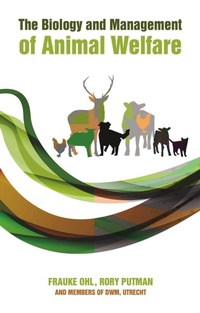
The Biology and Management of Animal Welfare
Published on 29. June 2018
Book
Paperback/Softback
160 pages
978-1-84995-366-5 (ISBN)
Description
This book provides a concise and up to date review of current knowledge on the biological processes affecting animal welfare, and the implications emerging from our improved understanding of those biological principles in terms of options available to assess and manage the welfare status of individuals and populations. Biological principles are embedded within wider consideration of the ethical basis for our concern about animals and their welfare, in recognition of the fact that concern and responsibility for welfare is strongly affected by cultural and ethical norms.
The Biology and Management of Animal Welfare covers several topics not addressed in other texts.
Thus it pays attention to the difference between animal welfare and animal rights and distinguishes between welfare and evolutionary fitness (which often causes confusion). The thorny problem of necessary versus unnecessary suffering is considered; most legislation provides for the prevention of unnecessary suffering but never defines it. In addition a box feature explores how human psychological development can affect attitudes to animals and how psychological dysfunctions (in terms of attitudes to other humans) can often be detected in advance from attitudes to animals. The book also includes consideration of alternatives to animal experimentation with a chapter devoted to the 3 Rs (Refine, Reduce, Replace).
Written by authors who work in the field and all regularly contribute to postgraduate courses in animal welfare, in veterinary faculties and elsewhere, the text is deliberately kept short and concise to emphasise the essential principles, but is comprehensively referenced throughout in order to guide the reader in their own wider background reading around the framework provided by this overview. The book includes a number of dedicated box features that offer more detailed illustration or worked examples for some of the topics addressed in the text, or to focus attention on additional special topics.
The Biology and Management of Animal Welfare covers several topics not addressed in other texts.
Thus it pays attention to the difference between animal welfare and animal rights and distinguishes between welfare and evolutionary fitness (which often causes confusion). The thorny problem of necessary versus unnecessary suffering is considered; most legislation provides for the prevention of unnecessary suffering but never defines it. In addition a box feature explores how human psychological development can affect attitudes to animals and how psychological dysfunctions (in terms of attitudes to other humans) can often be detected in advance from attitudes to animals. The book also includes consideration of alternatives to animal experimentation with a chapter devoted to the 3 Rs (Refine, Reduce, Replace).
Written by authors who work in the field and all regularly contribute to postgraduate courses in animal welfare, in veterinary faculties and elsewhere, the text is deliberately kept short and concise to emphasise the essential principles, but is comprehensively referenced throughout in order to guide the reader in their own wider background reading around the framework provided by this overview. The book includes a number of dedicated box features that offer more detailed illustration or worked examples for some of the topics addressed in the text, or to focus attention on additional special topics.
Reviews / Votes
`I found the book thought-provoking with excellent examples of why we need to look at animal welfare from the point of view of the animals'. Alan Wright, Lancashire Wildlife TrustMore details
Language
English
Place of publication
United Kingdom
Publishing group
Porto Press Ltd
Target group
College/higher education
Professional and scholarly
Product notice
Paperback (trade)
Unsewn / adhesive bound
Illustrations
illustrated with photographs and diagrams
Dimensions
Height: 216 mm
Width: 134 mm
Thickness: 17 mm
Weight
256 gr
ISBN-13
978-1-84995-366-5 (9781849953665)
Copyright in bibliographic data and cover images is held by Nielsen Book Services Limited or by the publishers or by their respective licensors: all rights reserved.
Schweitzer Classification
Persons
Professor of Animal Welfare in the Veterinary Faculty of the University of Utrecht
Content
Introduction: A Word in Advance; Ethics and Changing attitudes towards animals and their welfare; The Biology of welfare; Individual variation in self-assessment and in coping strategies; Welfare at the Group Level; Welfare status vs welfare issue: the importance of ethical considerations; Should responsibility for animal welfare vary with context?; Assessment of Welfare Status at individual or group level; Alternatives to animal experimentation: Refine, reduce and replace? Concluding Remarks; References; Glossary of terms