

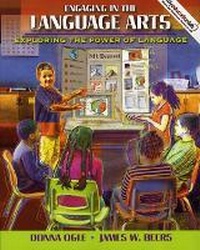
Engaging in the Language Arts
Exploring the Power of Language
Published on 23. October 2008
Book
Paperback/Softback
608 pages
978-0-205-43093-2 (ISBN)
Description
Engaging in the Language Artsis a new book that defines the discipline of language arts. This book emphasizes the need for teachers to draw upon the language power of students-the best language resource in their classrooms-in order to succeed in teaching to our increasingly culturally and linguistically diverse student body.
Engaging in the Language Arts enables teachers to identify their students' language possibilities and know how to make optimal use of these possibilities in their classrooms. Distinguished author team Donna Ogle and Jim Beers have crafted an ideal book for instructors seeking a focus on contemporary communication and visual literacy, using varied genre and electronic resources. Ogle and Beers present a lively narrative, clear organization, exceptional pedagogy and special features that bring the language arts to life for teachers.
Unlike comparable books, Engaging in the Language Arts helps teachers ensure that students learn to use language to communicate with others, to explore ideas, and to demonstrate their learning orally and in written formats. While covering all of the basic writing processes, the book places a unique emphasis on the actual purpose behind teaching writing and also includes classroom-based assessments and activities reflecting state and national standards that provide important resources to help teachers differentiate instruction.
Engaging in the Language Arts enables teachers to identify their students' language possibilities and know how to make optimal use of these possibilities in their classrooms. Distinguished author team Donna Ogle and Jim Beers have crafted an ideal book for instructors seeking a focus on contemporary communication and visual literacy, using varied genre and electronic resources. Ogle and Beers present a lively narrative, clear organization, exceptional pedagogy and special features that bring the language arts to life for teachers.
Unlike comparable books, Engaging in the Language Arts helps teachers ensure that students learn to use language to communicate with others, to explore ideas, and to demonstrate their learning orally and in written formats. While covering all of the basic writing processes, the book places a unique emphasis on the actual purpose behind teaching writing and also includes classroom-based assessments and activities reflecting state and national standards that provide important resources to help teachers differentiate instruction.
Reviews / Votes
Laurie Eilish-Piper says:This book has it all - a perfect balance of research, practical applications, and real-life examples. With this book as their guide, beginning teachers will learn everything they need to know to get started with language arts instruction. They will learn about the traditional language arts - writing, spelling, reading, and oral language, but they will also learn much more. This book will guide them through understanding how to support English Language Learners, how to incorporate technology into their teaching, and how to differentiate language arts instruction. As my students often say, "This book is a keeper!" It is a valuable resource that beginning teachers will rely on for answers, ideas, and encouragement as they begin their teaching careers.
More details
Language
English
Place of publication
United States
Publishing group
Pearson Education (US)
Target group
Professional and scholarly
Dimensions
Height: 203 mm
Width: 254 mm
Thickness: 22 mm
Weight
1066 gr
ISBN-13
978-0-205-43093-2 (9780205430932)
Copyright in bibliographic data and cover images is held by Nielsen Book Services Limited or by the publishers or by their respective licensors: all rights reserved.
Schweitzer Classification
Other editions
New editions
Book
07/2011
2nd Edition
Pearson
€192.49
Shipment within 15-20 days
Persons
About the Authors
Donna Ogle is Professor of Education at National-Louis University in Chicago, Illinois, and is actively involved in staff development projects work in the Chicago Public Schools, the Reading Leadership Institute, and in other American school districts. Dr. Ogle serves as a literacy consultant internationally, including Critical Thinking International and as a part of the editorial review boards of Lectura y Vida and the Thinking Classroom. She recently finished her term as president of the International Reading Association (IRA). Donna also conducts research on visual literacy and content comprehension, having developed both the K-W-L and PRC2 (partner reading in content, too). She is the author of many books, book chapters, and professional articles and conducts national and international workshops on teaching for comprehension and higher order thinking, as well as using the arts in teaching. Her K-W-L procedure has become so renowned that teachers use it all over the world.
James Beers is Professor of Reading, Language, and Literacy in the School of Education at the College of William and Mary, Williamsburg, Virginia. He is also the Director of the Eastern Virginia Writing Project of the National Writing Project which helps teachers help their students become better writers. He has a B.A. in English from Johns Hopkins University, an M.A. in English, and Ph.D. in Reading from the University of Virginia.
Dr. Beers has taught reading, writing, and spelling to students at all grade levels and has published books, chapters, and articles on reading, writing, and spelling. Among these publications are Developmental and Cognitive Aspects of Learning to Spell and Writing for Competency. James is also an author on the Scott Foresman Reading and Spelling Programs. He has given numerous in-service workshops throughout the United States and Canada for teachers and administrators on the teaching of reading, writing, and spelling. He has assisted a number of school systems in developing K-12 reading and writing curricula and the three- to four-year plans for implementing the curricula.
Along with his wife, Dr. Carol S. Beers, James has participated in the Reading and Writing for Critical Thinking Project through the International Reading Association's International Volunteer Program. This project has helped teachers in eastern European countries promote critical thinking and independent learning through reading and writing in their students. James and Carol are currently co-authoring a book that addresses what every principal should know about reading.
Donna Ogle is Professor of Education at National-Louis University in Chicago, Illinois, and is actively involved in staff development projects work in the Chicago Public Schools, the Reading Leadership Institute, and in other American school districts. Dr. Ogle serves as a literacy consultant internationally, including Critical Thinking International and as a part of the editorial review boards of Lectura y Vida and the Thinking Classroom. She recently finished her term as president of the International Reading Association (IRA). Donna also conducts research on visual literacy and content comprehension, having developed both the K-W-L and PRC2 (partner reading in content, too). She is the author of many books, book chapters, and professional articles and conducts national and international workshops on teaching for comprehension and higher order thinking, as well as using the arts in teaching. Her K-W-L procedure has become so renowned that teachers use it all over the world.
James Beers is Professor of Reading, Language, and Literacy in the School of Education at the College of William and Mary, Williamsburg, Virginia. He is also the Director of the Eastern Virginia Writing Project of the National Writing Project which helps teachers help their students become better writers. He has a B.A. in English from Johns Hopkins University, an M.A. in English, and Ph.D. in Reading from the University of Virginia.
Dr. Beers has taught reading, writing, and spelling to students at all grade levels and has published books, chapters, and articles on reading, writing, and spelling. Among these publications are Developmental and Cognitive Aspects of Learning to Spell and Writing for Competency. James is also an author on the Scott Foresman Reading and Spelling Programs. He has given numerous in-service workshops throughout the United States and Canada for teachers and administrators on the teaching of reading, writing, and spelling. He has assisted a number of school systems in developing K-12 reading and writing curricula and the three- to four-year plans for implementing the curricula.
Along with his wife, Dr. Carol S. Beers, James has participated in the Reading and Writing for Critical Thinking Project through the International Reading Association's International Volunteer Program. This project has helped teachers in eastern European countries promote critical thinking and independent learning through reading and writing in their students. James and Carol are currently co-authoring a book that addresses what every principal should know about reading.
Content
Chapter 1: Introducing the Language Arts
Chapter 2: Understanding Oral Language Development
Chapter 3: Developing Speaking and Listening
Chapter 4: Supporting Diverse Learners
Chapter 5: Assessing Language Arts
Chapter 6: Reading in the Primary Grades
Chapter 7: Writing Development
Chapter 8: Writing Conventions
Chapter 9: Spelling Development
Chapter 10: Exploring Writing Genres
Chapter 11: Engaging With Literature
Chapter 12: Reading Beyond the Primary Grades
Chapter 13: Developing Vocabulary
Chapter 14: Creating Classrooms for All Learners
Chapter 15: Incorporating Technology
Chapter 2: Understanding Oral Language Development
Chapter 3: Developing Speaking and Listening
Chapter 4: Supporting Diverse Learners
Chapter 5: Assessing Language Arts
Chapter 6: Reading in the Primary Grades
Chapter 7: Writing Development
Chapter 8: Writing Conventions
Chapter 9: Spelling Development
Chapter 10: Exploring Writing Genres
Chapter 11: Engaging With Literature
Chapter 12: Reading Beyond the Primary Grades
Chapter 13: Developing Vocabulary
Chapter 14: Creating Classrooms for All Learners
Chapter 15: Incorporating Technology