

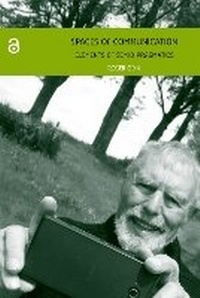
Spaces of Communication
Elements of Semio-Pragmatics
1st Edition
Will be published approx. on 1. December 2025
Book
Paperback/Softback
176 pages
978-1-041-18649-6 (ISBN)
Description
Spaces of Communication offers a concise introduction to semiopragmatics and condenses the intellectual trajectory of one of the foundational figures of film studies into a relatively short and accessible volume. It testifies to the author's deep and rich intellectual engagement with a vast array of objects ranging from the classics of the cinephile canon to television news programs, home movies and mobile phone films.
More details
Series
Language
English
Place of publication
London
United Kingdom
Publishing group
Taylor & Francis Ltd
Target group
Professional and scholarly
Academic
Dimensions
Height: 234 mm
Width: 156 mm
ISBN-13
978-1-041-18649-6 (9781041186496)
Copyright in bibliographic data and cover images is held by Nielsen Book Services Limited or by the publishers or by their respective licensors: all rights reserved.
Schweitzer Classification
Other editions
Additional editions
Book
12/2021
Amsterdam University Press
€145.10
Shipment within 10-20 days
Person
Roger Odin is emeritus professor of Communication at Paris 3 University; Head of the Film and Audiovisual Institute (1983-2003); Theorist of the semio-pragmatic approach (De la fiction, 2000; Les Espaces de Communication, 2011).
Content
A Democracy of Readings and Objects: Roger Odin's Contribution to the Theory of Film (Vinzenz Hediger), What We Make of Images and Sounds: Semio-Pragmatics as Approach and Method, Establishing a Discipline, Cultivating a Field: Roger Odin and Film Studies in France, Moving Semiotics Forward: Semio-Pragmatics and Film Theory since the 1960s, Beware of the Crypt: Semio-Pragmatics and the Question of Communication, After the Elegy of Cinema: Semio-Pragmatics and the State of Film Studies, Spaces of Communication: Elements of Semio-Pragmatics (Roger Odin), Foreword and Acknowledgements, Introduction: The Semio-Pragmatic Model, On the Difficulty of Getting Away from Immanence, On the Difficulty of Staying Within Immanence, Vacillation, For an Articulation between the Two Paradigms: Semio-Pragmatics, The Semio-Pragmatic Model, 1. Context, Constraints and the Space of Communication, Universally Shared Constraints, Natural Constraints, The Narrative Constraint, The Case of Languages, Language and Perception, The Influence of a Language on How We Read Images, Non-Natural Constraints and the Notion of the Space of Communication, 2. The Discursive Space : Communicative Competence and Modes of Production of Meaning, Fictionalizing Mode (First Approach), Spectacularizing and Energetic Modes, Documentarizing Mode, Moralizing Mode, Fictionalizing Mode (Second Approach); Fabulating Mode, 3. Aesthetic Mode, Artistic Mode: Relationship between Modes and Spaces, From the Aesthetic Mode to Aesthetic Spaces, From the Artistic Mode (in Reduced Form) to Inscription in the Space of Art, From the Artistic Mode (Full-Fledged Form) to the Spaces of Art, Relationship among Modes and among Spaces, 4. Contextual Analysis and the Space of Communication: The Space of Communication of Family Memory, The Space of Communication for Memory in the Traditional Family, The Constraints and the Construction of the Actants, Which Mode(s) to Construct? Private Mode, Intimate Mode, Communication Operators, The Space of Communication for Memory in the New Family Structure, Freed-Up Communication, Testimony Mode: Another Mode of Production of Meaning, Other Memory Operators, 5. The Space of Communication and Migration: The Example of the Home Movie, The Home Movie: From Archives to Loci of Memory, The Home Movie on Television, From Home Movie to Micro-Histories, The Home Movie in the Space of Art, The Home Movie in the Medical Context, 6. Textual Analysis and Semio-Pragmatics, A Stage of the Tour de France on Television, Interpreting the Reproduction of a Painting, Collective Academic Research, The Space of Description and the Construction of the Object of Analysis, From the Space of Textual Analysis to the Space of Interpretation, The Space of Ideological Analysis, The Space of Epistemological Reflection, The Place of Cinema in the Academic Institutional Space, Conclusion, List of Tools, The Different Stages of Construction of the Semio-Pragmatic Model, Bibliography, Index