

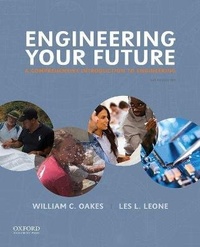
Engineering Your Future
A Comprehensive Introduction to Engineering
9th Edition
Published on 28. December 2016
Book
Paperback/Softback
688 pages
978-0-19-027926-4 (ISBN)
Description
Engineering Your Future: A Comprehensive Introduction to Engineering, Ninth Edition, is an authoritative guide to the academic expectations and professional opportunities in engineering, a field that is both academically rigorous and creatively demanding. Today's engineering students are faced with endless career opportunities. Engineering Your Future clarifies those options and directs students down the path to a rewarding career in the
engineering field. Featuring exceptionally broad coverage, it offers instructors unparalleled flexibility for any introductory course.
engineering field. Featuring exceptionally broad coverage, it offers instructors unparalleled flexibility for any introductory course.
More details
Edition
9th edition
Language
English
Place of publication
New York
United States
Target group
College/higher education
ISBN-13
978-0-19-027926-4 (9780190279264)
Copyright in bibliographic data and cover images is held by Nielsen Book Services Limited or by the publishers or by their respective licensors: all rights reserved.
Schweitzer Classification
Persons
William C. Oakes, P.E., is Professor of Engineering Education and Director of the EPICS Program at Purdue University. He is also the coauthor of Service-Learning: Engineering in Your Community, Second Edition (OUP, 2013) and a Fellow of the American Society for Engineering Education and the National Society of Professional Engineers. Les L. Leone is Assistant Dean Emeritus at the College of Engineering at Michigan State University. He is the recipient of numerous honors and awards from the American Society for Engineering Education.
Content
Preface THE WORLD OF ENGINEERING 1. The Heritage of Engineering 1.1 Introduction 1.2 The Beginnings of Engineering: The Earliest Days 1.3 Early Cities 1.4 A Case Study of Two Historical Engineers 1.5 Computers, Information, Networking, and People 1.6 The History of the Disciplines
1.7 Closing Thoughts References
Exercises and Activities 2. Engineering Majors 2.1 Introduction 2.2 Engineering Functions 2.3 Engineering Majors 2.4 Emerging Fields 2.5 Closing Thoughts 2.6 Engineering and Technical Organizations References
Exercises and Activities 3. A Statistical Profile of the Engineering Profession 3.1 Statistical Overview 3.2 College Enrollment Trends of Engineering Students 3.3 College Majors of Recent Engineering Students 3.4 Degrees in Engineering 3.5 Job Placement Trends 3.6 Salaries of Engineers 3.7 The Diversity of the Profession 3.8 Distribution of Engineers by Field of Study 3.9 Engineering Employment by Type of Employer 3.10 Percent of Students Unemployed or in Graduate School 3.11 A Word from Employers Exercises and Activities 4. Global and International Engineering 4.1 Introduction 4.2 The Evolving Global Marketplace 4.3 International Opportunities for Engineers 4.4 Preparing for a Global Career Exercises and Activities 5. Future Challenges 5.1 Expanding World Population 5.2 Pollution 5.3 Energy 5.4 Transportation 5.5 Infrastructure 5.6 Aerospace and Defense 5.7 Competitiveness and Productivity 5.8 Engineering's Grand Challenges
Exercises and Activities STUDYING ENGINEERING 6. Succeeding in the Classroom 6.1 Introduction 6.2 Attitude 6.3 Goals 6.4 Keys to Effectiveness 6.5 Test-taking 6.6 Making the Most of Your Professors 6.7 Learning Styles 6.8 Well-Rounded Equals Effective 6.9 Your Effective Use of Time 6.10 Accountability 6.11 Overcoming Challenges References
Exercises and Activities 7. Problem Solving 7.1 Introduction 7.2 Analytic and Creative Problem Solving 7.3 Analytic Problem Solving 7.4 Creative Problem Solving 7.5 Personal Problem-Solving Styles 7.6 Brainstorming Strategies 7.7 Critical Thinking References
Exercises and Activities 8. Graphics and Orthographic Projection
8.1 Introduction 8.2 Orthographic Projection 8.3 The Meaning of Lines
8.4 Hidden Lines 8.5 Cylindrical Features and Radii
8.6 Line Precedence 8.7 Freehand Sketching 8.8 Pictorial Sketching 8.9 Dimensioning 8.10 Scales and Measuring 8.11 Coordinate Systems and Three-Dimensional Space Exercises and Activities 9. Computer Tools for Engineers 9.1 Introduction 9.2 The Internet 9.3 Word-Processing Programs 9.4 Spreadsheets 9.5 Mathematics Software 9.6 Presentation Software 9.7 Operating Systems 9.8 Programming Languages 9.9 Advanced Engineering Packages References
Exercises and Activities 10. Teamwork 10.1 Introduction 10.2 Engineers Often Work in Teams 10.3 Team Organizational Structures 10.4 Team Growth Stages 10.5 What Makes a Successful Team? 10.6 Team Leadership 10.7 Effective Decision Making 10.8 Attitudes toward Team Experiences 10.9 Documenting Team Performance References
Exercises and Activities 11. Project Management 11.1 Introduction 11.2 The Triple Constraints
11.3 Student Example Project 11.4 Creating a Project Charter 11.5 Task Definitions 11.6 Schedule 11.7 Work Breakdown Structure 11.8 Network Diagrams 11.9 Critical Paths 11.10 Gantt Charts 11.11 Costs 11.12 Personnel Distribution 11.13 Documentation
11.14 Team Roles 11.15 Agile Project Management
References
Exercises and Activities 12. Engineering Design 12.1 What Is Engineering Design? 12.2 The Engineering Design Process 12.3 Using the Engineering Design Process--ATM 12.4 Using the Engineering Design Process--Backpack
References
Exercises and Activities 13. Technical Communications 13.1 Visual Communication 13.2 Oral Presentations 13.3 Written Documents 13.4 Revising and Editing 13.5 Conclusion References
Exercises and Activities 14. Ethics and Engineering 14.1 Introduction 14.2 The Nature of Ethics 14.3 The Nature of Engineering Ethics 14.4 Codes of Ethics and the Obligations of Engineers
Exercises and Activities THE FUNDAMENTALS OF ENGINEERING 15. Units and Conversions 15.1 History 15.2 The SI System of Units 15.3 Derived Units 15.4 Prefixes 15.5 Numerals 15.6 Unit Conversions 15.7 Dimensional Homogeneity and Dimensionless Numbers
References
Exercises and Activities 16. Mathematics Review 16.1 Algebra 16.2 Trigonometry 16.3 Geometry 16.4 Complex Numbers 16.5 Linear Algebra 16.6 Calculus 16.7 Probability and Statistics Exercises and Activities 17. Engineering Fundamentals 17.1 Statics 17.2 Dynamics 17.3 Thermodynamics 17.4 Electrical Circuits 17.5 Economics 18. The Campus Experience 18.1 Orienting Yourself to Your Campus 18.2 Exploring Your New Home Away from Home 18.3 Determining and Planning Your Major 18.4 Get into the Habit of Asking Questions 18.5 The "People Issue"
18.6 Searching for Campus Resources 18.7 Other Important Issues 18.8 Final Thoughts References
Exercises and Activities 19. Engineering Work Experience 19.1 A Job and Experience 19.2 Summer Jobs and On- and Off-Campus Work Experiences 19.3 Volunteer or Community Service Experiences 19.4 Supervised Independent Study or Research Assistantship 19.5 Internships 19.6 Cooperative Education 19.7 Which Is Best for You? Exercises and Activities 20. Connections: Liberal Arts and Engineering 20.1 What Are Connections?
20.2 Why Study Liberal Arts? Exercises and Activities Appendix A. Nine Excel (R) Skills Every Engineering Student Should Know Appendix B. Impress Them: How to Make Presentations Effective
Appendix C. An Introduction to MATLAB Index
1.7 Closing Thoughts References
Exercises and Activities 2. Engineering Majors 2.1 Introduction 2.2 Engineering Functions 2.3 Engineering Majors 2.4 Emerging Fields 2.5 Closing Thoughts 2.6 Engineering and Technical Organizations References
Exercises and Activities 3. A Statistical Profile of the Engineering Profession 3.1 Statistical Overview 3.2 College Enrollment Trends of Engineering Students 3.3 College Majors of Recent Engineering Students 3.4 Degrees in Engineering 3.5 Job Placement Trends 3.6 Salaries of Engineers 3.7 The Diversity of the Profession 3.8 Distribution of Engineers by Field of Study 3.9 Engineering Employment by Type of Employer 3.10 Percent of Students Unemployed or in Graduate School 3.11 A Word from Employers Exercises and Activities 4. Global and International Engineering 4.1 Introduction 4.2 The Evolving Global Marketplace 4.3 International Opportunities for Engineers 4.4 Preparing for a Global Career Exercises and Activities 5. Future Challenges 5.1 Expanding World Population 5.2 Pollution 5.3 Energy 5.4 Transportation 5.5 Infrastructure 5.6 Aerospace and Defense 5.7 Competitiveness and Productivity 5.8 Engineering's Grand Challenges
Exercises and Activities STUDYING ENGINEERING 6. Succeeding in the Classroom 6.1 Introduction 6.2 Attitude 6.3 Goals 6.4 Keys to Effectiveness 6.5 Test-taking 6.6 Making the Most of Your Professors 6.7 Learning Styles 6.8 Well-Rounded Equals Effective 6.9 Your Effective Use of Time 6.10 Accountability 6.11 Overcoming Challenges References
Exercises and Activities 7. Problem Solving 7.1 Introduction 7.2 Analytic and Creative Problem Solving 7.3 Analytic Problem Solving 7.4 Creative Problem Solving 7.5 Personal Problem-Solving Styles 7.6 Brainstorming Strategies 7.7 Critical Thinking References
Exercises and Activities 8. Graphics and Orthographic Projection
8.1 Introduction 8.2 Orthographic Projection 8.3 The Meaning of Lines
8.4 Hidden Lines 8.5 Cylindrical Features and Radii
8.6 Line Precedence 8.7 Freehand Sketching 8.8 Pictorial Sketching 8.9 Dimensioning 8.10 Scales and Measuring 8.11 Coordinate Systems and Three-Dimensional Space Exercises and Activities 9. Computer Tools for Engineers 9.1 Introduction 9.2 The Internet 9.3 Word-Processing Programs 9.4 Spreadsheets 9.5 Mathematics Software 9.6 Presentation Software 9.7 Operating Systems 9.8 Programming Languages 9.9 Advanced Engineering Packages References
Exercises and Activities 10. Teamwork 10.1 Introduction 10.2 Engineers Often Work in Teams 10.3 Team Organizational Structures 10.4 Team Growth Stages 10.5 What Makes a Successful Team? 10.6 Team Leadership 10.7 Effective Decision Making 10.8 Attitudes toward Team Experiences 10.9 Documenting Team Performance References
Exercises and Activities 11. Project Management 11.1 Introduction 11.2 The Triple Constraints
11.3 Student Example Project 11.4 Creating a Project Charter 11.5 Task Definitions 11.6 Schedule 11.7 Work Breakdown Structure 11.8 Network Diagrams 11.9 Critical Paths 11.10 Gantt Charts 11.11 Costs 11.12 Personnel Distribution 11.13 Documentation
11.14 Team Roles 11.15 Agile Project Management
References
Exercises and Activities 12. Engineering Design 12.1 What Is Engineering Design? 12.2 The Engineering Design Process 12.3 Using the Engineering Design Process--ATM 12.4 Using the Engineering Design Process--Backpack
References
Exercises and Activities 13. Technical Communications 13.1 Visual Communication 13.2 Oral Presentations 13.3 Written Documents 13.4 Revising and Editing 13.5 Conclusion References
Exercises and Activities 14. Ethics and Engineering 14.1 Introduction 14.2 The Nature of Ethics 14.3 The Nature of Engineering Ethics 14.4 Codes of Ethics and the Obligations of Engineers
Exercises and Activities THE FUNDAMENTALS OF ENGINEERING 15. Units and Conversions 15.1 History 15.2 The SI System of Units 15.3 Derived Units 15.4 Prefixes 15.5 Numerals 15.6 Unit Conversions 15.7 Dimensional Homogeneity and Dimensionless Numbers
References
Exercises and Activities 16. Mathematics Review 16.1 Algebra 16.2 Trigonometry 16.3 Geometry 16.4 Complex Numbers 16.5 Linear Algebra 16.6 Calculus 16.7 Probability and Statistics Exercises and Activities 17. Engineering Fundamentals 17.1 Statics 17.2 Dynamics 17.3 Thermodynamics 17.4 Electrical Circuits 17.5 Economics 18. The Campus Experience 18.1 Orienting Yourself to Your Campus 18.2 Exploring Your New Home Away from Home 18.3 Determining and Planning Your Major 18.4 Get into the Habit of Asking Questions 18.5 The "People Issue"
18.6 Searching for Campus Resources 18.7 Other Important Issues 18.8 Final Thoughts References
Exercises and Activities 19. Engineering Work Experience 19.1 A Job and Experience 19.2 Summer Jobs and On- and Off-Campus Work Experiences 19.3 Volunteer or Community Service Experiences 19.4 Supervised Independent Study or Research Assistantship 19.5 Internships 19.6 Cooperative Education 19.7 Which Is Best for You? Exercises and Activities 20. Connections: Liberal Arts and Engineering 20.1 What Are Connections?
20.2 Why Study Liberal Arts? Exercises and Activities Appendix A. Nine Excel (R) Skills Every Engineering Student Should Know Appendix B. Impress Them: How to Make Presentations Effective
Appendix C. An Introduction to MATLAB Index