

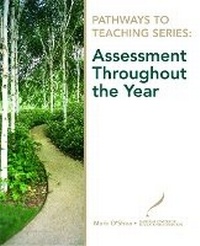
Pathways to Teaching Series
Assessment Throughout the Year
Published on 19. May 2008
Book
Paperback/Softback
256 pages
978-0-13-513057-5 (ISBN)
Description
Schools have undergone enormous change in the last ten years in response to the standards movement. New teachers will face the challenge of meeting state curriculum standards and new forms of assessment that derive in part from the No Child Left Behind policy. As part of the "Pathways to Teaching Series",Assessment Throughout the Year offers a brief, practical, and accessible text for teachers who need help mastering the skills of standards-based assessment and collaborative planning for this new teaching environment.
This book on classroom-based assessment can help teachers, especially those new to the classroom, to plan their instruction at the beginning of the school year based on the standards assessment data, find alternative forms of cumulative assessment to evaluate student achievement as described in the state or district standards, and to design teaching practices to meet the curriculum pacing and benchmark assessments of the school year. Learning objectives, chapter introductions, graphic organizers, and essential vocabulary at the beginning of each chapter prepare the reader for the content to follow.
This text is intended to help teachers prepare for the assessment experiences they will encounter throughout the school year. In this climate of school reform, it can also reinforce conventional instruction in the principles of testing and measurement and provide new approaches to assessment practices.
This book on classroom-based assessment can help teachers, especially those new to the classroom, to plan their instruction at the beginning of the school year based on the standards assessment data, find alternative forms of cumulative assessment to evaluate student achievement as described in the state or district standards, and to design teaching practices to meet the curriculum pacing and benchmark assessments of the school year. Learning objectives, chapter introductions, graphic organizers, and essential vocabulary at the beginning of each chapter prepare the reader for the content to follow.
This text is intended to help teachers prepare for the assessment experiences they will encounter throughout the school year. In this climate of school reform, it can also reinforce conventional instruction in the principles of testing and measurement and provide new approaches to assessment practices.
More details
Language
English
Place of publication
United States
Publishing group
Pearson Education (US)
Target group
Professional and scholarly
Dimensions
Height: 235 mm
Width: 191 mm
Weight
445 gr
ISBN-13
978-0-13-513057-5 (9780135130575)
Copyright in bibliographic data and cover images is held by Nielsen Book Services Limited or by the publishers or by their respective licensors: all rights reserved.
Schweitzer Classification
Persons
Dr. Mark O'Shea is a Professor of Education at California State University - Monterey Bay. Following eleven years of secondary school teaching and curriculum leadership, Dr. O'Shea embarked on his career as a teacher educator. His research interests focus on the identification of the skills and knowledge teachers need to succeed in standards-based classrooms. He is also involved in school reform efforts across the nation, from California to Alabama. He is the author of From Standards to Success: A Guide for School Leaders published in 2005 by the Association for Supervision and Curriculum Development.
Content
1.
Introductions
Six New Directions in Teaching, Learning and Assessment
An Overview of Assessment Purposes and Methods: Then and Now
2.
Introductions
An Experience in Contemporary Assessment
Closing the Door on Biased and Oppressive Assessment Practices?
What Are the Qualities We Seek in Good Assessment Practices?
How Do We Know If Our Assessments Are Measuring Student Learning Accurately?
Introduction to Reliability
Increasing Reliability in Classroom Assessments
A First Look at Validity
Validity and State Curriculum Standards
Enhancing Validity inClassroom Based Tests
3.
Learner Objectives
Introductions
Selecting Educational Goals and Objectives: Then and Now
State Curriculum Standards Influence the Selection of Instructional Goals and Objectives
How Do Teachers Meet Educational Goals and Objectives
Teaching to Standards-Based Instructional Objectives
Instructional Objectives and Classroom Management
4.
Learner Objectives
Introductions
Essential Purposes of Pre-Instructional Assessment
Pre-Instructional Assessment: Then and Now
Pre-Instructional Assessment and State Standards Achievement
An Introduction to Benchmark Assessment
Pre-Instructional Assessment for Today's Diverse Classroom
5.
Learner Objectives
Introductions
Formative Assessment as the Year Begins: Then and Now
Characteristics of Good Summative Assessment
Formative Assessment in a Standards-Based Setting
Formative Assessment Through the Year: Methods and Procedures
Progress Checking
Assessing Affective Responses to Instruction
6.
Learner Objectives
Introductions
Purpose of Summative Assessment
Summative Assessment: Then and Now
Problems with Conventional Testing Practices
Alternative Forms of Classroom-Based Summative Assessment
Summative Assessment in Today's Classroom
Contemporary Summative Assessment Practices
7.
Learner Objectives
Introductions
Linking Instruction to Assessment
Blueprints are Tools for Instruction and Assessment
Blueprints: Then and Now
An Overview of Test Item Types
Test Items Sort into One of Two Categories
Selected Response Items
Constructed Response Items
8.
Learner Objectives
Introductions
Essential Concepts for This Chapter
Administering Assessments
Scoring Student Responses to Test Items
Scoring Selected Response Items
Scoring Constructed Response Items
Grading the Test
Grading Student Work in a Standards-Based System
Improving Instruction Through Analysis of Test Outcomes
Evaluating Student Performances and Products
Determining Final Marks for Report Cards
Reporting Students' Academic Achievement
Introductions
Six New Directions in Teaching, Learning and Assessment
An Overview of Assessment Purposes and Methods: Then and Now
2.
Introductions
An Experience in Contemporary Assessment
Closing the Door on Biased and Oppressive Assessment Practices?
What Are the Qualities We Seek in Good Assessment Practices?
How Do We Know If Our Assessments Are Measuring Student Learning Accurately?
Introduction to Reliability
Increasing Reliability in Classroom Assessments
A First Look at Validity
Validity and State Curriculum Standards
Enhancing Validity inClassroom Based Tests
3.
Learner Objectives
Introductions
Selecting Educational Goals and Objectives: Then and Now
State Curriculum Standards Influence the Selection of Instructional Goals and Objectives
How Do Teachers Meet Educational Goals and Objectives
Teaching to Standards-Based Instructional Objectives
Instructional Objectives and Classroom Management
4.
Learner Objectives
Introductions
Essential Purposes of Pre-Instructional Assessment
Pre-Instructional Assessment: Then and Now
Pre-Instructional Assessment and State Standards Achievement
An Introduction to Benchmark Assessment
Pre-Instructional Assessment for Today's Diverse Classroom
5.
Learner Objectives
Introductions
Formative Assessment as the Year Begins: Then and Now
Characteristics of Good Summative Assessment
Formative Assessment in a Standards-Based Setting
Formative Assessment Through the Year: Methods and Procedures
Progress Checking
Assessing Affective Responses to Instruction
6.
Learner Objectives
Introductions
Purpose of Summative Assessment
Summative Assessment: Then and Now
Problems with Conventional Testing Practices
Alternative Forms of Classroom-Based Summative Assessment
Summative Assessment in Today's Classroom
Contemporary Summative Assessment Practices
7.
Learner Objectives
Introductions
Linking Instruction to Assessment
Blueprints are Tools for Instruction and Assessment
Blueprints: Then and Now
An Overview of Test Item Types
Test Items Sort into One of Two Categories
Selected Response Items
Constructed Response Items
8.
Learner Objectives
Introductions
Essential Concepts for This Chapter
Administering Assessments
Scoring Student Responses to Test Items
Scoring Selected Response Items
Scoring Constructed Response Items
Grading the Test
Grading Student Work in a Standards-Based System
Improving Instruction Through Analysis of Test Outcomes
Evaluating Student Performances and Products
Determining Final Marks for Report Cards
Reporting Students' Academic Achievement