

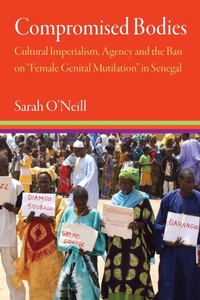
Compromised Bodies
Cultural Imperialism, Agency, and the Ban on "Female Genital Mutilation" in Senegal
Published on 25. March 2025
Book
Paperback/Softback
272 pages
978-1-5128-2723-1 (ISBN)
Description
This ethnography unravels the continuing political tensions surrounding Senegal's 1999 national ban on "female genital mutilation"
The Senegalese parliament authorized a national ban on "Female Genital Mutilation" in 1999. Because only a third of the Senegalese population practiced female genital cutting (FGC) at the time, policy makers did not expect that the new law would cause controversy or provoke commotion. Yet, in Fouta Toro and among Fulani, who traditionally practiced FGC, the response to the new law was fury, and frustrations often turned violent. More than a decade after the ban, Fouta Toro was considered "the most difficult region" for anti-FGC activists, both from inside and outside the government. Tires were burned, international NGO delegates were threatened, and activists publicly speaking out against the practice were religiously condemned. Animosity toward the ban remains palpable in the region to this day. The ban, many (but not all) locals say, is nothing other than an overt act of Western cultural imperialism imposed on their community. For these individuals, resisting the ban is critical for maintaining the autonomy and integrity of a traditional way of life. And from the outside, opposition to the law and NGOs can seem unified.
However, anthropologist Sarah O'Neill discovers that on the ground, there are tensions between those who oppose the ban and those who support it-even as that support is nuanced and often complicated. This ethnography unravels the continuing political tensions surrounding both national and international interventions in Fouta Toro and in Senegal that place protection of the female body at the center of their concerns. By way of the many stories of ordinary women and men caught up in debates around the value of the practice and meaning of FGC, Compromised Bodies reveals the personal struggles and difficult decisions Fulani face, be they traditional cutters, religious leaders, mothers, husbands, divorced women, or anti-FGC activists.
The Senegalese parliament authorized a national ban on "Female Genital Mutilation" in 1999. Because only a third of the Senegalese population practiced female genital cutting (FGC) at the time, policy makers did not expect that the new law would cause controversy or provoke commotion. Yet, in Fouta Toro and among Fulani, who traditionally practiced FGC, the response to the new law was fury, and frustrations often turned violent. More than a decade after the ban, Fouta Toro was considered "the most difficult region" for anti-FGC activists, both from inside and outside the government. Tires were burned, international NGO delegates were threatened, and activists publicly speaking out against the practice were religiously condemned. Animosity toward the ban remains palpable in the region to this day. The ban, many (but not all) locals say, is nothing other than an overt act of Western cultural imperialism imposed on their community. For these individuals, resisting the ban is critical for maintaining the autonomy and integrity of a traditional way of life. And from the outside, opposition to the law and NGOs can seem unified.
However, anthropologist Sarah O'Neill discovers that on the ground, there are tensions between those who oppose the ban and those who support it-even as that support is nuanced and often complicated. This ethnography unravels the continuing political tensions surrounding both national and international interventions in Fouta Toro and in Senegal that place protection of the female body at the center of their concerns. By way of the many stories of ordinary women and men caught up in debates around the value of the practice and meaning of FGC, Compromised Bodies reveals the personal struggles and difficult decisions Fulani face, be they traditional cutters, religious leaders, mothers, husbands, divorced women, or anti-FGC activists.
Reviews / Votes
"Compromised Bodies is a welcome addition to the field of medical anthropology, a nuanced study of the practice of excision and its relation to larger social issues." (Dinah Hannaford, University of Houston)More details
Series
Language
English
Place of publication
Pennsylvania
United States
Target group
College/higher education
Product notice
Paperback (trade)
Dimensions
Height: 229 mm
Width: 152 mm
Thickness: 15 mm
Weight
404 gr
ISBN-13
978-1-5128-2723-1 (9781512827231)
Copyright in bibliographic data and cover images is held by Nielsen Book Services Limited or by the publishers or by their respective licensors: all rights reserved.
Schweitzer Classification
Other editions
Additional editions
Sarah O'Neill
Compromised Bodies
Cultural Imperialism, Agency, and the Ban on "Female Genital Mutilation" in Senegal
E-Book
03/2025
1st Edition
University of Pennsylvania Press
from
€92.99
Available for download
Person
Sarah O'Neill is Associate Professor of Medical Anthropology at the Universite Libre de Bruxelles in Belgium and holds a FEDtWIN researcher position at the Royal Museum of Central Africa, Tervuren.