

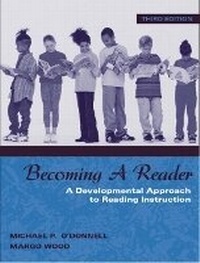
Becoming a Reader
A Developmental Approach to Reading Instruction
3rd Edition
Published on 11. November 2003
Book
Paperback/Softback
408 pages
978-0-205-33293-9 (ISBN)
Description
Main text for undergraduate and graduate courses in Elementary Reading/Literacy Instruction. This is a practical "how to do" book that represents a synthesis of many points of view on how to assess the reading needs of children and to address them with highly effective teacher-tested strategies. Organized around stages of development rather than randomly arranged topics.
More details
Edition
3rd edition
Language
English
Place of publication
United States
Publishing group
Pearson Education (US)
Target group
Professional and scholarly
Dimensions
Height: 228 mm
Width: 10 mm
Thickness: 10 mm
Weight
1000 gr
ISBN-13
978-0-205-33293-9 (9780205332939)
Copyright in bibliographic data and cover images is held by Nielsen Book Services Limited or by the publishers or by their respective licensors: all rights reserved.
Schweitzer Classification
Other editions
New editions
Michael P. O'Donnell | Margo Wood
Becoming a Reader
A Developmental Approach to Reading Instruction, MyLabSchool Edition
Book
02/2005
3rd Edition
Pearson
€99.20
Article is exhausted; no reprint
Previous edition

Book
09/1998
2nd Edition
Pearson
€62.15
Article exhausted; check for reprint
Content
Each chapter concludes with "Summary" and "Bibliography."
Preface.
PROLOGUE.
Stages of Literacy Development.
Content and Features of the Text.
Bibliography.
I. The Beginning Reader.
1. Emergent Reading Stage.
Concept and Language Development.
Principles and Conditions of Language Learning.
Goals and Instruction in the Emergent Reading Stage.
A Word About Packaged Programs.
Assessing Early Literacy Development.
Case Studies.
2. Initial Reading Stage: The Process of Learning to Read.
Goal 1: Understanding Reading as a Meaning-Making Process.
Goal 2: Acquiring Sight Vocabulary.
Goal 3: Developing Word Identification Strategies.
3. Initial Reading Stage: Instructional Approaches and Programs.
Case Studies.
II. Becoming Fluent.
4. Transitional Stage.
Goal 1: Fluency.
Goal 2: Motivation to Read and Write.
Goal 3: Emphasis on Reading for Meaning.
Instruction.
Case Studies.
Sources of Appropriate Literature for Transitional Stage Readers of Different Ages.
III. Fluent Readers.
5. Basic Literacy Stage.
The Comprehension Process.
6. Vocabulary Development.
How Conceptual Knowledge Is Acquired.
Guidelines for Vocabulary Instruction.
General Vocabulary Instruction.
7. Effective Reading of Texts.
Preparation for Reading: Content.
Preparation for Reading: Form.
Follow-Up to Reading: Questions and Answers.
8. Study Strategies.
Previewing.
Organizing and Summarizing Information.
Retaining and Using Information.
Application.
Case Studies.
9. Refinement Stage.
Effective Instructional Programs.
10. Refinement Stage: Content Area Reading.
Teacher-Directed Study of Informational Texts.
Independent Study Strategies.
Case Studies.
IV. Assessment.
11. Assessment.
Formal Assessment.
Informal Assessment.
Case Studies.
Naturalistic Assessment.
Standards-Based Assessment.
V. Organizing and Managing Classroom Reading Instruction.
12. Organization and Management.
Factors That Influence Organization.
13. Ms. Stein's First Grade: A Literature-Based Program.
Ms. Stein's Program.
How Ms. Stein Developed Her Program.
14. Mr. Gordon's Fourth Grade: Using Basal Readers.
Mr. Gordon's Program.
How Mr. Gordon Developed His Program.
15. Instructing Readers with Differences.
Gifted Readers.
Learning-Disabled/Remedial Readers.
Readers with Linguistic Differences.
APPENDIXES.
Appendix A: Informal Assessment of Study Strategies.
Appendix B: Examiners Manual: Informal Assessment of Elementary Reading.
Appendix C: Gorham (ME) Schools Literacy Guide.
Author Index.
Subject Index.
Preface.
PROLOGUE.
Stages of Literacy Development.
Content and Features of the Text.
Bibliography.
I. The Beginning Reader.
1. Emergent Reading Stage.
Concept and Language Development.
Principles and Conditions of Language Learning.
Goals and Instruction in the Emergent Reading Stage.
A Word About Packaged Programs.
Assessing Early Literacy Development.
Case Studies.
2. Initial Reading Stage: The Process of Learning to Read.
Goal 1: Understanding Reading as a Meaning-Making Process.
Goal 2: Acquiring Sight Vocabulary.
Goal 3: Developing Word Identification Strategies.
3. Initial Reading Stage: Instructional Approaches and Programs.
Case Studies.
II. Becoming Fluent.
4. Transitional Stage.
Goal 1: Fluency.
Goal 2: Motivation to Read and Write.
Goal 3: Emphasis on Reading for Meaning.
Instruction.
Case Studies.
Sources of Appropriate Literature for Transitional Stage Readers of Different Ages.
III. Fluent Readers.
5. Basic Literacy Stage.
The Comprehension Process.
6. Vocabulary Development.
How Conceptual Knowledge Is Acquired.
Guidelines for Vocabulary Instruction.
General Vocabulary Instruction.
7. Effective Reading of Texts.
Preparation for Reading: Content.
Preparation for Reading: Form.
Follow-Up to Reading: Questions and Answers.
8. Study Strategies.
Previewing.
Organizing and Summarizing Information.
Retaining and Using Information.
Application.
Case Studies.
9. Refinement Stage.
Effective Instructional Programs.
10. Refinement Stage: Content Area Reading.
Teacher-Directed Study of Informational Texts.
Independent Study Strategies.
Case Studies.
IV. Assessment.
11. Assessment.
Formal Assessment.
Informal Assessment.
Case Studies.
Naturalistic Assessment.
Standards-Based Assessment.
V. Organizing and Managing Classroom Reading Instruction.
12. Organization and Management.
Factors That Influence Organization.
13. Ms. Stein's First Grade: A Literature-Based Program.
Ms. Stein's Program.
How Ms. Stein Developed Her Program.
14. Mr. Gordon's Fourth Grade: Using Basal Readers.
Mr. Gordon's Program.
How Mr. Gordon Developed His Program.
15. Instructing Readers with Differences.
Gifted Readers.
Learning-Disabled/Remedial Readers.
Readers with Linguistic Differences.
APPENDIXES.
Appendix A: Informal Assessment of Study Strategies.
Appendix B: Examiners Manual: Informal Assessment of Elementary Reading.
Appendix C: Gorham (ME) Schools Literacy Guide.
Author Index.
Subject Index.