


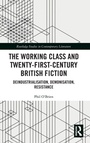
The Working Class and Twenty-First-Century British Fiction
Deindustrialisation, Demonisation, Resistance
1st Edition
Published on 13. December 2021
Book
Paperback/Softback
184 pages
978-1-032-23928-6 (ISBN)
Description
The Working Class and Twenty-First-Century British Fiction looks at how the twenty-first-century British novel has explored contemporary working-class life. Studying the works of David Peace, Gordon Burn, Anthony Cartwright, Ross Raisin, Jenni Fagan, and Sunjeev Sahota, the book shows how they have mapped the shift from deindustrialisation through to stigmatization of individuals and communities who have experienced profound levels of destabilization and unemployment. O'Brien argues that these novels offer ways of understanding fundamental aspects of contemporary capitalism for the working class in modern Britain, including, class struggle, inequality, trauma, social abjection, racism, and stigmatization, exclusively looking at British working-class literature of the twenty-first century.
Reviews / Votes
'What does it mean to be working class in the twenty-first century, decades after industrial jobs and strong unions have given way to low-wage service jobs, contingent labour, and precarity? This book traces how deindustrialisation literature wrestles with this question, revealing how class itself is being reimagined and reshaped by economic restructuring and neoliberalism - while also introducing readers to a range of engaging and entertaining books worth reading'.Sherry Lee Linkon, Georgetown University, USA.
'This book makes a compelling case for the intersections between class and contemporary literature. It brings the academic study of working-class writing bang up to date'.
Nicola Wilson, University of Reading, UK.
"The Working Class and Twenty-First-Century British Fiction is as thoughtful as it is rigorous. Its arguments are compelling and its close readings convincing; for these reasons alone it would make a valuable addition to university libraries. But for the wider implications of its secondary argument, that fiction has the potential to make significant interventions into critical discourses, it deserves a place on any contemporary fiction reading list. As the book's final words attest, 'class matters' (154), and it will go on mattering; the same goes for fiction, and O'Brien shows us why."
Joseph Williams, University of East Anglia, UK. 'What does it mean to be working class in the twenty-first century, decades after industrial jobs and strong unions have given way to low-wage service jobs, contingent labour, and precarity? This book traces how deindustrialisation literature wrestles with this question, revealing how class itself is being reimagined and reshaped by economic restructuring and neoliberalism - while also introducing readers to a range of engaging and entertaining books worth reading'.
Sherry Lee Linkon, Georgetown University, USA.
'This book makes a compelling case for the intersections between class and contemporary literature. It brings the academic study of working-class writing bang up to date'.
Nicola Wilson, University of Reading, UK.
More details
Series
Language
English
Place of publication
London
United Kingdom
Publishing group
Taylor & Francis Ltd
Target group
College/higher education
Postgraduate
Dimensions
Height: 229 mm
Width: 152 mm
Thickness: 10 mm
Weight
279 gr
ISBN-13
978-1-032-23928-6 (9781032239286)
Copyright in bibliographic data and cover images is held by Nielsen Book Services Limited or by the publishers or by their respective licensors: all rights reserved.
Schweitzer Classification
Other editions
Additional editions
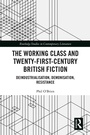
Phil O'Brien
The Working Class and Twenty-First-Century British Fiction
Deindustrialisation, Demonisation, Resistance
E-Book
12/2019
1st Edition
Routledge
€60.49
Available for download
Phil O'Brien
The Working Class and Twenty-First-Century British Fiction
Deindustrialisation, Demonisation, Resistance
E-Book
12/2019
1st Edition
Routledge
€60.49
Available for download
Phil O'Brien
The Working Class and Twenty-First-Century British Fiction
Deindustrialisation, Demonisation, Resistance
Book
12/2019
1st Edition
Routledge
€206.00
Shipment within 15-20 days
Person
Phil O'Brien has written on working-class fiction and theatre for Textual Practice and Literature & History and in Accelerated Times: British Literature in Transition (Cambridge University Press) and Working-Class Writing: Theory & Practice (Palgrave). He is secretary of the Raymond Williams Society, on the editorial board of Key Words, and editor of Culture & Politics (Verso) by Raymond Williams. He has taught at the University of Manchester and Liverpool John Moores University. This is his first book.
Content
Introduction: Class, Culture, Politics
Part One: Mapping Deindustrialisation
Chapter One: David Peace and the Strike Novel: Conflict, History, Knowledge
Chapter Two: Gordon Burn and Working-Class Nostalgia: Region, Form, Commodification
Chapter Three: Anthony Cartwright and the Deindustrial Novel: Realism, Place, Class
Part Two: Resisting Demonisation
Chapter Four: Ross Raisin and Class Mourning: Masculinity, Work, Precarity
Chapter Five: Jenni Fagan and the Revolting Class: Gender, Stigma, Resistance
Chapter Six: Sunjeev Sahota and the Racialised Worker: Class, Race, Violence
Conclusion: Class Matters
Part One: Mapping Deindustrialisation
Chapter One: David Peace and the Strike Novel: Conflict, History, Knowledge
Chapter Two: Gordon Burn and Working-Class Nostalgia: Region, Form, Commodification
Chapter Three: Anthony Cartwright and the Deindustrial Novel: Realism, Place, Class
Part Two: Resisting Demonisation
Chapter Four: Ross Raisin and Class Mourning: Masculinity, Work, Precarity
Chapter Five: Jenni Fagan and the Revolting Class: Gender, Stigma, Resistance
Chapter Six: Sunjeev Sahota and the Racialised Worker: Class, Race, Violence
Conclusion: Class Matters