

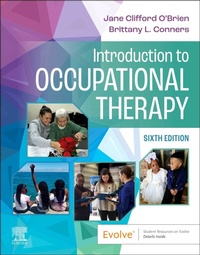
Introduction to Occupational Therapy
6th Edition
Published on 27. January 2023
Book
Paperback/Softback
320 pages
978-0-323-79856-3 (ISBN)
Description
Prepare for success in OT practice with a complete overview of the profession! Introduction to Occupational Therapy, 6th Edition helps you master the roles and responsibilities of the OT practitioner. Content examines OT practice - from client evaluation to planning interventions and goals to reaching optimal outcomes. You will also learn valuable skills in clinical reasoning and in providing occupational therapy across the client's lifespan. Written by the respected author team of Jane Clifford O'Brien and Brittany Conners, this comprehensive resource discusses today's OT practice and adds new chapters on self-care, supportive technology, advocacy, and the lived experience of OT practitioners.
Complete coverage of OT practice provides an overview of practice in a variety of rehabilitation, mental health, and community settings, and across the lifespan
A broad perspective fits the needs of both Occupational Therapy and Occupational Therapy Assistant students
Case studies and activities in each chapter help you apply concepts and develop problem-solving skills
Emphasis on evidence-based practice helps you learn to think logically and use research to create intervention plans
Helpful tables and boxes provide easy access to material for practice, action steps, and outlines of processes
The OT Practice Framework provides a sound basis for decision making, defining occupational therapy areas of concern and the OT process
Chapter objectives, key terms, chapter summaries, and review questions highlight important content in each chapter
NEW! Additional chapters cover Prioritizing Self Care; Leadership and Advocacy; The Lived Experience of OT Practitioners; and Technology to Support Occupational Engagement
UPDATED! Revised content throughout provides the most current information needed to be an effective practitioner today
NEW! Current content addresses societal trends influencing the profession, including occupational justice, diversity, equity, and inclusion
NEW! Expanded content includes historical influences of Black OTs, OTs of color, LGBTQIA, and multicultural groups, emphasizing action steps to promote, advocate, and enable diversity, equity, and inclusion within the profession
NEW! Perspectives from students, practitioners (therapists and OT assistants), professors, entrepreneurs, and retired practitioners are embedded in chapters
UPDATED! The latest references and examples ensure the content is current and applicable for today's students
Follows the Occupational Therapy Practice Framework (4th Edition) (OTPF) and the newest Accreditation Council for Occupational Therapy Education (ACOTE) Curriculum standards [2018]
Boxes with tips in many chapters apply content in practice related to concepts such as self-care, advocacy, critical thinking, and inclusion
Representation of the diversity of the OT profession is reflected throughout the text in content and photos
Complete coverage of OT practice provides an overview of practice in a variety of rehabilitation, mental health, and community settings, and across the lifespan
A broad perspective fits the needs of both Occupational Therapy and Occupational Therapy Assistant students
Case studies and activities in each chapter help you apply concepts and develop problem-solving skills
Emphasis on evidence-based practice helps you learn to think logically and use research to create intervention plans
Helpful tables and boxes provide easy access to material for practice, action steps, and outlines of processes
The OT Practice Framework provides a sound basis for decision making, defining occupational therapy areas of concern and the OT process
Chapter objectives, key terms, chapter summaries, and review questions highlight important content in each chapter
NEW! Additional chapters cover Prioritizing Self Care; Leadership and Advocacy; The Lived Experience of OT Practitioners; and Technology to Support Occupational Engagement
UPDATED! Revised content throughout provides the most current information needed to be an effective practitioner today
NEW! Current content addresses societal trends influencing the profession, including occupational justice, diversity, equity, and inclusion
NEW! Expanded content includes historical influences of Black OTs, OTs of color, LGBTQIA, and multicultural groups, emphasizing action steps to promote, advocate, and enable diversity, equity, and inclusion within the profession
NEW! Perspectives from students, practitioners (therapists and OT assistants), professors, entrepreneurs, and retired practitioners are embedded in chapters
UPDATED! The latest references and examples ensure the content is current and applicable for today's students
Follows the Occupational Therapy Practice Framework (4th Edition) (OTPF) and the newest Accreditation Council for Occupational Therapy Education (ACOTE) Curriculum standards [2018]
Boxes with tips in many chapters apply content in practice related to concepts such as self-care, advocacy, critical thinking, and inclusion
Representation of the diversity of the OT profession is reflected throughout the text in content and photos
More details
Edition
6th edition
Language
English
Place of publication
St Louis
United States
Publishing group
Elsevier - Health Sciences Division
Target group
College/higher education
Dimensions
Height: 216 mm
Width: 280 mm
Thickness: 14 mm
Weight
708 gr
ISBN-13
978-0-323-79856-3 (9780323798563)
Copyright in bibliographic data and cover images is held by Nielsen Book Services Limited or by the publishers or by their respective licensors: all rights reserved.
Schweitzer Classification
Other editions
Previous edition
Jane Clifford O'Brien
Introduction to Occupational Therapy
Book
04/2017
5th Edition
Mosby
€73.03
Article exhausted; check for reprint
Persons
Professor Jane Clifford O'Brien works in the Occupational Therapy Department at University of New England Portland, Maine.
Content
SECTION I Occupational Therapy:The Profession
1. Introductory Questions
2. Looking Back: A History of Occupational Therapy
3. Philosophical Base and Values of Occupational Therapy
4. Current Trends in Occupational Therapy
5. A Global Perspective of Occupational Therapy
SECTION II Occupational Therapy: The Practitioner
6. From Student to Practitioner: Preparation and Certification
7. Occupational Therapy Roles
8. Practicing Legally and Ethically
9. Leadership and Advocacy
10. Prioritizing Self-Care
11. The Lived Experience of Occupational Therapy Practitioners
SECTION III The Practice of Occupational Therapy
12. Occupational Therapy Practice Framework: Domain and Process
13. Occupational Therapy Across the Life Span
14. Treatment Settings and Models of Health Care
15. Technology to Support Occupational Engagement
SECTION IV The Process of Occupational Therapy
16. Occupational Therapy Process: Evaluation,Intervention,and Outcomes
17. Models of Practice and Frames of Reference
18. Intervention Modalities
19. Therapeutic Relationships
20. Therapeutic Reasoning
1. Introductory Questions
2. Looking Back: A History of Occupational Therapy
3. Philosophical Base and Values of Occupational Therapy
4. Current Trends in Occupational Therapy
5. A Global Perspective of Occupational Therapy
SECTION II Occupational Therapy: The Practitioner
6. From Student to Practitioner: Preparation and Certification
7. Occupational Therapy Roles
8. Practicing Legally and Ethically
9. Leadership and Advocacy
10. Prioritizing Self-Care
11. The Lived Experience of Occupational Therapy Practitioners
SECTION III The Practice of Occupational Therapy
12. Occupational Therapy Practice Framework: Domain and Process
13. Occupational Therapy Across the Life Span
14. Treatment Settings and Models of Health Care
15. Technology to Support Occupational Engagement
SECTION IV The Process of Occupational Therapy
16. Occupational Therapy Process: Evaluation,Intervention,and Outcomes
17. Models of Practice and Frames of Reference
18. Intervention Modalities
19. Therapeutic Relationships
20. Therapeutic Reasoning