

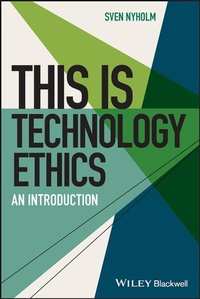
This is Technology Ethics: An Introduction
Description
In the Technology Age, innovations in medical, communications, and weapons technologies have given rise to many new ethical questions: Are technologies always value-neutral tools? Are human values and human prejudices sometimes embedded in technologies? Should we merge with the technologies we use? Is it ethical to use autonomous weapons systems in warfare? What should a self-driving car do if it detects an unavoidable crash? Can robots have morally relevant properties?
This is Technology Ethics: An Introduction provides an accessible overview of the sub-field of philosophy that focuses on the ethical implications of new technologies. Requiring no previous background in the subject, this reader-friendly volume explores ethical questions concerning artificial intelligence, robots, self-driving cars, brain implants, social media and communication technologies, and more. Throughout the book, clear and engaging chapters describe and discuss key discussions, issues, and themes while inviting readers to develop their own perspectives on a wide range of moral and ethical questions.
Discusses how various technologies influence and shape individuals and society both positively and negatively
Illustrates how emerging technologies affect traditional ideas about ethics and human self-understanding
Addresses the ethical complications of creating technologies that may lead to morally problematic consequences
Considers if the benefits of new technologies outweigh potential drawbacks, such as how people interact online through social media
Explores how established moral and ethical theories relate to new questions concerning advanced technologies
Part of the popular This is Philosophy series published by Wiley-Blackwell, This is Technology Ethics: An Introduction is a must-read for undergraduate students taking a Technology Ethics course, researchers in the field, engineers, technology professionals, and general readers looking to learn more about the topic.
<b>An approachable introduction to the philosophical study of ethical dilemmas in technology </b>
In the Technology Age, innovations in medical, communications, and weapons technologies have given rise to many new ethical questions: Are technologies always value-neutral tools? Are human values and human prejudices sometimes embedded in technologies? Should we merge with the technologies we use? Is it ethical to use autonomous weapons systems in warfare? What should a self-driving car do if it detects an unavoidable crash? Can robots have morally relevant properties?
<i>This is Technology Ethics: An Introduction </i>provides an accessible overview of the sub-field of philosophy that focuses on the ethical implications of new technologies. Requiring no previous background in the subject, this reader-friendly volume explores ethical questions concerning artificial intelligence, robots, self-driving cars, brain implants, social media and communication technologies, and more. Throughout the book, clear and engaging chapters describe and discuss key discussions, issues, and themes while inviting readers to develop their own perspectives on a wide range of moral and ethical questions.
<ul><li>Discusses how various technologies influence and shape individuals and society both positively and negatively</li><li>Illustrates how emerging technologies affect traditional ideas about ethics and human self-understanding</li><li>Addresses the ethical complications of creating technologies that may lead to morally problematic consequences</li><li>Considers if the benefits of new technologies outweigh potential drawbacks, such as how people interact online through social media</li><li>Explores how established moral and ethical theories relate to new questions concerning advanced technologies </li></ul>Part of the popular <i>This is Philosophy</i> series published by Wiley-Blackwell, <i>This is Technology Ethics: An Introduction </i>is a must-read for undergraduate students taking a Technology Ethics course, researchers in the field, engineers, technology professionals, and general readers looking to learn more about the topic.
More details
Other editions
Additional editions
Person
<b>Sven Nyholm</b> is an Associate Professor of Philosophy at Utrecht University, a member of the Ethics Advisory Board of the Human Brain Project, and an Associate Editor of <i>Science and Engineering Ethics</i>. He writes about ethical theory, human self-understanding, and emerging technologies, and is the author of <i>Humans and Robots: Ethics, Agency, and Anthropomorphism</i> and <i>Revisiting Kant's Universal Law and Humanity Formulas.</i>