

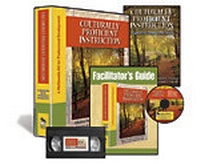
Culturally Proficient Instruction (Multimedia Kit)
A Multimedia Kit for Professional Development
1st Edition
Published on 18. January 2007
Book
48 pages
978-1-4129-2508-2 (ISBN)
Description
In this multimedia kit the authors provide opportunities for educators to reflect on who they are as teachers, who their learners are, and the unique perspectives they each bring to the classroom. It contains reflective activities and group work to guide users through the process, and a well-documented case study that demonstrates cultural proficiency in practice. Incorporating examples from a multitude of environments, this interactive resource addresses the needs of primary and secondary teachers and administrators, higher education faculty, adult educators, and trainers in business and healthcare. This is for everyone who teaches, in every type of setting.
More details
Language
English
Place of publication
Thousand Oaks
United States
Publishing group
SAGE Publications Inc
Target group
Professional and scholarly
Interest Age: 0 years
Dimensions
Height: 279 mm
Width: 216 mm
Weight
1021 gr
ISBN-13
978-1-4129-2508-2 (9781412925082)
Copyright in bibliographic data and cover images is held by Nielsen Book Services Limited or by the publishers or by their respective licensors: all rights reserved.
Schweitzer Classification
Persons
Kikanza Nuri-Robins helps people to close the gap between what they say they are and what they actually do. Whether she is in a corporate boardroom, the fireside room of a retreat center, or a convention center auditorium, Kikanza uses her skills and insights to help people and organizations that are in transition - or ought to be. She shares her observations and recommendations with clarity and candor, while gently encouraging them to face the difficult situations that challenge their skill sets and their values. She leads people to this growing edge with unswerving focus, an understanding heart, and laughter that rises from the seat of her soul.
Since 1978, Kikanza has worked as an organizational development consultant in a variety of settings includ-ing education, health care, criminal justice, and religion, focusing on leadership development, change management, and cultural proficiency. Her clients range from school districts, to university faculty, to government offices and non-profit organizations. The connecting thread is her passion for working with people who want to making a difference for others.
Kikanza studied at Occidental College, the University of Southern California, and the San Francisco Theological Seminary. She is the author of many articles and five books, including: Cultural Proficiency and Culturally Proficient Responses to the LGBT Communities. Kikanza lives in Los Angeles where she spends her discretionary time as a textile artist.
Randall B. Lindsey is Emeritus Professor at California State University, Los Angeles. He has served as a teacher, an administrator, executive director of a non-profit corporation, as Interim Dean at California Lutheran University, as Distinguished Educator in Residence at Pepperdine University, and as Chair of the Education Department at the University of Redlands. All of Randy's experiences have been in working with diverse populations and his area of study is the behavior of white people in multicultural settings. His Ph.D. is in Educational Leadership from Georgia State University, his Master of Arts in Teaching is in History Education from the University of Illinois, and his B.S. in Social Science Education is from Western Illinois University. He has served as a junior high school and high school teacher and as an administrator in charge of school desegregation efforts. At Cal State, L.A. he served as Chair of the Division of Administration and Counseling and as Director of the Regional Assistance Centers for Educational Equity, a regional race desegregation assistance center. With co-authors he has written several books and articles on applying the Cultural Proficiency Framework in various contexts.
Email - randallblindsey@gmail.com
Website - CCPEP.org
Twitter - @RBLindsey41 Dr. Delores B. Lindsey served as assistant principal, principal, and county office administrator. She served as Executive Director of the regional school leadership center. Delores uses her skills as Cognitive Coach and Adaptive Schools trainer blended with her understanding and skills as a cultural proficiency trainer to design and implement the 10-Day Certification Program for Culturally Proficient Educational Practice. She served as assistant professor at California State University San Marcos for more than 10 years. She retired from the institution; however, she has not retired from the education profession. Her primary focus is developing culturally proficient leaders. She helps educational leaders examine their organizations' policies and practices and their individual beliefs and values about cross-cultural communication. Her favorite reflective questions are, Who are we? and, Are we who we say we are? Delores and her husband, Randall (her favorite SAGE/Corwin author), continue to co-write about the application of the four tools of Cultural Proficiency. Her most recent publications which are on Corwin's bestseller list are Leading While Female: A Culturally Proficient Response for Gender Equity, and My Leading While Female Journey: A Guided Reflective Journal with Trudy Arriaga and Stacie Stanley.
Raymond Terrell, EdD. retired as Associate Dean for Research and Diversity and member of he department of Educational Leadership at Miami University, Oxford< Ohio. He previously worked at California State University, Los Angeles where he served as Professor of Educational Administration and for five years he was the Dean of the School of Eduction. His journey in education began in a public school district where he taught English to junior and senior high students;. He also was a principal and an assistant superintend in the same district. Dr. Terrell is co-author on a number of books including , Cultural Proficiency: and a A Manual for School Leaders, Cultural Proficient Leadership. His books and numerous articles and life's work have all focused on issues of equity and inclusion
Since 1978, Kikanza has worked as an organizational development consultant in a variety of settings includ-ing education, health care, criminal justice, and religion, focusing on leadership development, change management, and cultural proficiency. Her clients range from school districts, to university faculty, to government offices and non-profit organizations. The connecting thread is her passion for working with people who want to making a difference for others.
Kikanza studied at Occidental College, the University of Southern California, and the San Francisco Theological Seminary. She is the author of many articles and five books, including: Cultural Proficiency and Culturally Proficient Responses to the LGBT Communities. Kikanza lives in Los Angeles where she spends her discretionary time as a textile artist.
Randall B. Lindsey is Emeritus Professor at California State University, Los Angeles. He has served as a teacher, an administrator, executive director of a non-profit corporation, as Interim Dean at California Lutheran University, as Distinguished Educator in Residence at Pepperdine University, and as Chair of the Education Department at the University of Redlands. All of Randy's experiences have been in working with diverse populations and his area of study is the behavior of white people in multicultural settings. His Ph.D. is in Educational Leadership from Georgia State University, his Master of Arts in Teaching is in History Education from the University of Illinois, and his B.S. in Social Science Education is from Western Illinois University. He has served as a junior high school and high school teacher and as an administrator in charge of school desegregation efforts. At Cal State, L.A. he served as Chair of the Division of Administration and Counseling and as Director of the Regional Assistance Centers for Educational Equity, a regional race desegregation assistance center. With co-authors he has written several books and articles on applying the Cultural Proficiency Framework in various contexts.
Email - randallblindsey@gmail.com
Website - CCPEP.org
Twitter - @RBLindsey41 Dr. Delores B. Lindsey served as assistant principal, principal, and county office administrator. She served as Executive Director of the regional school leadership center. Delores uses her skills as Cognitive Coach and Adaptive Schools trainer blended with her understanding and skills as a cultural proficiency trainer to design and implement the 10-Day Certification Program for Culturally Proficient Educational Practice. She served as assistant professor at California State University San Marcos for more than 10 years. She retired from the institution; however, she has not retired from the education profession. Her primary focus is developing culturally proficient leaders. She helps educational leaders examine their organizations' policies and practices and their individual beliefs and values about cross-cultural communication. Her favorite reflective questions are, Who are we? and, Are we who we say we are? Delores and her husband, Randall (her favorite SAGE/Corwin author), continue to co-write about the application of the four tools of Cultural Proficiency. Her most recent publications which are on Corwin's bestseller list are Leading While Female: A Culturally Proficient Response for Gender Equity, and My Leading While Female Journey: A Guided Reflective Journal with Trudy Arriaga and Stacie Stanley.
Raymond Terrell, EdD. retired as Associate Dean for Research and Diversity and member of he department of Educational Leadership at Miami University, Oxford< Ohio. He previously worked at California State University, Los Angeles where he served as Professor of Educational Administration and for five years he was the Dean of the School of Eduction. His journey in education began in a public school district where he taught English to junior and senior high students;. He also was a principal and an assistant superintend in the same district. Dr. Terrell is co-author on a number of books including , Cultural Proficiency: and a A Manual for School Leaders, Cultural Proficient Leadership. His books and numerous articles and life's work have all focused on issues of equity and inclusion
Content
About the Authors
Introduction
How to Use the Guide
How to Use the Video/DVD
Additional Resources for Facilitators
Chapter-by-Chapter Study Guide: Culturally Proficient Instruction: A Guide for People Who Teach, Nuri Robins, Lindsey, Lindsey, and Terrell
Welcome and Workshop Starter
Workshop Activity
Video/DVD Clip and Summary: Introduction
Discussion Questions After the Video/DVD Clip: Introduction
1. What Is Cultural Proficiency?
Summary
Video/DVD Preview Activity
Workshop Activities
Video/DVD Clip and Summary: The Guiding Principles of Cultural Proficiency
Discussion Questions After the Video/DVD Clip: The Guiding Principles of Cultural Proficiency
Workshop Activity
Practical Application
2. Culturally Competent Praxis
Summary
Workshop Activity
Practical Application
3. Culturally Proficient Standards
Summary
Workshop Activity
Practical Applications
4. The Case for Cultural Proficiency
Summary
Workshop Activity
Practical Applications
5. Barriers to Cultural Proficiency
Summary
Video/DVD Clip and Summary: The Barriers to Cultural Proficiency (Part I)
Discussion Questions After the Video/DVD Clip: The Barriers to Cultural Proficiency (Part I)
Video/DVD Clip and Summary: The Barriers to Cultural Proficiency (Part II)
Discussion Questions After the Video/DVD Clip: The Barriers to Cultural Proficiency (Part II)
Workshop Activities
Practical Application
6. The Cultural Proficiency Continuum
Summary
Workshop Activity
Video/DVD Clip and Summary: The Cultural Proficiency Continuum
Discussion Questions After the Video/DVD Clip: The Cultural Proficiency Continuum
Workshop Activities
Practical Application
Video/DVD Clip and Summary: The Essential Elements of Cultural Proficiency
Discussion Questions After the Video/DVD Clip: The Essential Elements of Cultural Proficiency
Workshop Activity
7. Assessing Your Culture: Naming the Differences
Summary
Workshop Activities
Practical Application
8. Valuing Diversity: Claiming the Differences
Summary
Workshop Activities
Practical Application
9. Managing the Dynamics of Difference: Reframing the Differences
Summary
Workshop Activities
Practical Applications
10. Adapting to Diversity: Training About Differences
Summary
Workshop Activities
Practical Application
11. Institutionalizing Cultural Knowledge: Changing for Differences
Summary
Workshop Activities
Video/DVD Clip and Summary: Conclusion (Part I)
Discussion Questions After the Video/DVD Clip: Conclusion (Part I)
Video/DVD Clip and Summary: Conclusion (Part II)
Discussion Questions After the Video/DVD Clip: Conclusion (Part II)
Practical Applications
Sample Workshop Agendas
Half-Day Workshop Agenda
One-Day Workshop Agenda
Two-Day Workshop Agenda
Workshop Evaluation Form
Introduction
How to Use the Guide
How to Use the Video/DVD
Additional Resources for Facilitators
Chapter-by-Chapter Study Guide: Culturally Proficient Instruction: A Guide for People Who Teach, Nuri Robins, Lindsey, Lindsey, and Terrell
Welcome and Workshop Starter
Workshop Activity
Video/DVD Clip and Summary: Introduction
Discussion Questions After the Video/DVD Clip: Introduction
1. What Is Cultural Proficiency?
Summary
Video/DVD Preview Activity
Workshop Activities
Video/DVD Clip and Summary: The Guiding Principles of Cultural Proficiency
Discussion Questions After the Video/DVD Clip: The Guiding Principles of Cultural Proficiency
Workshop Activity
Practical Application
2. Culturally Competent Praxis
Summary
Workshop Activity
Practical Application
3. Culturally Proficient Standards
Summary
Workshop Activity
Practical Applications
4. The Case for Cultural Proficiency
Summary
Workshop Activity
Practical Applications
5. Barriers to Cultural Proficiency
Summary
Video/DVD Clip and Summary: The Barriers to Cultural Proficiency (Part I)
Discussion Questions After the Video/DVD Clip: The Barriers to Cultural Proficiency (Part I)
Video/DVD Clip and Summary: The Barriers to Cultural Proficiency (Part II)
Discussion Questions After the Video/DVD Clip: The Barriers to Cultural Proficiency (Part II)
Workshop Activities
Practical Application
6. The Cultural Proficiency Continuum
Summary
Workshop Activity
Video/DVD Clip and Summary: The Cultural Proficiency Continuum
Discussion Questions After the Video/DVD Clip: The Cultural Proficiency Continuum
Workshop Activities
Practical Application
Video/DVD Clip and Summary: The Essential Elements of Cultural Proficiency
Discussion Questions After the Video/DVD Clip: The Essential Elements of Cultural Proficiency
Workshop Activity
7. Assessing Your Culture: Naming the Differences
Summary
Workshop Activities
Practical Application
8. Valuing Diversity: Claiming the Differences
Summary
Workshop Activities
Practical Application
9. Managing the Dynamics of Difference: Reframing the Differences
Summary
Workshop Activities
Practical Applications
10. Adapting to Diversity: Training About Differences
Summary
Workshop Activities
Practical Application
11. Institutionalizing Cultural Knowledge: Changing for Differences
Summary
Workshop Activities
Video/DVD Clip and Summary: Conclusion (Part I)
Discussion Questions After the Video/DVD Clip: Conclusion (Part I)
Video/DVD Clip and Summary: Conclusion (Part II)
Discussion Questions After the Video/DVD Clip: Conclusion (Part II)
Practical Applications
Sample Workshop Agendas
Half-Day Workshop Agenda
One-Day Workshop Agenda
Two-Day Workshop Agenda
Workshop Evaluation Form