

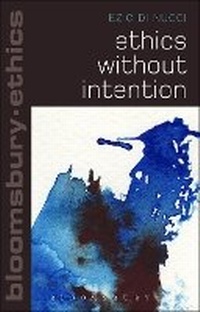
Ethics Without Intention
Published on 28. August 2014
Book
Paperback/Softback
280 pages
978-1-4725-3296-1 (ISBN)
Description
Ethics Without Intention tackles the questions raised by difficult moral dilemmas by providing a critical analysis of double effect and its most common ethical and political applications. The book discusses the philosophical distinction between intended harm and foreseen but unintended harm. This distinction, which, according to the doctrine of double effect, makes a difference to the moral justification of actions, is widely applied to some of the most controversial ethical and political questions of our time: collateral damages in wars and acts of terrorism; palliative care, euthanasia, abortion, and embryo research; self-defence, suicide, and self-sacrifice. It is also crucial to the now notorious theoretical cases of the trolley problem and the knobe effect.
Di Nucci approaches the doctrine of double effect from four key directions: its historical origins, which can be traced further back than the classic attribution to Aquinas; its theoretical coherence, which is the subject of a lively contemporary debate in philosophy; its moral intuitiveness, which has always been taken for granted but has recently begun to be questioned; and finally its relevance to the difficult moral and political decisions of our time. An engaging and comprehensive introduction to the doctrine of double effect.
Di Nucci approaches the doctrine of double effect from four key directions: its historical origins, which can be traced further back than the classic attribution to Aquinas; its theoretical coherence, which is the subject of a lively contemporary debate in philosophy; its moral intuitiveness, which has always been taken for granted but has recently begun to be questioned; and finally its relevance to the difficult moral and political decisions of our time. An engaging and comprehensive introduction to the doctrine of double effect.
Reviews / Votes
In his "Ethics without Intention. An Essay on Double Effect" Ezio di Nucci provides the first in-depth action theoretic analysis of the infamous Doctrine of Double Effect, without already presupposing a particular ethical theory. He offers eight arguments against the doctrine, and convincingly shows that we cannot justify a particular immoral action by way of distinguishing between intended means and its merely foreseen side-effects.His study is original, lucid, and analytically sharp. His book is a must read for everyone interested in the moral relevance of intentions. * Monika Betzler, Chair for Practical Philosophy, University of Bern, Switzerland. *
More details
Series
Language
English
Place of publication
London
United Kingdom
Publishing group
Bloomsbury Publishing PLC
Target group
College/higher education
Dimensions
Height: 216 mm
Width: 138 mm
Weight
354 gr
ISBN-13
978-1-4725-3296-1 (9781472532961)
DOI
CBID182270
Copyright in bibliographic data and cover images is held by Nielsen Book Services Limited or by the publishers or by their respective licensors: all rights reserved.
Schweitzer Classification
Other editions
Additional editions
Ezio Di Nucci
Ethics Without Intention
E-Book
08/2014
1st Edition
Bloomsbury Academic
€32.99
Available for download
Ezio Di Nucci
Ethics Without Intention
E-Book
08/2014
1st Edition
Bloomsbury Academic
€32.99
Available for download
Person
Ezio Di Nucci is Assistant Professor in Philosophy at Universitaet Duisburg-Essen, Germany.
Content
Preface
1. Introductory Remarks: We Never Do Just One Thing
Part I: The Doctrine of Double Effect
2. Definitions First: Classic Formulations of the Doctrine
3. Back to the Beginning: Aristotle, Aquinas and the Origins of Double Effect
Part II: Double Effect in Theory
4. The Trolley Problem
5. An Experimental Approach to the Permissibility of Killing One to Save Five
6. A Theoretical Problem with Double Effect: Closeness
7. Kamm, Kant, and Double Effect
Part III: Double Effect in Practice
8. The Classic Application of Double Effect: Collateral Damages
9. An Experimental Approach to the Distinction between Intending and Merely Foreseeing
10. Bioethical Applications: The Example of Embryo Loss and Stem Cell Research
11. What Shall I Do? The Doctrine Cannot Tell Us How We May Permissibly Act
12. Concluding Remarks: Responsibility, Character and Mends
Notes
Bibliography
Index
1. Introductory Remarks: We Never Do Just One Thing
Part I: The Doctrine of Double Effect
2. Definitions First: Classic Formulations of the Doctrine
3. Back to the Beginning: Aristotle, Aquinas and the Origins of Double Effect
Part II: Double Effect in Theory
4. The Trolley Problem
5. An Experimental Approach to the Permissibility of Killing One to Save Five
6. A Theoretical Problem with Double Effect: Closeness
7. Kamm, Kant, and Double Effect
Part III: Double Effect in Practice
8. The Classic Application of Double Effect: Collateral Damages
9. An Experimental Approach to the Distinction between Intending and Merely Foreseeing
10. Bioethical Applications: The Example of Embryo Loss and Stem Cell Research
11. What Shall I Do? The Doctrine Cannot Tell Us How We May Permissibly Act
12. Concluding Remarks: Responsibility, Character and Mends
Notes
Bibliography
Index