


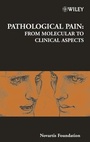
Pathological Pain
From Molecular to Clinical Aspects. No. 261
Will be published approx. on 20. July 2004
Book
Hardback
282 pages
978-0-470-86910-9 (ISBN)
Description
This book brings together contributions from key investigators in the area of pathological pain. It covers the molecular basis of receptors and channels involved in nociception, the possible messages that cause neuropathic plasticity, spinal plasticity in neuropathy, plastic changes in opioid systems in neuropathy and opioid tolerance, and plastic changes related to pathological pain.
Reviews / Votes
"...an excellent book to review the electrophysiological and molecular aspects of pathological pain...can be of great value to both basic scientists and clinicians." (Annals of Neurology, August 2005)More details
Product info
gebunden
Series
Edition
1. Auflage
Language
English
Place of publication
New York
United States
Target group
Professional and scholarly
Product notice
Unsewn / adhesive bound
Paper over boards
Dimensions
Height: 234 mm
Width: 155 mm
Thickness: 18 mm
Weight
567 gr
ISBN-13
978-0-470-86910-9 (9780470869109)
Schweitzer Classification
Other editions
Additional editions
E-Book
01/2005
Wiley
€166.99
Available for download
Person
Derek J. Chadwick and Jamie A. Goode are editors for Pathological Pain: From Molecular to Clinical Aspects and other scientific titles.
Content
Chair's Introduction (Takao Kumazawa).
Regulation Mechanisms of Vanilloid Receptors (Makoto Tominagaet, et al.).
Sodium channels and neuropathic pain (Jin Mo Chung and Kyungsoon Chung).
Ion channel activities implicated in pathological pain (John N. Wood, et al.).
General Discussion I.
Chronic pain and microglia: the role of ATP (Kazuhide Inoue, et al.).
Neurotrophic influences on neuropathic pain (Stephen B. McMahon and William B. J. Cafferty).
Changes in DRG neurons and spinal excitability in neuropathy (Koichi Noguchi, et al.).
Functional reorganization of the spinal pain pathways in developmental and pathological conditions (M. Yoshimura, et al.).
Central plasticity in pathological pain (Min Zhuo).
General Discussion II.
Anti-opioid systems in morphine tolerance and addiction: locus-specific involvement of nociceptin and NMDA receptor (Hiroshi Ueda).
Chronic morphine-induced plasticity among signalling molecules (Alan R. Gintzler and Sumita Chakrabarti).
Opioid tolerance and neuroplasticity (Jianren Mao).
General Discussion III.
A mechanism-based understanding of bone cancer pain (Patrick W. Mantyh).
Mechanistic and clinical aspects of complex regional pain syndrome (CRPS)(Ralf Baron).
Cortical pathophysiology of chronic pain (A. Vania Apkarian).
Final Discussion: Translating basic research to the clinic.
Index of contributors.
Subject index.