

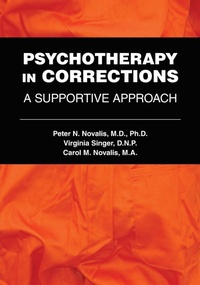
Psychotherapy in Corrections
A Supportive Approach
Published on 12. November 2022
Book
Paperback/Softback
536 pages
978-1-61537-332-1 (ISBN)
Description
Where so many existing books on psychiatry in a prison
setting focus on either standards or issues of medication, Psychotherapy
in Corrections is unique in its focus on the actual practice of
psychotherapy in correctional facilities.
With a particular emphasis
on supportive psychotherapy with adult patients, this guide draws on the
authors' extensive experience in the field and features case vignettes that
serve to bring some of the most important points to life. Organized into
four parts, it covers:
* The relationship between psychotherapy and corrections; supportive
therapy techniques; and issues that affect new or returning prisoners
*
How to address core issues in helping prisoners, including self-harm and
suicidality, trauma and stressor-related disorders, and substance use
disorders
* Key disorders encountered in correctional settings,
including serious mental illness; mood disorders, including bipolar disorder
and depression; and personality disorders, including psychopathy
*
Special considerations, including the experience of women in prison;
behaviors and problems that can disrupt care; cultural issues; and preparing
prisoners for release
Diagnostically oriented chapters, each of which
features key points and provides quick access when referencing specific
conditions and scenarios.
Psychotherapy in Corrections also
incorporates the latest developments in society wrought by the pandemic and
ongoing conversations about social justice, acknowledging the effects that
COVID-19 has had on conditions within prisons and the issues that affect
therapists practicing in a correctional setting, such as the treatment of
the poor, minorities, and traditionally disadvantaged persons.
All
those practicing in correctional settings-whether psychiatrists,
psychologists, mid-level mental health practitioners, social workers,
professional counselors, and others-will benefit from the practical and
detailed approach in this comprehensive volume that will equip them to focus
on and treat the human before them, irrespective of their crime or the
setting.
setting focus on either standards or issues of medication, Psychotherapy
in Corrections is unique in its focus on the actual practice of
psychotherapy in correctional facilities.
With a particular emphasis
on supportive psychotherapy with adult patients, this guide draws on the
authors' extensive experience in the field and features case vignettes that
serve to bring some of the most important points to life. Organized into
four parts, it covers:
* The relationship between psychotherapy and corrections; supportive
therapy techniques; and issues that affect new or returning prisoners
*
How to address core issues in helping prisoners, including self-harm and
suicidality, trauma and stressor-related disorders, and substance use
disorders
* Key disorders encountered in correctional settings,
including serious mental illness; mood disorders, including bipolar disorder
and depression; and personality disorders, including psychopathy
*
Special considerations, including the experience of women in prison;
behaviors and problems that can disrupt care; cultural issues; and preparing
prisoners for release
Diagnostically oriented chapters, each of which
features key points and provides quick access when referencing specific
conditions and scenarios.
Psychotherapy in Corrections also
incorporates the latest developments in society wrought by the pandemic and
ongoing conversations about social justice, acknowledging the effects that
COVID-19 has had on conditions within prisons and the issues that affect
therapists practicing in a correctional setting, such as the treatment of
the poor, minorities, and traditionally disadvantaged persons.
All
those practicing in correctional settings-whether psychiatrists,
psychologists, mid-level mental health practitioners, social workers,
professional counselors, and others-will benefit from the practical and
detailed approach in this comprehensive volume that will equip them to focus
on and treat the human before them, irrespective of their crime or the
setting.
Reviews / Votes
The overall book is long; however, it is a useful resourcecovering multiple topics and providing real-life applications for
psychotherapy in the corrections setting. It is well-organized and easy to
navigate. It addresses multiple key elements for providers practicing in
corrections and contains numerous tables for quick reference. It is a great
source discussing core issues, practical advice, and supportive techniques,
including special situations that can occur. It demonstrates a wealth of
knowledge both in the authors' experience and references used to create the
book. This book will be a great addition to aid practitioners in treating
patients, with its unique focus on psychotherapy in the correctional
setting. -- Shelby Hope, M.D. * Doody *
More details
Language
English
Place of publication
VA
United States
Target group
Professional and scholarly
US School Grade: College Graduate Student and over
Product notice
Paperback (trade)
Illustrations
3 Charts; 8 Figures; 90 Tables, unspecified
Dimensions
Height: 254 mm
Width: 178 mm
Thickness: 37 mm
Weight
921 gr
ISBN-13
978-1-61537-332-1 (9781615373321)
Copyright in bibliographic data and cover images is held by Nielsen Book Services Limited or by the publishers or by their respective licensors: all rights reserved.
Schweitzer Classification
Other editions
Additional editions
Peter N. Novalis | Virginia Singer | Carol M. Novalis
Psychotherapy in Corrections
A Supportive Approach
E-Book
09/2022
American Psychiatric Association Publishing
€69.99
Available for download
Persons
Peter N. Novalis, M.D., Ph.D., has more than 30
years of clinical experience, most of it in public psychiatric institutions,
including state and federal psychiatric hospitals and correctional
facilities. He was the primary author of the first major textbook on
supportive psychotherapy, Clinical Manual of Supportive Psychotherapy, which
was recently published in its second edition in 2020. Recognizing a need for
the application of supportive psychotherapy in correctional facilities, he
has developed the current project along with his
coauthors.
Virginia Singer, D.N.P., PMHNP-BC, CARN-AP, is a
nurse practitioner, board certified in psychiatric mental health and
addictions. She has more than 25 years of experience in mental health and
has worked in jails, state prisons, inpatient psychiatric hospitals, and
inpatient and outpatient drug and alcohol treatment centers.
Carol
M. Novalis, M.A., is an adult educator and researcher with 30 years
of experience in both private and public institutions. She has a special
interest in improving the education of socially disadvantaged adults.
years of clinical experience, most of it in public psychiatric institutions,
including state and federal psychiatric hospitals and correctional
facilities. He was the primary author of the first major textbook on
supportive psychotherapy, Clinical Manual of Supportive Psychotherapy, which
was recently published in its second edition in 2020. Recognizing a need for
the application of supportive psychotherapy in correctional facilities, he
has developed the current project along with his
coauthors.
Virginia Singer, D.N.P., PMHNP-BC, CARN-AP, is a
nurse practitioner, board certified in psychiatric mental health and
addictions. She has more than 25 years of experience in mental health and
has worked in jails, state prisons, inpatient psychiatric hospitals, and
inpatient and outpatient drug and alcohol treatment centers.
Carol
M. Novalis, M.A., is an adult educator and researcher with 30 years
of experience in both private and public institutions. She has a special
interest in improving the education of socially disadvantaged adults.
Content
Introduction
Notes on Usage
Acknowledgements
Part 1. Introduction to Psychotherapy in
Corrections and Supportive Techniques
Chapter 1. The Place of
Supportive Psychotherapy in the Correctional Environment
Chapter 2.
Techniques of Supportive Psychotherapy
Chapter 3. Entering the
Institution
Chapter 4. Managing the Therapy
Part 2. Core
Issues
Chapter 5. Crisis, Self-harm, and Suicidal
Behavior
Chapter 6. Trauma and Stressor-Related Disorders
Chapter 7.
Substance Use Disorders
Part 3. Key Disorders
Chapter 8.
Serious Mental Illness
Chapter 9. Mood Disorders
Chapter 10.
(They've Got) Personality (Disorder): A Challenge in Corrections
Part
4. Important Considerations
Chapter 11. Women in
Prison
Chapter 12. Deception and Disruption
Chapter 13. Special
Topics
Chapter 14. Time to Say Goodbye
In Conclusion
List of
Tables and Figures
Notes on Usage
Acknowledgements
Part 1. Introduction to Psychotherapy in
Corrections and Supportive Techniques
Chapter 1. The Place of
Supportive Psychotherapy in the Correctional Environment
Chapter 2.
Techniques of Supportive Psychotherapy
Chapter 3. Entering the
Institution
Chapter 4. Managing the Therapy
Part 2. Core
Issues
Chapter 5. Crisis, Self-harm, and Suicidal
Behavior
Chapter 6. Trauma and Stressor-Related Disorders
Chapter 7.
Substance Use Disorders
Part 3. Key Disorders
Chapter 8.
Serious Mental Illness
Chapter 9. Mood Disorders
Chapter 10.
(They've Got) Personality (Disorder): A Challenge in Corrections
Part
4. Important Considerations
Chapter 11. Women in
Prison
Chapter 12. Deception and Disruption
Chapter 13. Special
Topics
Chapter 14. Time to Say Goodbye
In Conclusion
List of
Tables and Figures