

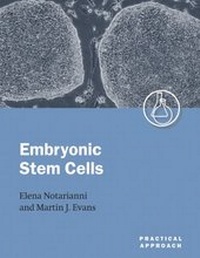
Embryonic Stem Cells
A Practical Approach
Published on 4. May 2006
Book
Hardback
360 pages
978-0-19-855000-6 (ISBN)
Description
The groundbreaking isolation of embryonic stem cells (or 'ES cells') of the mouse in the early 1980's triggered a sustained expansion of global research into their exploitation. This led to the routine genetic engineering of the mouse and revolutionised our understanding of biological processes in the context of the whole animal. ES cell biology remains a crucial and growing area of research with far-reaching implications for developmental and comparative biology as well as for human health. This book serves as a primer to ES cells, their derivation and experimental manipulation. It contains a broad compendium of methods of direct relevance to both graduate students and specialist researchers. An introductory chapter by the principle originator of ES cell research outlines the fundamentals and charts the development of the field. This is followed by comprehensive coverage of state-of-the art techniques for ES cell manipulation, with the mouse as the experimental paradigm, and by recent innovations with ES cells from human and non-human primates. ES cell-based therapies for otherwise intractable diseases are now being developed with the present challenge to control ES cell growth and differentiation for applications such as cell transplantation - a recurrent theme in this book. As a volume in the Practical Approach Series, the emphasis is on current methods from recognised experts.
This book provides an integral approach to the history and current methods for manipulation of embryonic stem (ES) cells by recognised experts. ES cell research attracts a level of interest that is unprecedented for any area of cell biology. Notarianni and Evans have provided a must-have manual for scientists engaged in stem cell research and a textbook for graduate courses in stem cell biology.
This book provides an integral approach to the history and current methods for manipulation of embryonic stem (ES) cells by recognised experts. ES cell research attracts a level of interest that is unprecedented for any area of cell biology. Notarianni and Evans have provided a must-have manual for scientists engaged in stem cell research and a textbook for graduate courses in stem cell biology.
More details
Series
Language
English
Place of publication
Oxford
United Kingdom
Target group
Professional and scholarly
Illustrations
16 colour plates, 31 halftones, 11 line drawings
Dimensions
Height: 254 mm
Width: 196 mm
Thickness: 24 mm
Weight
985 gr
ISBN-13
978-0-19-855000-6 (9780198550006)
Copyright in bibliographic data and cover images is held by Nielsen Book Services Limited or by the publishers or by their respective licensors: all rights reserved.
Schweitzer Classification
Other editions
Additional editions
Book
05/2006
Oxford University Press
€121.32
Article exhausted; check different version
Persons
Content
Preface ; 1 Introduction ; 2. Procedures for deriving ES cell lines from the mouse ; 3. Production of ES cell-derived mice ; 4. Generating animal models of human mitochondrial genetic disease using mouse ES cells ; 5. Controlling the differentiation of mouse ES cells in vitro ; 6. In vitro differentiation of mouse ES cells into muscle cells ; 7. In vitro differentiation of mouse ES cells into haematopoietic cells ; 8. Lineage selection and transplantation of mouse ES cell-derived neural precursors ; 9. In vitro differentiation of mouse ES cells into pancreatic and hepatic cells ; 10. Isolation and characterisation of human ES cells ; 11. Differentiation of human ES cells ; 12. ES cell lines from the cynomolgus monkey (Macaca fascicularis) ; Index