

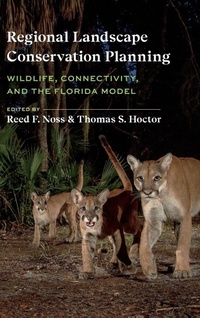
Regional Landscape Conservation Planning
Wildlife, Connectivity, and the Florida Model
Published on 29. April 2026
Book
Hardback
270 pages
978-1-68340-654-9 (ISBN)
Description
The history, science, and influence of an innovative land acquisition program that has protected Florida's natural ecosystems and inspired global efforts
This book traces the growth of landscape conservation planning in Florida, which has developed one of the most ambitious conservation land acquisition programs in North America. As a climate-vulnerable biodiversity hotspot facing rapid growth and development pressures, Florida offers a unique case study in adapting conservation strategies under challenging circumstances. By chronicling the state's successes, the book offers insights into effective planning for the preservation of ecosystems and the wildlife they support.
The Florida Model combines UNESCO's biosphere reserve framework-core protected areas with surrounding multiuse buffer zones-with the concept of wildlife corridors. Informed by decades of research in conservation biology, landscape ecology, and restoration ecology, along with island biogeography and metapopulation theory, Florida's practitioners developed robust tools for evaluating and prioritizing land acquisitions. This work led to the creation of the Florida Ecological Greenways Network and its flagship Florida Wildlife Corridor, cemented by landmark legislation in 2021, and has inspired similar regional conservation initiatives around the world.
This book traces the growth of landscape conservation planning in Florida, which has developed one of the most ambitious conservation land acquisition programs in North America. As a climate-vulnerable biodiversity hotspot facing rapid growth and development pressures, Florida offers a unique case study in adapting conservation strategies under challenging circumstances. By chronicling the state's successes, the book offers insights into effective planning for the preservation of ecosystems and the wildlife they support.
The Florida Model combines UNESCO's biosphere reserve framework-core protected areas with surrounding multiuse buffer zones-with the concept of wildlife corridors. Informed by decades of research in conservation biology, landscape ecology, and restoration ecology, along with island biogeography and metapopulation theory, Florida's practitioners developed robust tools for evaluating and prioritizing land acquisitions. This work led to the creation of the Florida Ecological Greenways Network and its flagship Florida Wildlife Corridor, cemented by landmark legislation in 2021, and has inspired similar regional conservation initiatives around the world.
More details
Language
English
Place of publication
Florida
United States
Target group
College/higher education
Product notice
Paper over boards
Illustrations
31 illustrations - 7 illus., 24 maps, 7 tables, references, index
Dimensions
Height: 235 mm
Width: 157 mm
Thickness: 22 mm
Weight
739 gr
ISBN-13
978-1-68340-654-9 (9781683406549)
Copyright in bibliographic data and cover images is held by Nielsen Book Services Limited or by the publishers or by their respective licensors: all rights reserved.
Schweitzer Classification
Other editions
Additional editions
Reed F. Noss | Thomas S. Hoctor
Regional Landscape Conservation Planning
Wildlife, Connectivity, and the Florida Model
E-Book
05/2026
1st Edition
University of Florida Press
€88.99
Available for download
Persons
Reed F. Noss is conservation science coordinator for the Center for Landscape Conservation Planning at the University of Florida. Noss is the author of several books, including Fire Ecology of Florida and the Southeastern Coastal Plain.
Thomas S. Hoctor is director of the Center for Landscape Conservation Planning and research professor in the Department of Landscape Architecture at the University of Florida. Hoctor is the architect of the Florida Ecological Greenways Network and a cofounder of the Florida Wildlife Corridor.
Contributors: Aaron Adams Eve Bohnett Isabella Guttuso Browne Ramesh Buch Margaret (Peggy) Carr Susan Carr Charles Chester John Davis Lauren Day Mallory Dimmitt Paul Donsky Richard L. Doty Daniel Farrah Alan Flint Lorraine Flint Marly Fuller Asena Goren Ken Grudens Joseph M. Guthrie Jodi Hilty Tom Kay Amy Knight Jason Lauritsen Kailyn Lawson Harvey Locke Sarah Lockhart Michael O'Brien Jon Oetting Debi Osborne Katie Shepard Daniel J. Smith Philip Stevens Ron Sutherland Emily Taylor Jason K. Teisinger Liz Thompson Kimberly Tillman Michael I. Volk Sonam Wangdi Carlton Ward Jr. Shane Wellendorf JoEllen Wilson Derya Yesilkusak Paul D. Zwick
Thomas S. Hoctor is director of the Center for Landscape Conservation Planning and research professor in the Department of Landscape Architecture at the University of Florida. Hoctor is the architect of the Florida Ecological Greenways Network and a cofounder of the Florida Wildlife Corridor.
Contributors: Aaron Adams Eve Bohnett Isabella Guttuso Browne Ramesh Buch Margaret (Peggy) Carr Susan Carr Charles Chester John Davis Lauren Day Mallory Dimmitt Paul Donsky Richard L. Doty Daniel Farrah Alan Flint Lorraine Flint Marly Fuller Asena Goren Ken Grudens Joseph M. Guthrie Jodi Hilty Tom Kay Amy Knight Jason Lauritsen Kailyn Lawson Harvey Locke Sarah Lockhart Michael O'Brien Jon Oetting Debi Osborne Katie Shepard Daniel J. Smith Philip Stevens Ron Sutherland Emily Taylor Jason K. Teisinger Liz Thompson Kimberly Tillman Michael I. Volk Sonam Wangdi Carlton Ward Jr. Shane Wellendorf JoEllen Wilson Derya Yesilkusak Paul D. Zwick
Content
List of Figures
List of Tables
Introduction
Reed F. Noss and Thomas S. Hoctor
1. Conservation Planning in a Biodiversity Hotspot
Reed F. Noss and Thomas S. Hoctor
2. The Influences, Precursors, and Early History of Regional Landscape Conservation Planning
Reed F. Noss and Thomas S. Hoctor
3. Prioritization Methods for Ambitious Land Conservation under Preservation 2000, Florida Forever, and the Rural and Family Lands Protection Program
Jon Oetting, Amy Knight, and Thomas S. Hoctor
4. Statewide Land-Use Planning and Growth Modeling
Margaret (Peggy) Carr, Richard Doty, Daniel Farrah, Jason Teisinger, Liz Thompson, Michael Volk, and Paul Zwick
5. Identifying and Protecting Climate Refugia at Multiple Spatial Scales
Eve Bohnett, Reed F. Noss, Alan Flint, Lorraine Flint, Michael O'Brien, Paul Donsky, Isabella Guttuso Browne, Derya Yesilkusak, and Thomas S. Hoctor
6. Applying a Landscape Approach to Aquatic and Coastal Conservation
Aaron Adams, JoEllen Wilson, Philip Stevens, and Emily Taylor
7. The Florida Ecological Greenways Network and Florida Wildlife Corridor: Protecting Biodiversity and Ecosystem Services
Thomas S. Hoctor, Michael O'Brien, Carlton Ward Jr., Mallory Dimmitt, Joseph M. Guthrie, Eve Bohnett, Sarah Lockhart, Asena Goren, Reed F. Noss, Jason Lauritsen, Marly Fuller, Kailyn Lawson, and Derya Yesilkusak
8. Road Ecology Planning and Practice
Daniel J. Smith
9. How Land Trusts Implement Landscape Conservation
Susan Carr, Reed F. Noss, Sarah Lockhart, Ramesh Buch, Shane Wellendorf, Debi Osborne, Ken Grudens, Lauren Day, Kimberly Tillman, and Tom Kay
10. Florida's Paradoxical Influence on Wildlands Protection and Restoration
John Davis, Jodi Hilty, Harvey Locke, Ron Sutherland, Charles Chester, Sonam Wangdi, and Katie Shepard
Acknowledgments
List of Contributors
Index
List of Tables
Introduction
Reed F. Noss and Thomas S. Hoctor
1. Conservation Planning in a Biodiversity Hotspot
Reed F. Noss and Thomas S. Hoctor
2. The Influences, Precursors, and Early History of Regional Landscape Conservation Planning
Reed F. Noss and Thomas S. Hoctor
3. Prioritization Methods for Ambitious Land Conservation under Preservation 2000, Florida Forever, and the Rural and Family Lands Protection Program
Jon Oetting, Amy Knight, and Thomas S. Hoctor
4. Statewide Land-Use Planning and Growth Modeling
Margaret (Peggy) Carr, Richard Doty, Daniel Farrah, Jason Teisinger, Liz Thompson, Michael Volk, and Paul Zwick
5. Identifying and Protecting Climate Refugia at Multiple Spatial Scales
Eve Bohnett, Reed F. Noss, Alan Flint, Lorraine Flint, Michael O'Brien, Paul Donsky, Isabella Guttuso Browne, Derya Yesilkusak, and Thomas S. Hoctor
6. Applying a Landscape Approach to Aquatic and Coastal Conservation
Aaron Adams, JoEllen Wilson, Philip Stevens, and Emily Taylor
7. The Florida Ecological Greenways Network and Florida Wildlife Corridor: Protecting Biodiversity and Ecosystem Services
Thomas S. Hoctor, Michael O'Brien, Carlton Ward Jr., Mallory Dimmitt, Joseph M. Guthrie, Eve Bohnett, Sarah Lockhart, Asena Goren, Reed F. Noss, Jason Lauritsen, Marly Fuller, Kailyn Lawson, and Derya Yesilkusak
8. Road Ecology Planning and Practice
Daniel J. Smith
9. How Land Trusts Implement Landscape Conservation
Susan Carr, Reed F. Noss, Sarah Lockhart, Ramesh Buch, Shane Wellendorf, Debi Osborne, Ken Grudens, Lauren Day, Kimberly Tillman, and Tom Kay
10. Florida's Paradoxical Influence on Wildlands Protection and Restoration
John Davis, Jodi Hilty, Harvey Locke, Ron Sutherland, Charles Chester, Sonam Wangdi, and Katie Shepard
Acknowledgments
List of Contributors
Index