

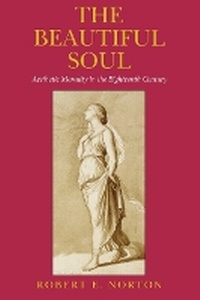
The Beautiful Soul
Aesthetic Morality in the Eighteenth Century
Published on 15. October 2022
Book
Paperback/Softback
330 pages
978-1-5017-6822-4 (ISBN)
Description
For many eighteenth-century European philosophers and writers, the beautiful soul was a symbol of enlightened humanity, carrying with it the possibility that aesthetic beauty and moral goodness would be fused in a new, indivisible unity. In the first book in English on the subject, Robert E. Norton follows the fortunes of this cultural icon, exploring the reasons for both its initial popularity and its subsequent decline as a cultural ideal during the Enlightenment.
Tracing the emergence of the notion of moral beauty as it first appears in the late seventeenth and early eighteenth centuries, Norton maintains that the attempt to combine the good and the beautiful was a response to the rise of secular authority. He draws on English, French, and German sources to show how writers in various intellectual traditions united philosophical, theological, and cultural themes in their elaboration of the beautiful soul.
In Norton's view, this articulation of the beautiful soul was so persuasive that, by the second half of the eighteenth century, some version of moral beauty was introduced in nearly every discussion of morality. While writers such as Wieland, Rousseau, and Goethe employed the beautiful soul as a moral and aesthetic ideal in fiction, thinkers such as Kant explored it in philosophical works. Norton ends by demonstrating how the figure of the beautiful soul achieved its foremost expression in Schiller's writings and was definitively rejected in Hegel's Phenomenology.
Tracing the emergence of the notion of moral beauty as it first appears in the late seventeenth and early eighteenth centuries, Norton maintains that the attempt to combine the good and the beautiful was a response to the rise of secular authority. He draws on English, French, and German sources to show how writers in various intellectual traditions united philosophical, theological, and cultural themes in their elaboration of the beautiful soul.
In Norton's view, this articulation of the beautiful soul was so persuasive that, by the second half of the eighteenth century, some version of moral beauty was introduced in nearly every discussion of morality. While writers such as Wieland, Rousseau, and Goethe employed the beautiful soul as a moral and aesthetic ideal in fiction, thinkers such as Kant explored it in philosophical works. Norton ends by demonstrating how the figure of the beautiful soul achieved its foremost expression in Schiller's writings and was definitively rejected in Hegel's Phenomenology.
Reviews / Votes
Norton's book is to be commended for casting fresh and invigorating light on the living relevance of eighteenth-century intellectual problems to one of the central preoccupations of such modern thinkers as Wittgenstein, Foucault, and Richard Rorty.(Modern Language Review) The Beautiful Soul is an important and fascinating book which traces the rise and fall of what Robert E. Norton takes to be one of the European Enlightenment's most characteristic ideas -that there might be an intrinsic link between ethics and aesthetics, the good and the beautiful, which manifested itself in the concept of the 'beautiful soul.'
(International Journal of the Classical Tradition) Norton's book is a fine contribution to scholarship, one that is well worth pondering.
(The Journal of English and Germanic Philology)
More details
Language
English
Place of publication
Ithaca
United States
Product notice
Paperback (trade)
Dimensions
Height: 229 mm
Width: 152 mm
Weight
907 gr
ISBN-13
978-1-5017-6822-4 (9781501768224)
Copyright in bibliographic data and cover images is held by Nielsen Book Services Limited or by the publishers or by their respective licensors: all rights reserved.
Schweitzer Classification