

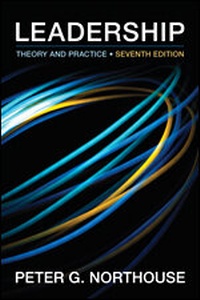
Leadership
Theory and Practice
7th Edition
Published on 23. April 2015
Book
Paperback/Softback
520 pages
978-1-4833-1753-3 (ISBN)
Description
Translated into 12 different languages and used in 89 countries, this market-leading text successfully combines an academically robust account of the major theories and models of leadership with an accessible style and practical exercises that help students apply what they learn. Peter G. Northouse wrote each chapter in a consistent format, allowing students to contrast the various theories. Every chapter includes three case studies that provide students with practical examples of the theories discussed.
Reviews / Votes
"I have found Peter's books exceptionally well written, applauded by my students for its quality and readability. It immediately leads us excitingly toward the geneses of the symptoms we often treat as causal. It is direct and logical in its development. It is easy reading but by no means elementary. Finally but more importantly, it will I feel help students better understand their own needs and develop plans for further development." -- William A. Welch, Sr., Ed.D. "A useable and up-to-date introduction of the psychodynamic approach that brings psychological concerns about motivation and personality into a helpful conversation with mainstream leadership theory." -- Jack Barentsen "This is a great addition to the text. It is important for leaders to understand and meet the needs of those whom they are leading and the environment in which their interactions take place. They must seamlessly account for all these factors in a way that is not focused on the leader him or herself, but on the context. [The Adaptive Leadership Chapter] presents leadership through a new lens and provides an approach to leadership that was missing from previous editions. It offers concrete practical examples that are relatable and provide context to both current and future leaders." -- Daniel W. Calhoun "This is an excellent introductory text to the field of leadership studies. It features short, concise, readable chapters complemented by case studies and self-analyses for those wishing to apply the material. It is the first book I recommend to anyone wishing to learn more about the field and how they can improve their own leadership practices." -- Benjamin W. Redekop "This is simply my bible for teaching on Leadership. It is informative, yet an enjoyable read and essential for lecturers and students alike. No module on Leadership should be without one!" -- Frances Dodd "Leadership: Theory and Practice is a scholarly examination of leadership as a dynamic, evolving, and elusive influence process with differing approaches to effectively build relationships and facilitate the achievement of goals and visions." -- Horacio Salinas, Jr. "Northouse is highly readable and explains leadership material extremely well. He then presents the strengths and weaknesses of various leadership approaches in a compelling way, yielding evidence based leadership practices." -- Jon Sager "Northouse's approach to leadership provides a balanced overview of both theory and relevant application while presenting it an easy to understand format. Students will find it an excellent resource for years to come." -- Kaye Shelton "This is the ideal text for a survey course on leadership theory that also helps students put their leadership into practice." -- Lisa Burgoon "A must read for anyone preparing to take a leadership position in any setting." -- Moja Teboho "This single text has become the primary resource for our doctoral program in Educational Leadership. It provides the foundation upon which we base our program of study and encompasses the breadth of leadership theory and practice in a manner accessible to students, practitioners, and scholars." -- Pamela Scott "Leadership today is about building followership, and Leadership: Theory and Practice provides a practical approach for how to build that followship in today's workforce." -- Patti Ippoliti "Leadership: Theory and Practice is a 'must have' for all students studying leadership at both undergraduate and postgraduate level. Theories of leadership are articulated in a very accessible manner and supported by appropriate case studies which bring meaning to the rhetoric -reality debate. This text is well structured and takes the student on a learning journey which leads to a greater understanding of leadership in its broadest sense." -- Rose Envy "The text does an excellent job of addressing leadership at the individual level of analysis. The single greatest strength is the empirical review of the major theories of leadership, provided in a chapter framework that describes the theory, explains how a particular approach works, describes strengths and criticisms, discusses how to apply the theory, provides relevant cases, and a related assessment instrument." -- Thomas MeriweatherMore details
Edition
7th Revised edition
Language
English
Place of publication
Thousand Oaks
United States
Target group
College/higher education
Edition type
Revised edition
Dimensions
Height: 229 mm
Width: 152 mm
Weight
694 gr
ISBN-13
978-1-4833-1753-3 (9781483317533)
Copyright in bibliographic data and cover images is held by Nielsen Book Services Limited or by the publishers or by their respective licensors: all rights reserved.
Schweitzer Classification
Other editions
New editions
Book
02/2025
10th Edition
SAGE Publications Inc
€127.50
Shipment within 15-20 days
Book
06/2021
9th Edition
SAGE Publications Inc
€141.50
Available immediately
Person
Peter G. Northouse, PhD, is Professor Emeritus of Communication in the School of Communication at Western Michigan University. Leadership: Theory and Practice is the best-selling academic textbook on leadership in the world and has been translated into 15 languages. In addition to authoring publications in professional journals, he is the author of Introduction to Leadership: Concepts and Practice (now in its sixth edition) and co-author of Leadership Case Studies in Education (now in its fourth edition) and Health Communication: Strategies for Health Professionals (now in its third edition). His scholarly and curricular interests include models of leadership, leadership assessment, ethical leadership, and leadership and group dynamics. For more than 40 years, he has taught courses in leadership, interpersonal communication, and organizational communication on both the undergraduate and graduate levels. Currently, he is a consultant and lecturer on trends in leadership research, leadership development, and leadership education. He holds a doctorate in speech communication from the University of Denver, and master's and bachelor's degrees in communication education from Michigan State University.
Content
Chapter 1: Introduction
Leadership Defined
Leadership Described
Plan of the Book
Summary
Chapter 2: Trait Approach
Description
How Does the Trait Approach Work?
Strengths
Criticisms
Application
Case Studies
Leadership Instrument
Summary
Chapter 3: Skills Approach
Description
How Does the Skills Approach Work?
Strengths
Criticisms
Application
Case Studies
Leadership Instrument
Summary
Chapter 4: Behavioral Approach
Description
How Does the Behavioral Approach Work?
Strengths
Criticisms
Application
Case Studies
Leadership Instrument
Summary
Chapter 5: Situational Approach
Description
How Does the Situational Approach Work?
Strengths
Criticisms
Application
Case Studies
Leadership Instrument
Summary
Chapter 6: Path-Goal Theory
Description
How Does Path-Goal Theory Work?
Strengths
Criticisms
Application
Case Studies
Leadership Instrument
Summary
Chapter 7: Leader-Member Exchange Theory
Description
How Does LMX Theory Work?
Strengths
Criticisms
Application
Case Studies
Leadership Instrument
Summary
Chapter 8: Transformational Leadership
Description
How Does the Transformational Approach Work?
Strengths
Criticisms
Application
Case Studies
Leadership Instrument
Summary
Chapter 9: Authentic Leadership
Description
How Does Authentic Leadership Theory Work?
Strengths
Criticisms
Application
Case Studies
Leadership Instrument
Summary
Chapter 10: Servant Leadership
Description
Model of Servant Leadership
How Does Servant Leadership Work?
Strengths
Criticisms
Application
Case Studies
Leadership Instrument
Summary
Chapter 11: Adaptive Leadership
Description
A Model of Adaptive Leadership
How Does Adaptive Leadership Work?
Strengths
Criticisms
Application
Case Studies
Leadership Instrument
Summary
Chapter 12: Psychodynamic Approach
Description
How does the Psychodynamic Approach Work?
Strengths
Criticisms
Application
Case Studies
Leadership Instrument
Summary
Chapter 13: Leadership Ethics
Description
Strengths
Application
Criticisms
Case Studies
Leadership Instrument
Summary
Chapter 14: Team Leadership
Description
Team Leadership Model
How Does the Team Leadership Model Work?
Strengths
Criticisms
Application
Case Studies
Leadership Instrument
Summary
Chapter 15: Gender and Leadership
Description
The Glass Ceiling Turned Labyrinth
Strengths
Criticisms
Application
Case Studies
Leadership Instrument
Summary
Chapter 16: Culture and Leadership
Description
Strengths
Criticisms
Application
Case Studies
Leadership Instrument
Summary
Leadership Defined
Leadership Described
Plan of the Book
Summary
Chapter 2: Trait Approach
Description
How Does the Trait Approach Work?
Strengths
Criticisms
Application
Case Studies
Leadership Instrument
Summary
Chapter 3: Skills Approach
Description
How Does the Skills Approach Work?
Strengths
Criticisms
Application
Case Studies
Leadership Instrument
Summary
Chapter 4: Behavioral Approach
Description
How Does the Behavioral Approach Work?
Strengths
Criticisms
Application
Case Studies
Leadership Instrument
Summary
Chapter 5: Situational Approach
Description
How Does the Situational Approach Work?
Strengths
Criticisms
Application
Case Studies
Leadership Instrument
Summary
Chapter 6: Path-Goal Theory
Description
How Does Path-Goal Theory Work?
Strengths
Criticisms
Application
Case Studies
Leadership Instrument
Summary
Chapter 7: Leader-Member Exchange Theory
Description
How Does LMX Theory Work?
Strengths
Criticisms
Application
Case Studies
Leadership Instrument
Summary
Chapter 8: Transformational Leadership
Description
How Does the Transformational Approach Work?
Strengths
Criticisms
Application
Case Studies
Leadership Instrument
Summary
Chapter 9: Authentic Leadership
Description
How Does Authentic Leadership Theory Work?
Strengths
Criticisms
Application
Case Studies
Leadership Instrument
Summary
Chapter 10: Servant Leadership
Description
Model of Servant Leadership
How Does Servant Leadership Work?
Strengths
Criticisms
Application
Case Studies
Leadership Instrument
Summary
Chapter 11: Adaptive Leadership
Description
A Model of Adaptive Leadership
How Does Adaptive Leadership Work?
Strengths
Criticisms
Application
Case Studies
Leadership Instrument
Summary
Chapter 12: Psychodynamic Approach
Description
How does the Psychodynamic Approach Work?
Strengths
Criticisms
Application
Case Studies
Leadership Instrument
Summary
Chapter 13: Leadership Ethics
Description
Strengths
Application
Criticisms
Case Studies
Leadership Instrument
Summary
Chapter 14: Team Leadership
Description
Team Leadership Model
How Does the Team Leadership Model Work?
Strengths
Criticisms
Application
Case Studies
Leadership Instrument
Summary
Chapter 15: Gender and Leadership
Description
The Glass Ceiling Turned Labyrinth
Strengths
Criticisms
Application
Case Studies
Leadership Instrument
Summary
Chapter 16: Culture and Leadership
Description
Strengths
Criticisms
Application
Case Studies
Leadership Instrument
Summary