

Sweet and Clean?
Bodies and Clothes in Early Modern England
Published on 26. March 2020
Book
Hardback
356 pages
978-0-19-885613-9 (ISBN)
Description
Sweet and Clean? challenges the widely held beliefs on bathing and cleanliness in the past. For over thirty years, the work of the French historian, George Vigarello, has been hugely influential on early modern European social history, describing an aversion to water and bathing, and the use of linen underwear as the sole cleaning agent for the body. However, these concepts do not apply to early modern England. Sweet and Clean? analyses etiquette and medical literature, revealing repeated recommendations to wash or bathe in order to clean the skin. Clean linen was essential for propriety but advice from medical experts was contradictory. Many doctors were convinced that it prevented the spread of contagious diseases, but others recommended flannel for undergarments, and a few thought changing a fever patient's linens was dangerous. The methodology of material culture helps determine if and how this advice was practiced. Evidence from inventories, household accounts and manuals, and surviving linen garments tracks underwear through its life-cycle of production, making, wearing, laundering, and final recycling. Although the material culture of washing bodies is much sparser, other sources, such as the Old Bailey records, paint a more accurate picture of cleanliness in early modern England than has been previously described. The contrasting analyses of linen and bodies reveal what histories material culture best serves. Finally, what of the diseases-plague, smallpox, and typhus-that cleanliness of body and clothes were thought to prevent? Did following early modern medical advice protect people from these illnesses?
Reviews / Votes
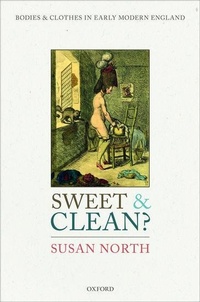
This carefully researched and detailed book is important reading, and not just for those with specific interests in dress or textile history, or the history of washing and hygiene. It encourages historians and student historians with broader interests to think about everyday routines and actions in the past, and how we might seek to recover them despite minimal evidence. * Sarah Fox, The Journal of the Social History Society * Sweet and Clean? provides a detailed reexamination of long-held assumptions about bathing and cleanliness in 16th-18th century England. North, who is curator of fashion at the Victoria & Albert Museum, takes specific aim at the idea that bathing was rare and considered risky, and that changing linen undergarments was the primary method of keeping clean. Summing Up: Highly recommended * CHOICE * What constitutes cleanliness? Or, more relevantly, what constituted personal cleanliness in early modern England? A hint is offered in the cover illustration to Susan North's most recent and thought-provoking book, Sweet and Clean, which depicts James Gillray's 1779 print, The Whore's Last Shift. The woman in question, naked apart from her worn stockings, shoes, and the feathers in her neatly dressed hair, washes her shift in a chamber pot. The use of the pot for washing highlights several things-the desire to have clean linens and, as North notes, a possible reference to the use of the urine in the chamber pot as part of the washing process. * Maria Hayward, University of Southampton, Journal of Modern History * The book is not only a must read for anyone interested in the history of linen and cotton clothing and textiles, but also historians of the body, of cleanliness and of medicine in relation to hygiene and disease. * Sarah A. Bendall, The Costume * There are many things to admire in this original and thoughtful book. The author's use of primary material is especially impressive. From the start, she is realistic about the challenges of her subject, pointing out the difficulties of recovering evidence of washing and 'shifting' (i.e. 'changing') linen clothing, and especially the more intimate acts ofcleaning the body. However, the quantity of evidence that she presents and her skilful and nuanced analysis of it has produced an illuminating and persuasive account of the labour-intensive efforts made by early modern people to stay 'sweet and clean'. The inclusivity of her study is also admirable: from the rich to the poor, from babies toadults, and considering both rural and urban dwellers. * Danae Tankard, Textile History * There are many things to admire in thisoriginal and thoughtful book. The author's use of primary material is especially impressive. From the start, she is realistic about the challenges of her subject, pointing out the difficulties of recovering evidence of washing and 'shifting' (i.e. 'changing') linen clothing, and especially the more intimate acts of cleaning the body. However, the quantity of evidence that she presents and her skilful and nuanced analysis of it has produced an illuminating and persuasive account of the labour-intensive efforts made by early modern people to stay 'sweet and clean'. * Danae Tankard, Textile History *More details
Language
English
Place of publication
Oxford
United Kingdom
Target group
Professional and scholarly
Product notice
sewn/stitched
Cloth over boards
Illustrations
46 figures/illustrations
Dimensions
Height: 236 mm
Width: 157 mm
Thickness: 25 mm
Weight
771 gr
ISBN-13
978-0-19-885613-9 (9780198856139)
Copyright in bibliographic data and cover images is held by Nielsen Book Services Limited or by the publishers or by their respective licensors: all rights reserved.
Schweitzer Classification
Other editions
Additional editions
E-Book
03/2020
1st Edition
OUP eBook
€69.99
Available for download
E-Book
03/2020
1st Edition
OUP eBook
€62.99
Available for download
Person
Susan North is the Curator of Fashion, 1550-1800 at the Victoria and Albert Museum. She has a BA in Art History from Carleton University, Ottawa, an MA in Dress History from the Courtauld Institute, London, and a PhD from Queen Mary, University of London. North worked for the National Gallery of Canada and the National Archives of Canada, before joining the V&A Museum in 1995. She has published articles and book chapters, co-authored several V&A publications relating to early modern dress, as well as co-curating Style and Splendour: Queen Maud of Norway's Wardrobe in 2005 and Splendour of the Tsars in 2008. As a museum curator, North in particularly interested in the material culture of surviving historical clothing, the stories revealed in its materials, methods of construction, and alterations, and how these contribute to broader narratives of early modern history.
Content
1: Digging the dirt in the pursuit of cleanliness
PART I - Advice
2: Manners and health
3: Clothing and Disease
4: Clean Bodies
PART II - Practice
5: Wearing linens
6: Owning linens
7: Manufacturing linens
8: Sewing linens
9: Washing linen
10: More washing
11: Washing Bodies
12: Conclusion: Sweet and clean
Appendix
PART I - Advice
2: Manners and health
3: Clothing and Disease
4: Clean Bodies
PART II - Practice
5: Wearing linens
6: Owning linens
7: Manufacturing linens
8: Sewing linens
9: Washing linen
10: More washing
11: Washing Bodies
12: Conclusion: Sweet and clean
Appendix